The Singapore issue
Under the Fluorescent Tube: Singapore's Hawker Centres and the Soul They Keep
A calm, practical walk through fourteen of Singapore's hawker centres — where to start, where locals actually eat, and how to seat a group without a fight over a tissue packet.
By Ingrid VogelThe city read block by block
The fluorescent tubes hum the same in every hawker centre: a flat white light over communal tables, a ceiling fan turning slowly, the clatter of a wok being scraped at a stall that has been in one family for forty years. Singapore built these places in the 1960s and 70s to bring street cooks indoors under one roof, and in doing so it accidentally built the country's most honest dining rooms. What follows is not a ranking. It is a way of thinking about which centre to walk into, and when, depending on who you are with and what you came to eat.
Start here, and know what you are walking into
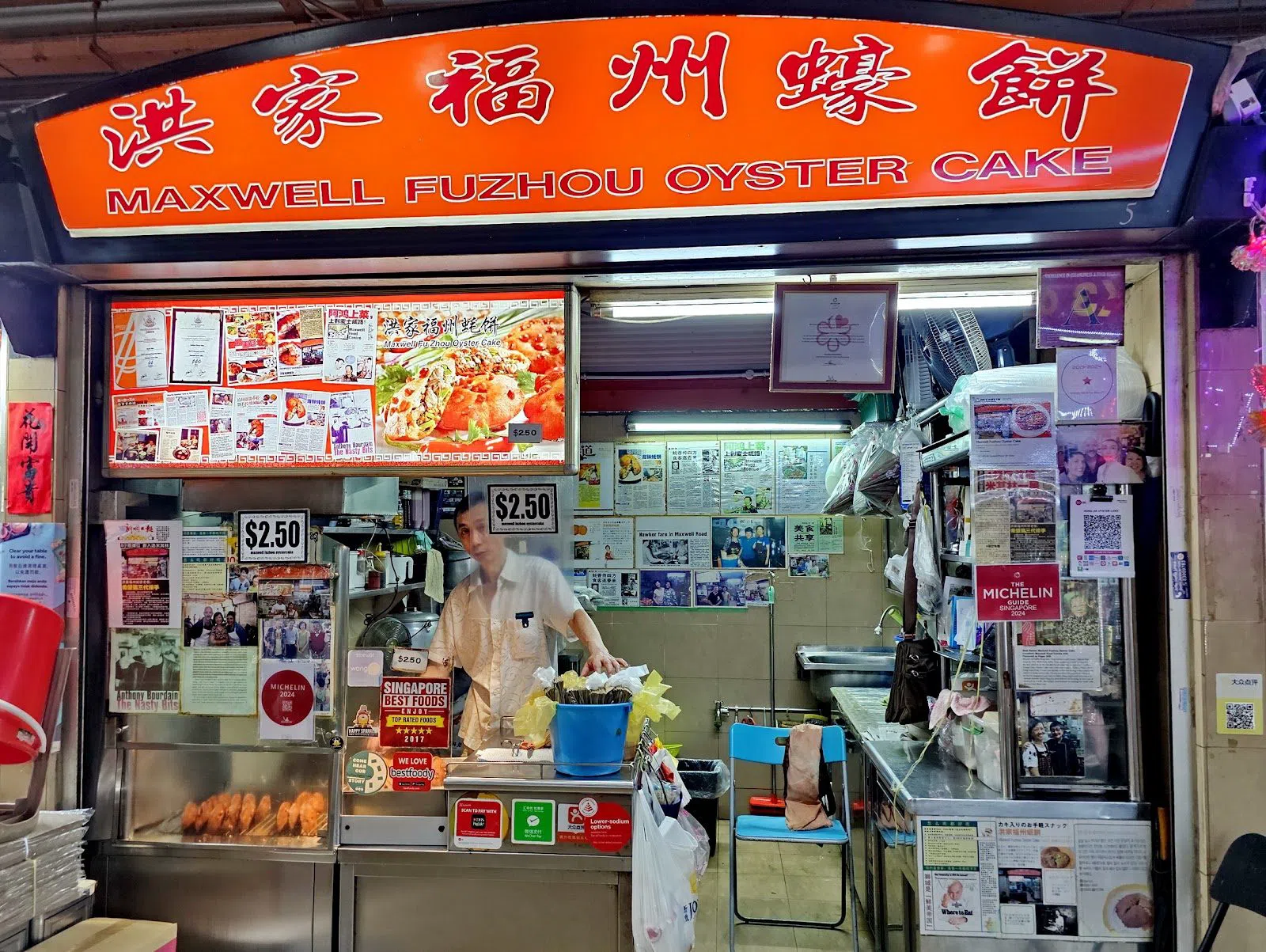
Most visitors begin at Maxwell Food Centre (Chinatown), and there is no shame in that. It sits a few minutes' walk from Chinatown MRT, it is dense with recognisable classics, and it reads easily on a first visit. The catch is the queue at Tian Tian chicken rice, which has become a tourist bottleneck rather than a local secret. Come before noon or after 2pm, especially if there are six of you, because the tables are communal and unreserved — you seat where you can. A useful habit to learn on day one: 'choping', the local practice of reserving a seat by laying a packet of tissues on it. Do it before you queue, not after. Dishes run roughly S$4–8, and a group is better off splitting up to queue different stalls than shuffling through one line together.
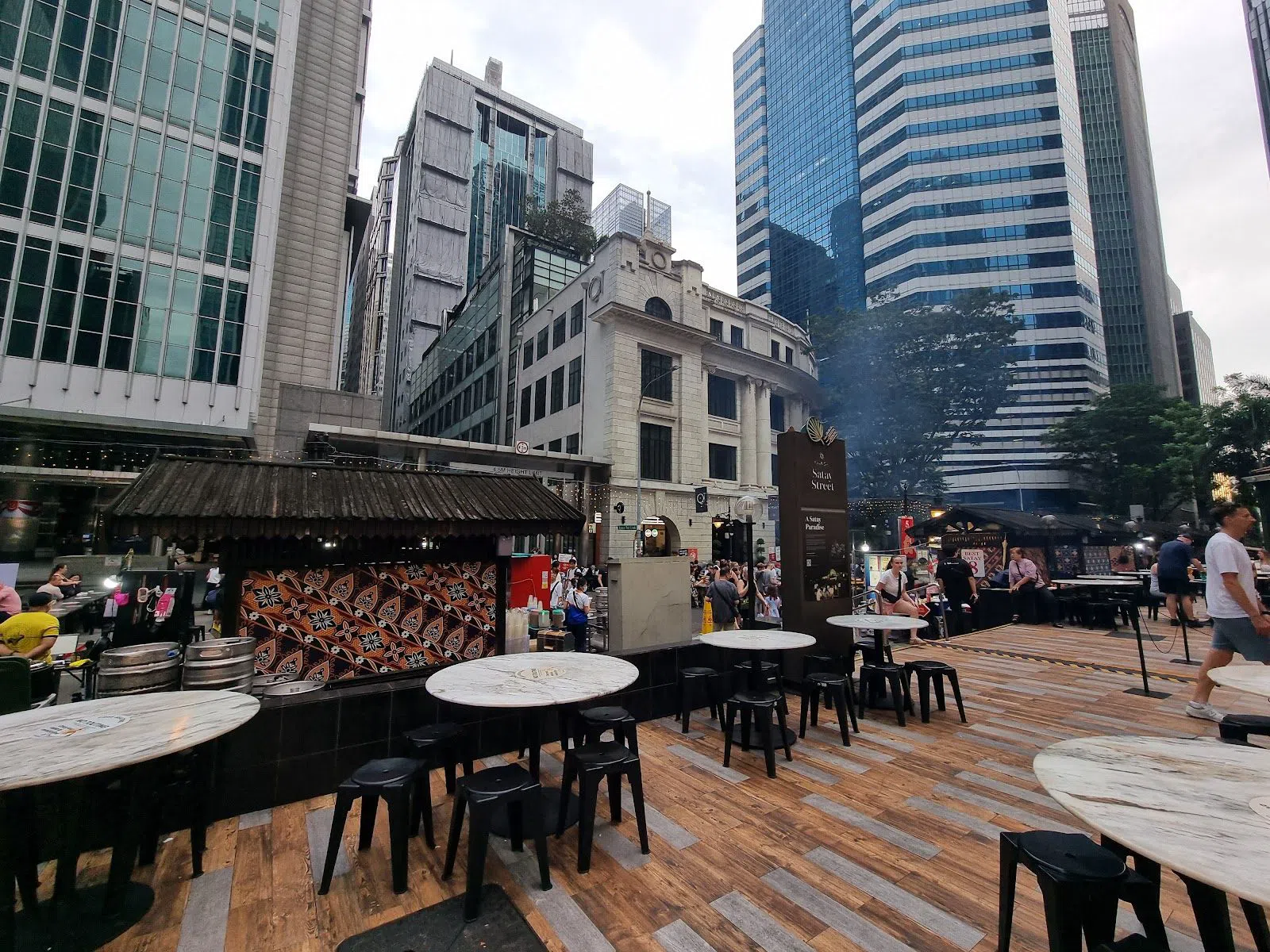
A short walk away in the CBD, Lau Pa Sat (Telok Ayer) is the set-piece. The Victorian ironwork pavilion is genuinely beautiful, and after dark the adjacent Satay Street closes to traffic and fills with open-air tables and charcoal smoke. It is privately managed and built to absorb crowds: satay by the stick, tables that take a large group without drama, and a schedule worth memorising — the satay street runs from 7pm on weekdays and from 3pm on weekends and public holidays. Be honest with yourself that it is touristy and a little pricier than the heartland, around S$5–10 a dish. For a group that wants atmosphere over authenticity, it earns its place.
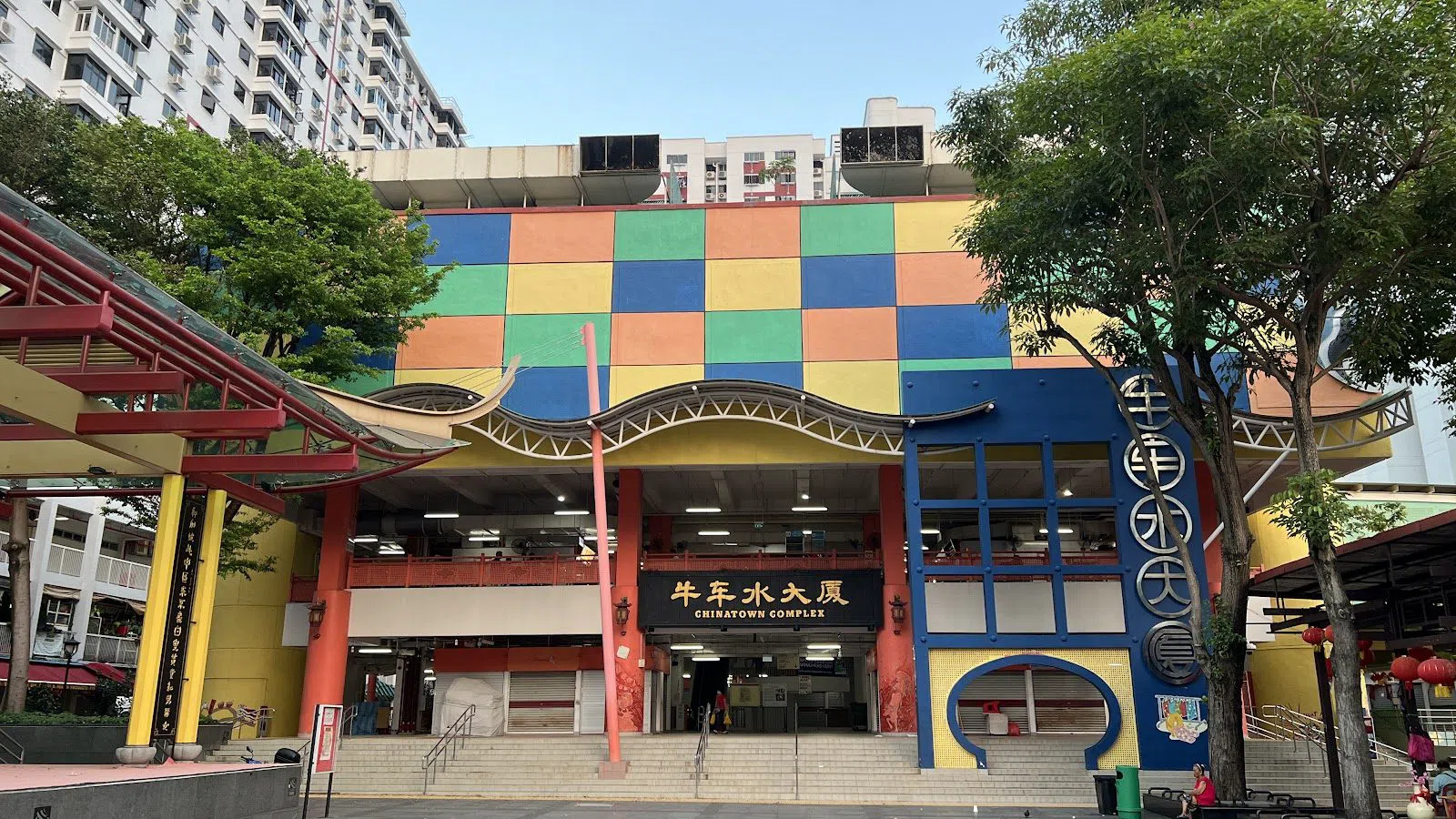
For sheer scale, Chinatown Complex Food Centre (Chinatown) is the one to understand. It is Singapore's largest hawker centre, hundreds of stalls stacked in a warren above a wet market, and it holds the world's first Michelin-starred hawker, Liao Fan Hawker Chan soya-sauce chicken rice. The raw seating capacity is unmatched, which makes it the best bet for a big group, but the layout defeats people who don't plan. Nominate a meeting table before you scatter, and keep it. Prices are among the cheapest in the city, roughly S$3–7, and the crowd is overwhelmingly local despite the Michelin queue.
Plan your Singapore trip
Live prices from our booking partners.
Free cancellation on many rooms. We may earn a commission when you book.
Chinatown's quieter counter
A block from the tourist flow, Hong Lim Market & Food Centre (Chinatown) is where you go when Maxwell feels like a theme park. It is a roomy two-storey building with a legendary noodle bench: Michelin Bib Gourmand Outram Park fried kway teow, Ah Heng curry chicken bee hoon mee, and Tanglin curry puffs. The crowd here is office workers, which tells you when to arrive. Weekday lunch is a scrum, so a larger group is far happier mid-morning or after the 1pm rush. Dishes sit around S$4–8. If you only have time for one Chinatown centre and you care more about the food than the photograph, make it this one.
Where locals send you
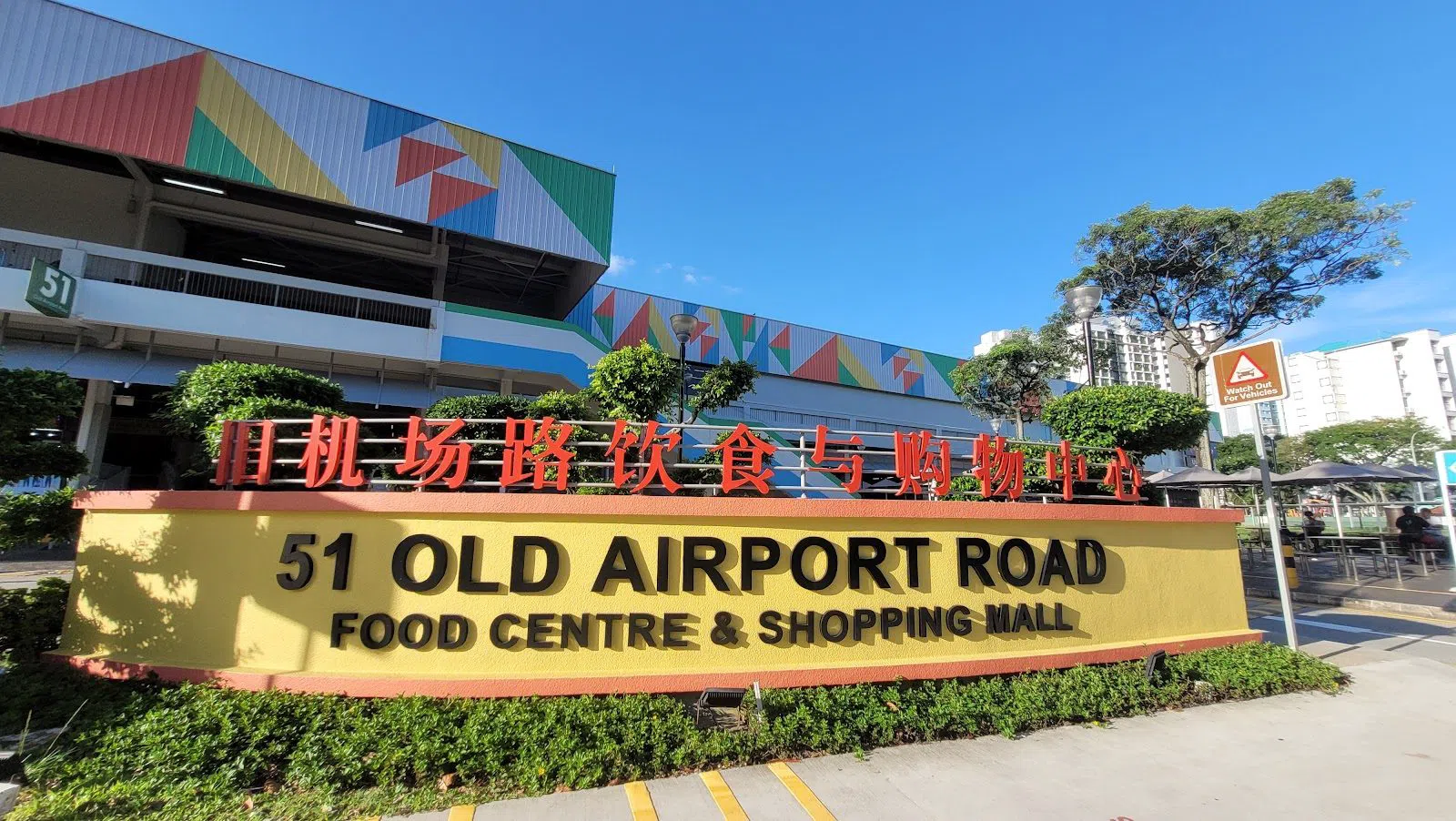
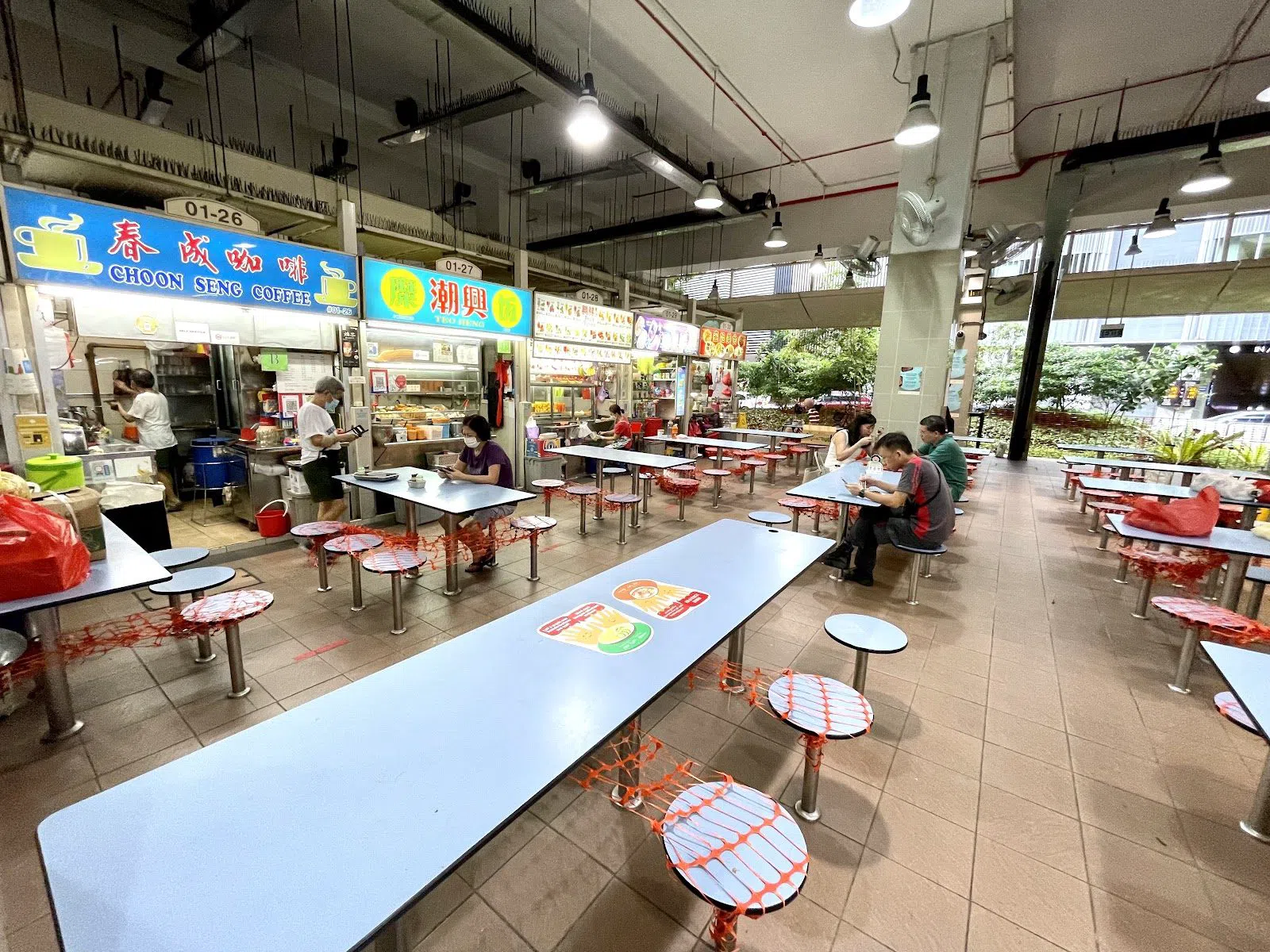
Ask a Singaporean where to eat and you will often be pointed east, to Old Airport Road Food Centre (Dakota MRT, Circle Line). It is big, it is rarely tourist-clogged, and it seats a group comfortably outside the peak lunch hour. This is the address for Nam Sing Hokkien mee, Dong Ji char kway teow, and the Michelin Bib jun-yuan fish soup — the real thing, cooked without an audience. It reopened after 2024 upgrading works with better fans and cleaner toilets, both of which matter more than they sound in a tropical open hall. Many stalls prefer cash, so carry small notes. Expect S$4–8 a dish.
Back in the financial district, Amoy Street Food Centre (Telok Ayer) is a stall-hunter's centre packed with Michelin Bib names — A Noodle Story's ramen-laksa hybrid, Han Kee fish soup. It is compact and it gets slammed at weekday lunch, roughly 11.30am to 1.30pm, when the surrounding towers empty out. During that window it suits couples and pairs only; a bigger group should come just before noon, after 1.30pm, or on a quieter weekend. Dishes run S$5–10. This is a place to eat well rather than to sprawl.
By the water, and long after dark
Some centres are defined by their hours rather than their neighbourhood. Newton Food Centre (Newton MRT) is open 24 hours, with sprawling outdoor seating that makes it excellent for a late group, and it has a cinematic reputation from a certain film about wealthy families. The atmosphere after midnight is real. So is the classic overcharge: hawkers here actively tout for tables, and seafood is often priced by weight, so agree the price before anything hits the grill. Most dishes are S$6–15, with seafood higher. Treat it as theatre with a bill you should read carefully.
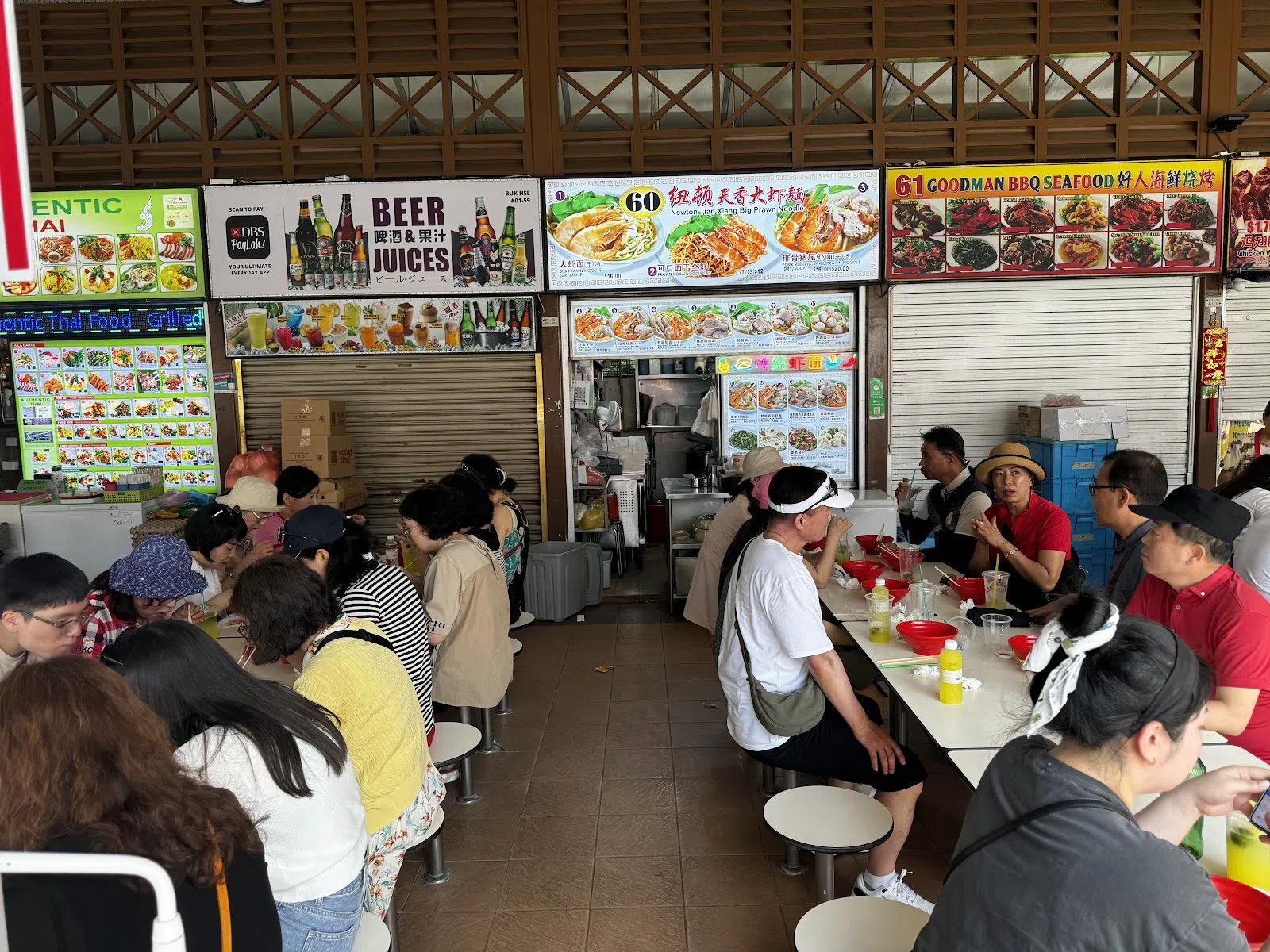
For the only genuine beachside option, East Coast Lagoon Food Village (East Coast Park) trades convenience for setting. There is no MRT stop; it is a taxi or a cycle out along the coast, and many stalls are cash-only. What you get is relaxed open-air seating by the sea, satay, barbecued seafood, and sambal stingray, best in the late afternoon and evening once the heat drops. It is ideal for a group that wants to linger, around S$5–10 a dish, provided someone has planned the ride there and back.
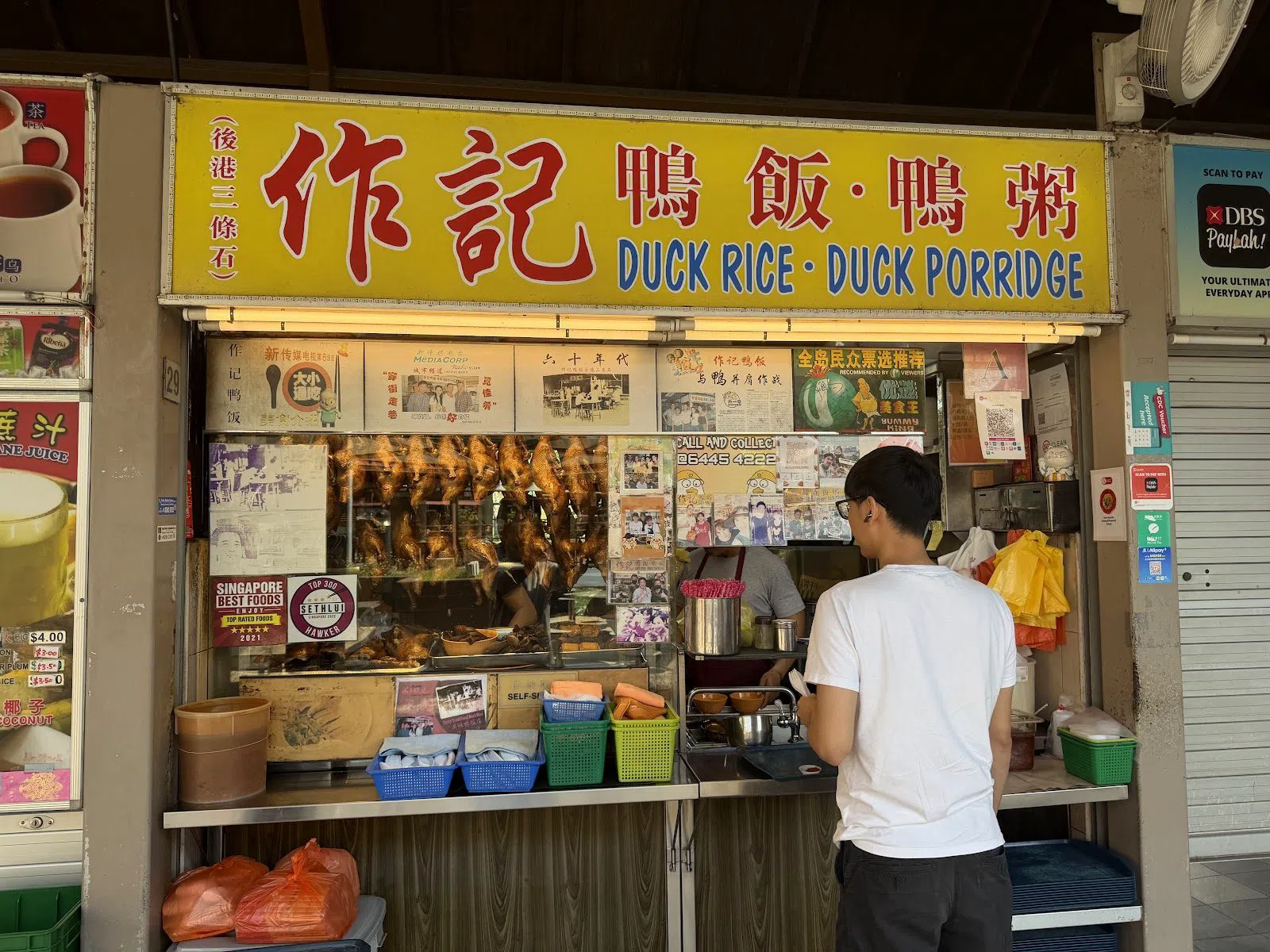
Late-night eating has its own institution in Chomp Chomp Food Centre (Serangoon Gardens), an evening-only supper spot with tight but lively seating. There is no daytime trade at all — it is strictly a dinner and late-night stop for barbecue chicken wings, satay bee hoon, and sambal stingray. It reopened on 27 January 2026 after a three-month upgrade with better ventilation, which the low ceilings badly needed. A group is fine here off-peak; at peak you will be shoulder to shoulder with everyone else who had the same idea. Dishes run S$4–9.
Beyond the Chinese kitchen
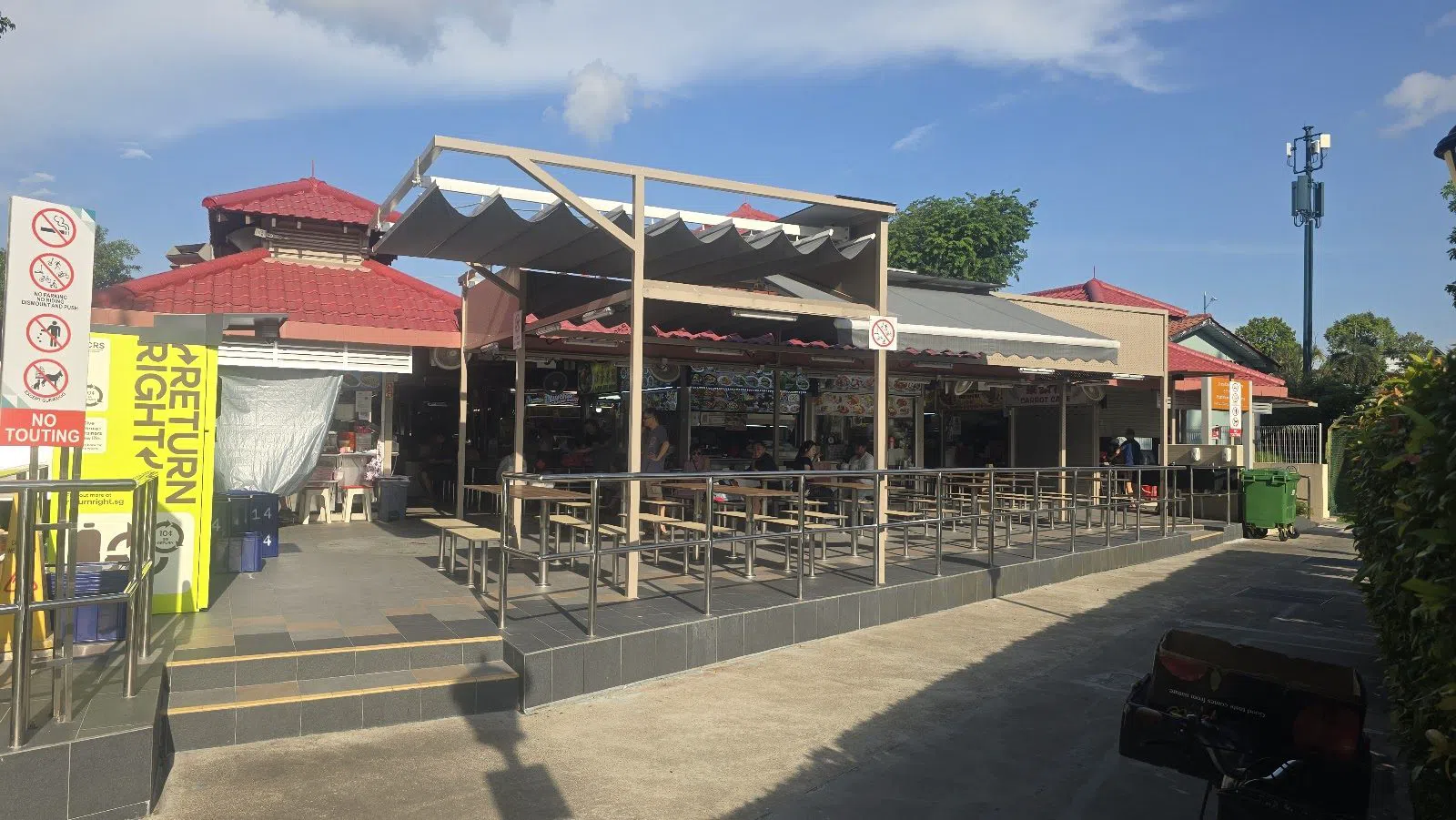
Singapore's hawker food is not one cuisine, and the centres that lean Malay, Indian, and Thai are where the range shows. Tekka Centre (Little India MRT) is the go-to for Indian-Muslim cooking — biryani, roti prata, murtabak, mutton soup — inside a large hall of communal tables that handles a group well. It is predominantly halal, which makes it an easy call for a mixed-diet party, and it is the most sensory stop on this list, wrapped inside the noise and colour of Little India.
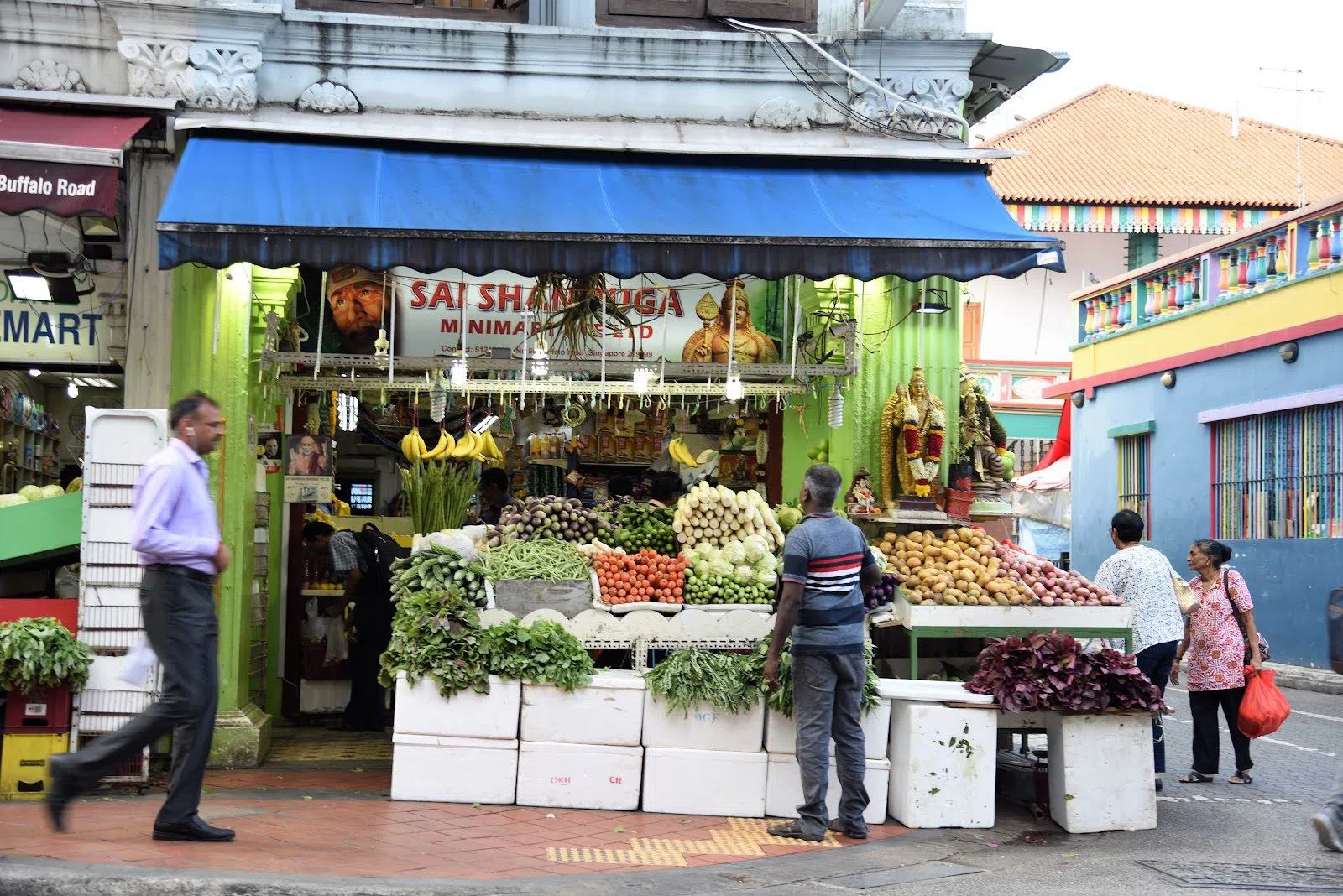
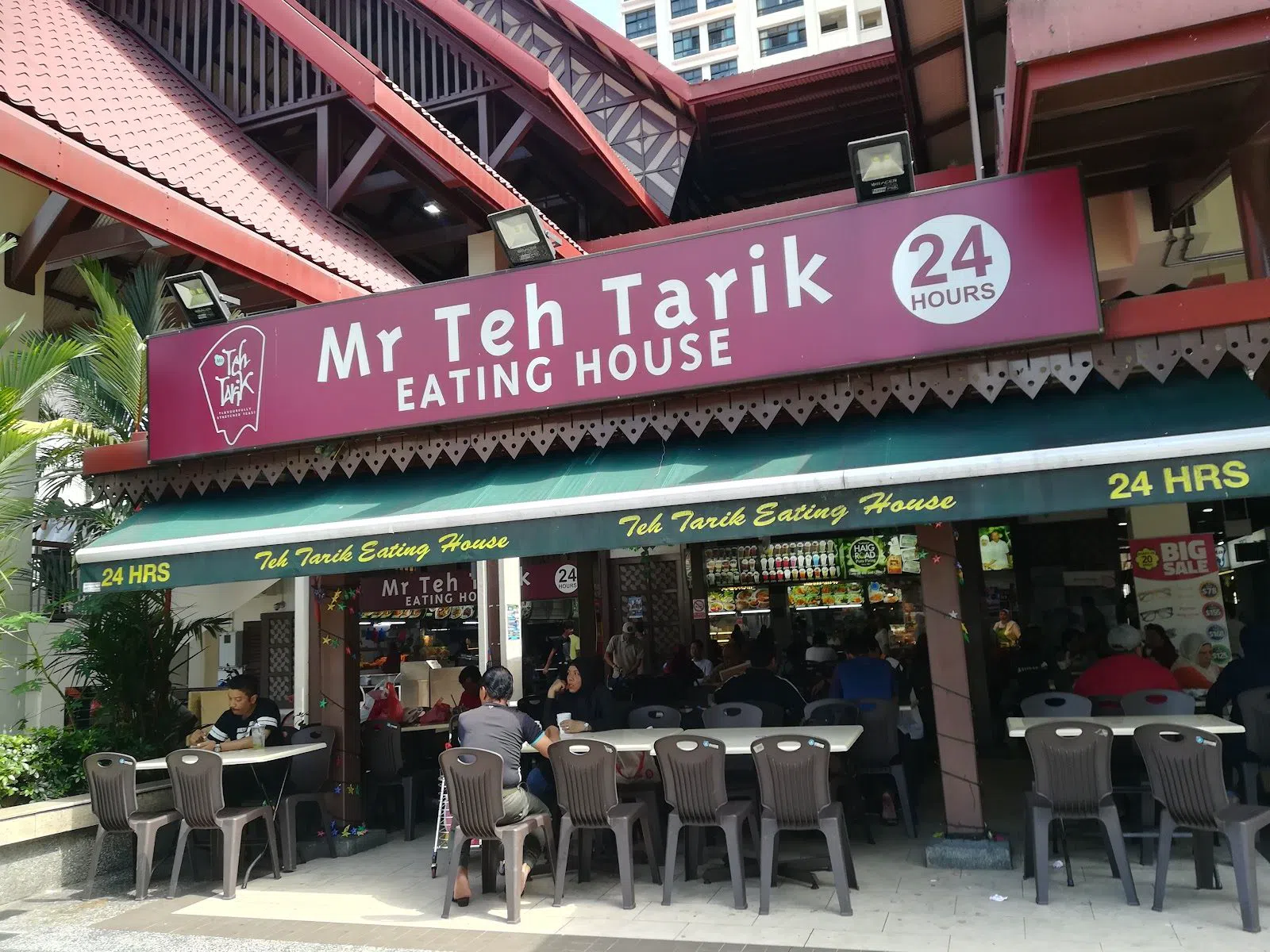
Geylang Serai Market & Food Centre (Paya Lebar MRT) offers the strongest Malay and Indonesian food in the hawker system: soto, nasi padang, satay — dishes that are genuinely hard to find done this well elsewhere. The upstairs hall seats groups readily, it is overwhelmingly halal, and it turns electric during the Ramadan bazaar season. If your group includes Muslim diners, this is the most comfortable pick in the city, culturally immersive rather than curated.
For a change of accent, Golden Mile Food Centre (Nicoll Highway MRT) is Singapore's Thai enclave, its 'Little Thailand'. Come for boat noodles, som tam, and mookata-style grills alongside a surprisingly strong char kway teow and chicken rice. Note that it is a different building from the redeveloped Golden Mile Complex nearby — easy to confuse, worth getting right. The seating is ordinary communal hawker fare that takes a group fine outside peak, with dishes around S$4–9.
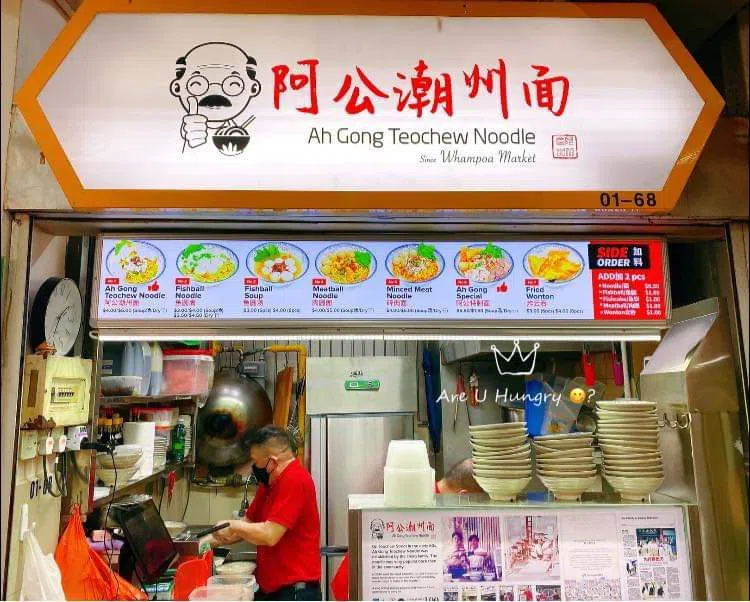
Out west, Adam Road Food Centre (Botanic Gardens MRT) is small and beloved. It is a heavy concentration of halal stalls — Selera Rasa nasi lemak, Michelin-recommended mee soto, mutton soup — which again makes mixed diets easy. It is best for a modest group rather than a crowd, and it pairs naturally with a morning at the UNESCO-listed Botanic Gardens next door. Reckon on S$4–8 a dish and treat it as a food stop on a walk rather than a destination in itself.
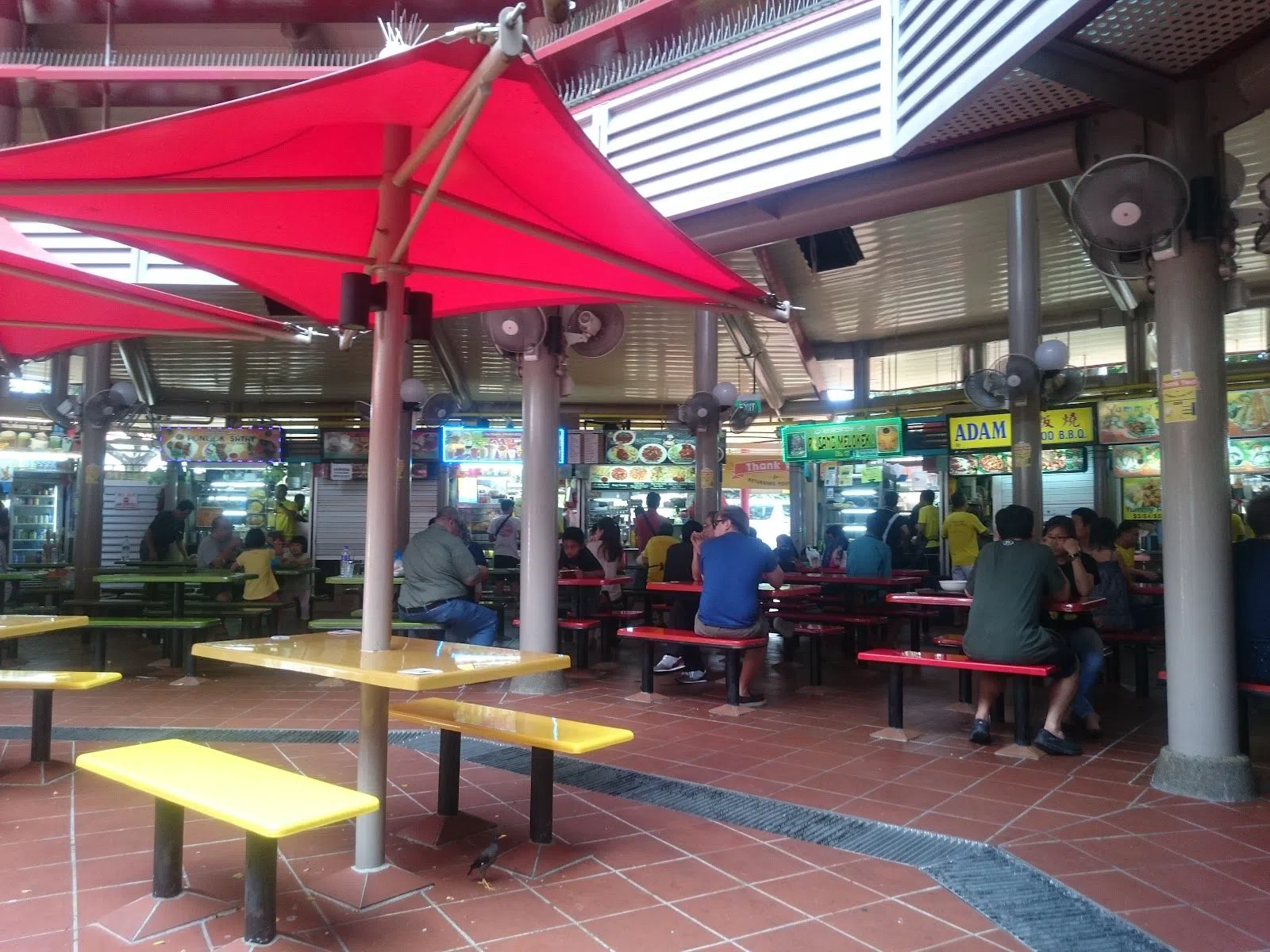
The breakfast centre
Breakfast in Singapore has its own address. Tiong Bahru Market (Tiong Bahru MRT) is the best morning hawker centre, with upstairs communal seating that suits small to mid-sized groups. Come early for Jian Bo chwee kueh, lor mee, and hand-made pau, then walk it off around the low-rise Art Deco estate, one of the city's most photogenic neighbourhoods. It reopened in mid-2025 with upgraded facilities. This is a morning destination and behaves like one; by mid-afternoon the reason to be here has largely gone.
Couples, groups, and the honest picture
A quick sorting, since the seating reality varies more than the food. For two people who want to eat quietly and well, Amoy Street and Hong Lim reward you at off-peak hours, and Tiong Bahru is a gentle morning. For a genuinely large group, Chinatown Complex, Lau Pa Sat's satay street, Old Airport Road, and East Coast Lagoon have the space and the tolerance. For late-night crowds, Newton and Chomp Chomp are built for it, with the standing caveat that you confirm seafood prices at Newton before you commit. Nowhere takes reservations; the tissue packet is your booking system, and splitting up to queue is the norm, not rudeness.
If you are still deciding where to base yourself around all this eating, a Singapore hotel search will show you how close Chinatown, Little India, and the CBD centres actually sit to each other — it is a compact city — and the wider Singapore guide covers what to do between meals.
Practical notes
Transport. Most centres sit on the MRT: Chinatown for Maxwell, Chinatown Complex and Hong Lim; Little India for Tekka; Dakota for Old Airport Road; Newton, Tiong Bahru, Paya Lebar and Botanic Gardens for their namesakes. Two exceptions need a plan: East Coast Lagoon is a taxi or cycle ride out to the coast, and Chomp Chomp in Serangoon Gardens is a short bus or taxi from Serangoon MRT.
Cash. Many stalls now take PayNow and cards, but a meaningful number — especially at Old Airport Road and East Coast Lagoon — still prefer cash, and queues move faster when you have small notes ready.
Timing. Weekday lunch, roughly 11.30am to 1.30pm, is peak everywhere near an office district; arrive before or after it if you are more than two people. Tiong Bahru is a morning centre, Chomp Chomp an evening-only one, and Newton runs around the clock.
Budget. A satisfying single dish runs about S$3–8 across most centres, cheapest at Chinatown Complex and dearest where seafood is sold by weight at Newton. Budget S$10–20 a head to graze across two or three stalls, which is the right way to eat in a hawker centre anyway.
Before you go
What does 'chope' mean and is it rude to do it?
'Choping' is Singapore's local practice of reserving a communal seat by placing a packet of tissues on it before you queue. It is completely normal and expected — do it before you join a stall line, not after, and don't move someone else's packet.
Which hawker centre is best for a first-time visitor?
Maxwell Food Centre near Chinatown MRT is the easy default — dense with recognisable classics and walkable from town. Arrive before noon or after 2pm to beat the tourist queue at the chicken rice stall, and split up to queue different stalls if you're in a group.
Where do locals actually eat, away from the tourist crowds?
Old Airport Road Food Centre (Dakota MRT) and Hong Lim Market in Chinatown are strong local picks, along with Amoy Street at off-peak hours. They serve Michelin Bib-level food without the tourist bottlenecks, though many stalls prefer cash.
How much does a meal at a Singapore hawker centre cost in 2026?
A single dish runs roughly S$3–8 at most centres, cheapest at Chinatown Complex and pricier where seafood is sold by weight at Newton. Budget around S$10–20 per person to graze across two or three stalls.
Which hawker centres are halal or Muslim-friendly?
Tekka Centre in Little India (Indian-Muslim), Geylang Serai near Paya Lebar (Malay/Indonesian), and Adam Road near the Botanic Gardens are predominantly halal, making them easy choices for mixed-diet groups.