
The call to prayer carries further than you expect down Bussorah Street at eight in the morning, when the shutters are still down and the only other people out are sweeping their own doorsteps. By noon the same stretch is packed with phones held at arm's length. Kampong Glam is small, twelve minutes to cross on foot, and almost everything that makes a visit good or bad comes down to which of those two versions you arrive for.
What the quarter actually is
This is the old Malay-Arab quarter, laid out in the 1820s around a royal compound and a mosque, and it is still organised that way: a religious and civic core on Muscat Street and Sultan Gate, a textile and perfume trade along Arab Street, and a back lane of bars and small shops at the Beach Road end. Eight or nine streets, all flat, all walkable in sandals.
The fixed point is Masjid Sultan (Muscat Street), whose gold dome you will see from the Bugis MRT exit before you see anything else. Entry is free, and non-Muslim visitors are welcome in set slots only: Saturday to Thursday, 10am to 12pm and 2pm to 4pm, and on Friday just 2.30pm to 4pm. Robes are loaned at the door free of charge but on a first-come basis, so a coachload arriving together will wait. Flash photography and video need permission. Organised school, company or tour groups cannot simply turn up: they email [email protected] at least two months ahead for a presenter-led visit of 30 to 60 minutes, Monday to Thursday between 10am and 12pm. Build the rest of the day around those hours rather than hoping to slot the mosque in later.

The one thing here that is genuinely new
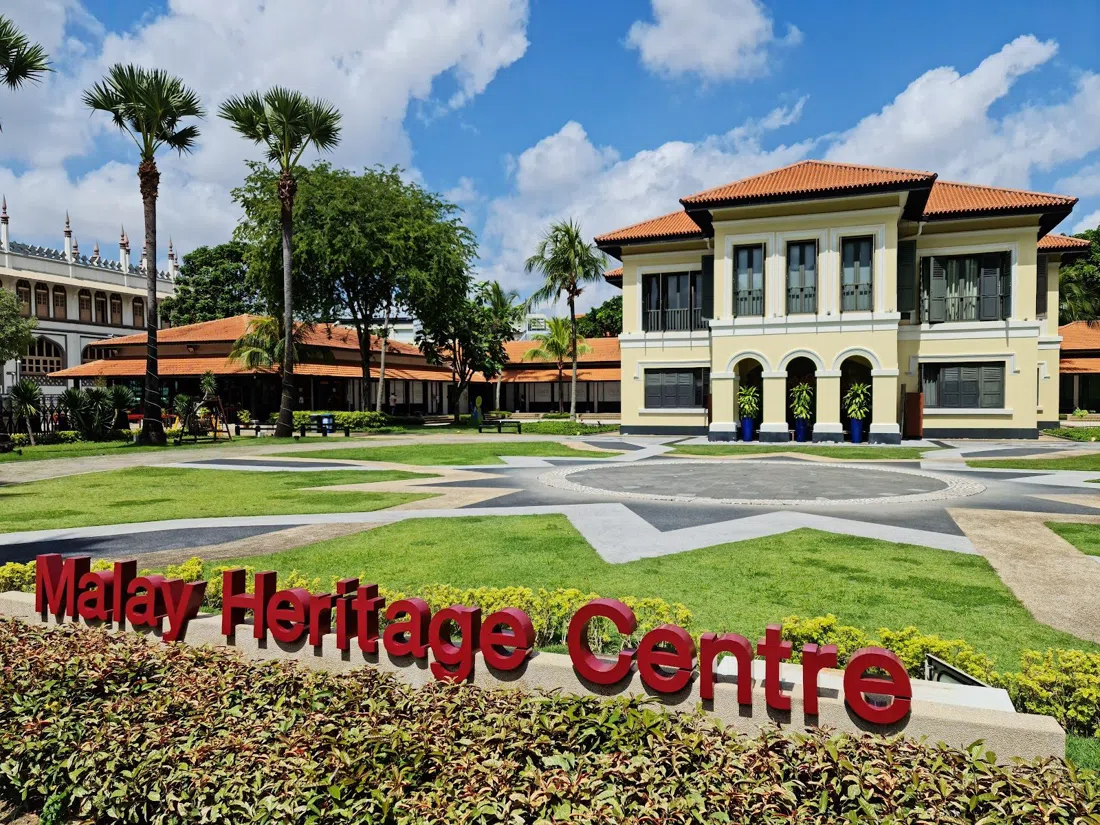
The Malay Heritage Centre at Istana Kampong Gelam (Sultan Gate) reopened on 25 April 2026 after a rebuild lasting three and a half years, and it is the single biggest change to the quarter since 2022. Six new permanent galleries, 279 artefacts, and more than 80% of them never displayed before. Entry is free for Singaporeans and permanent residents; tourists pay S$10 for an adult and S$8 for a senior or student. It opens Tuesday to Sunday, 10am to 6pm, with last entry at 5.30pm, and it is closed on Mondays, which makes it the most common wasted trip in the quarter. Entry is timed and there are guided gallery tours, so anything larger than a family should book ahead. Allow 60 to 90 minutes; the galleries are dense with text and the air conditioning makes it the natural place to be when the afternoon heat peaks.
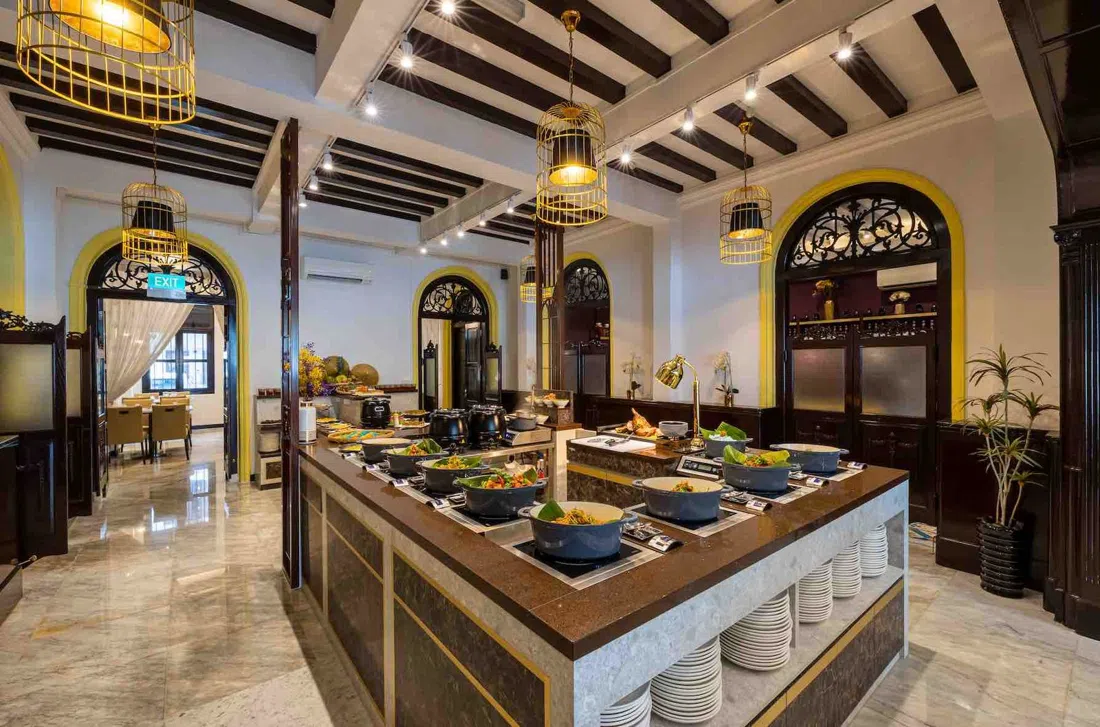
Next door, Permata at Gedung Kuning (Sultan Gate) is the only way to get inside the yellow mansion that sits in the same compound. It is a sit-down buffet rather than a walk-in café, roughly S$50 to S$70 a head, with regular 1-for-1 adult promotions, booked by phone or online. Through September and October 2026 it is running rotating regional menus built on Kelantan, Terengganu and Pahang dishes. The mansion has private and function rooms, which makes it the one address here genuinely built for a group of twelve.
Haji Lane before the shutters go up
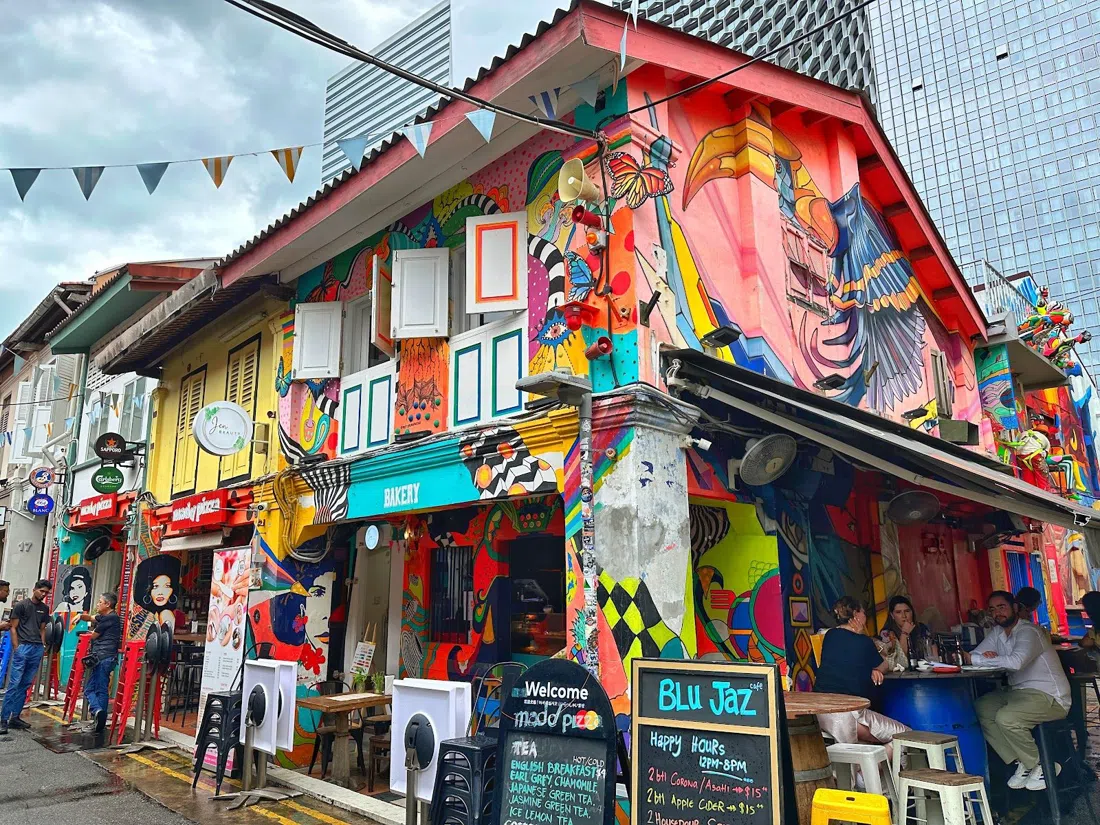
Haji Lane (off Beach Road) is the photograph everyone comes for and the easiest thing to get wrong. It is a public street, open all hours, with no door policy and no fee, but the shops only lift their shutters around 11am to 12pm. Before 10am it is empty and the murals are clean of people; by early afternoon on a weekend it is shoulder to shoulder and too narrow for anyone to stand still in. If you are more than four, split up and meet at the Beach Road end rather than clotting the lane. After dark it stops being retail and becomes bars and live music.
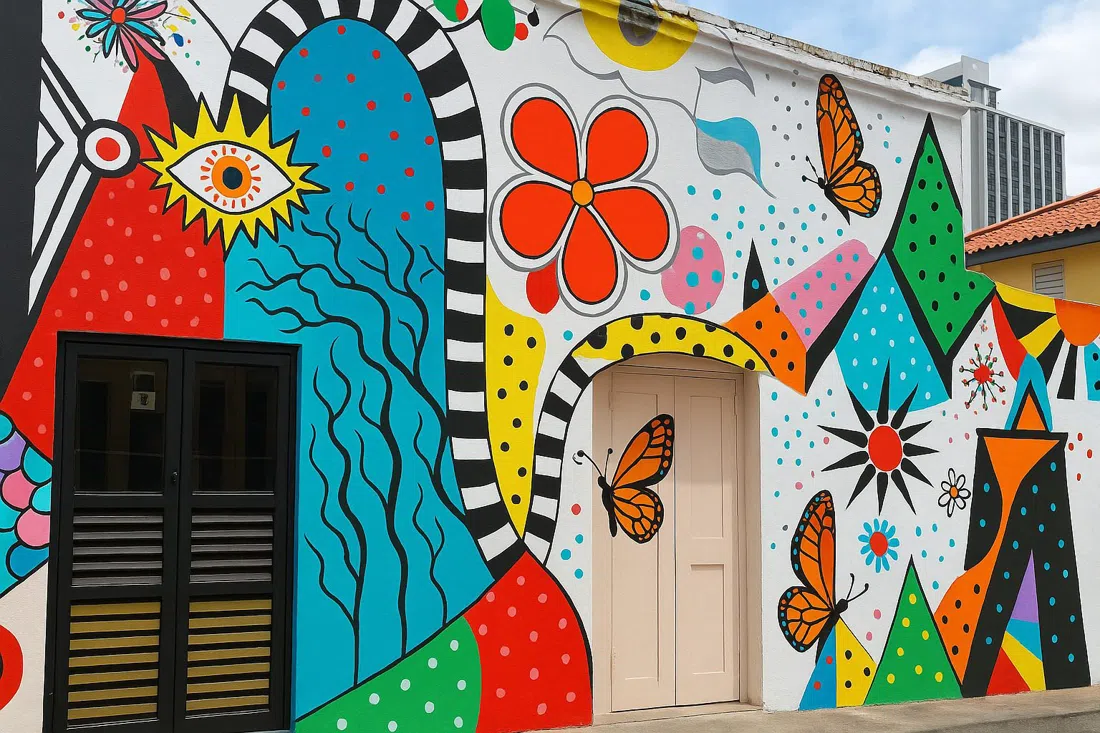
When the lane is jammed, walk two minutes to Gelam Gallery (the back lanes off Muscat Street), Singapore's first outdoor gallery: work by more than 30 artists from Singapore, Malaysia, Myanmar, France and the United Kingdom bolted straight onto the alley walls. It is free, unstaffed and open around the clock, and single-file in places, so it suits two or three people rather than a tour party.
The shops still run by the families who started them
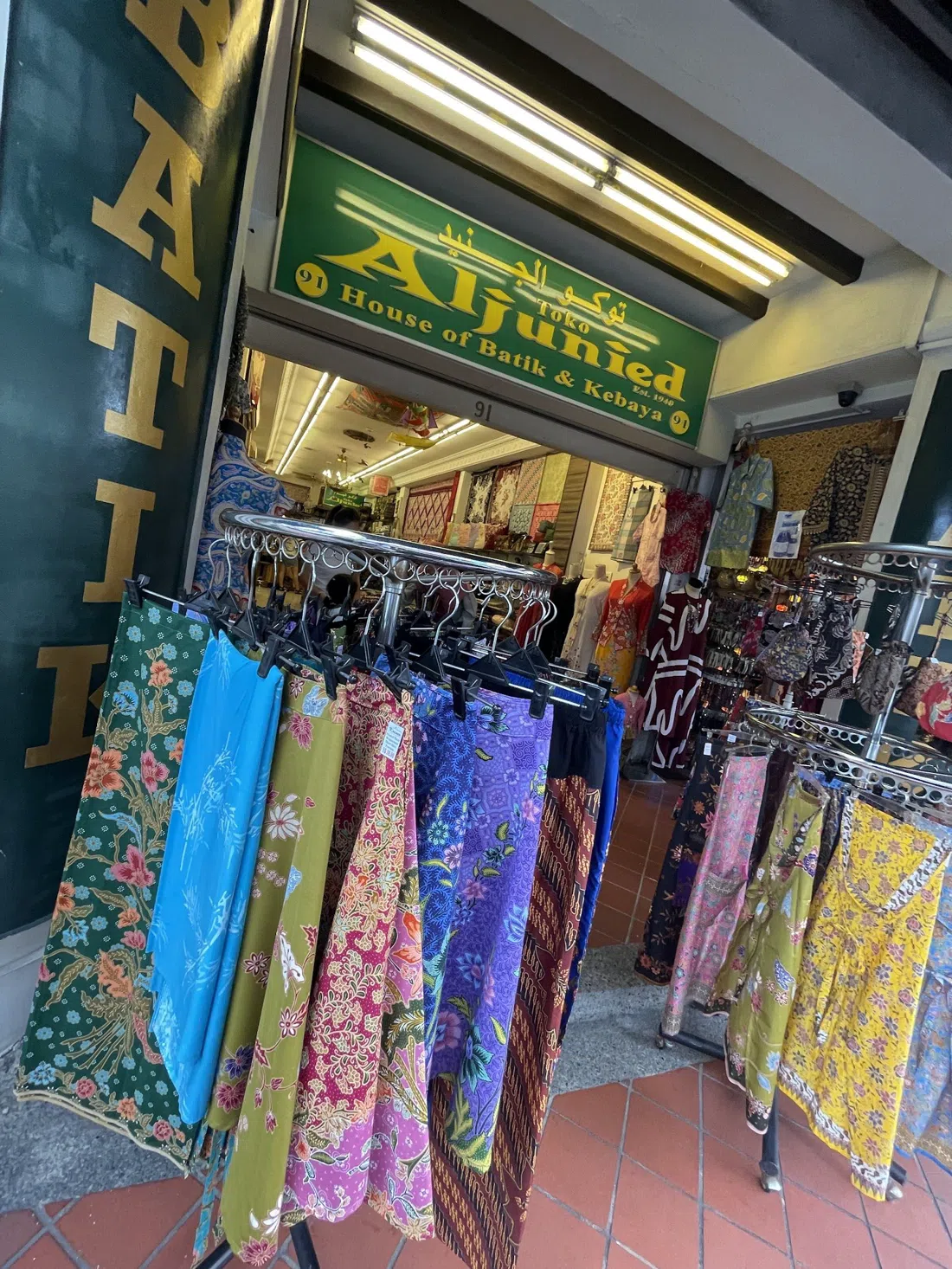
Arab Street's trade is textiles and scent, and a handful of the originals are still trading. Toko Aljunied (Arab Street) has been open since 1940, is run by one of the city's old Arab families and sits on the SG Heritage Business Registry. Sarongs and batik run from roughly S$20 to S$150 and up, browsing is free, and the family will talk you through the cloth, though the floor is narrow and more than six people at once is a squeeze.
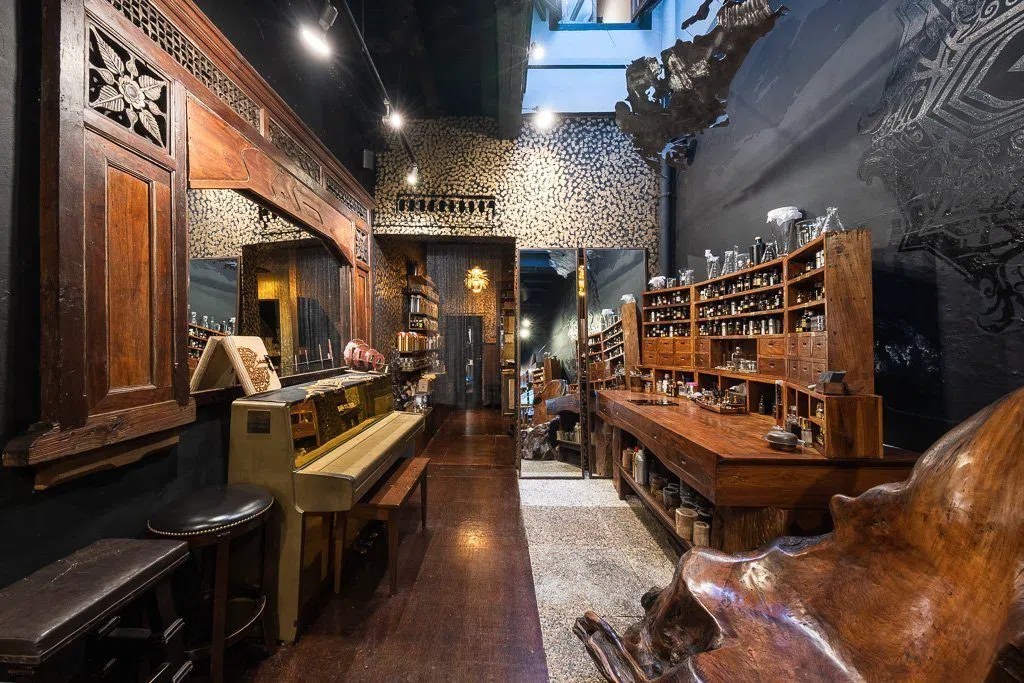
Sifr Aromatics (Arab Street) was founded in 2010 by the grandson of a traditional attar trader, and it is the one place where you sit down and have a scent built for you. Ready-made oils start around S$40; a bespoke blending session is from about S$150 and is by appointment, with only two or three people at the bench at a time. Walk-in hours are roughly 10am to 5pm, with later slots booked ahead, so check before turning up in the evening.
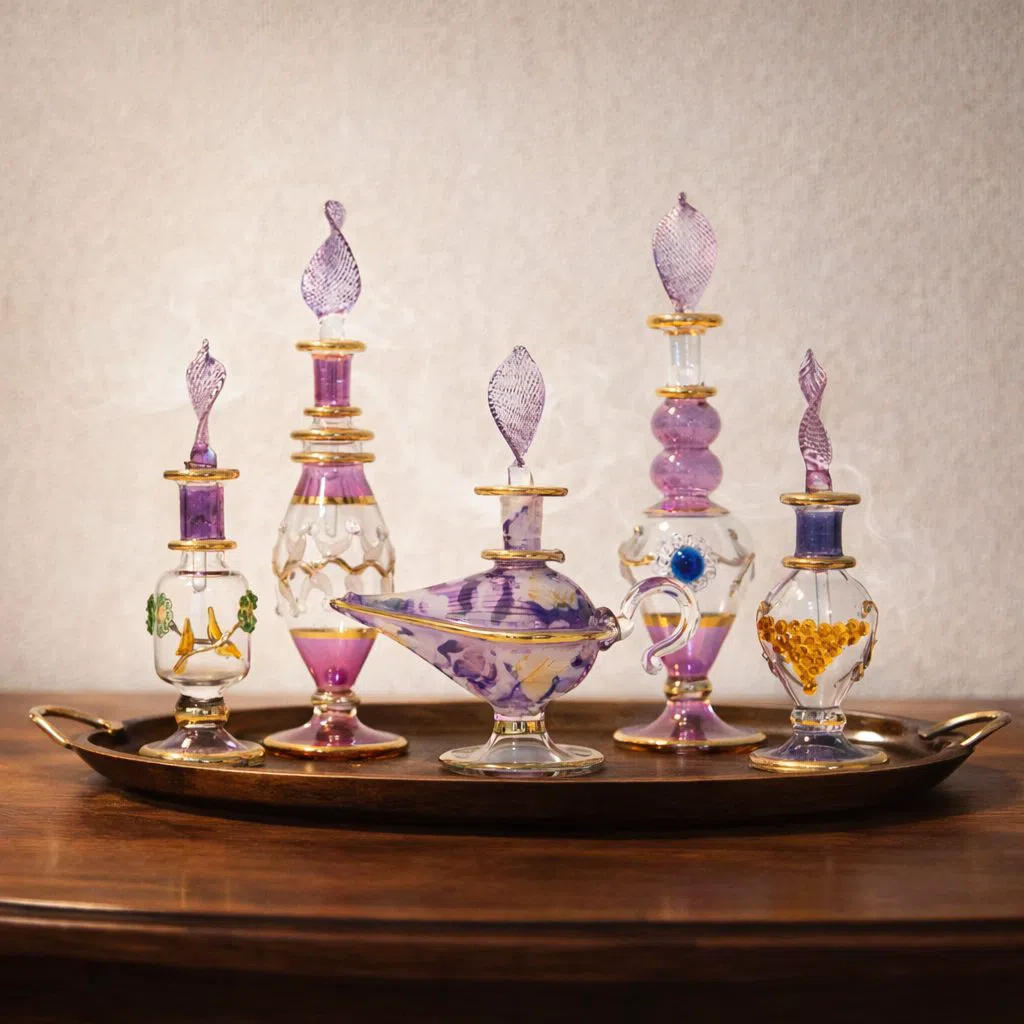
For the cheapest honest souvenir in the quarter, Jamal Kazura Aromatics (North Bridge Road and Bussorah Street) has been selling alcohol-free oil-based attar since 1933 across three shopfronts: 728 North Bridge Road, and 21 and 39 Bussorah Street. Small bottles are around S$10 to S$30, decorative bottles cost extra, and it is counter service with no bookings, so a group should go in waves. Wardah Books (Bussorah Street) carries over 4,000 English-language titles on Islam, regional history, philosophy and fiction, priced roughly S$20 to S$60. It is the best late stop in the quarter (Monday to Thursday 10am to 9pm, Friday 10am to 10pm, Saturday 9am to 10pm, Sunday 9am to 9pm), and it closes for Friday prayers between 12.45pm and 2pm. It is a quiet shop, and large parties are not welcome.

Eating well without queueing twice
Hjh Maimunah Restaurant (Jalan Pisang) is the most reliable lunch here: nasi padang, point-and-pick at the counter, roughly S$8 to S$15 a head, open since 1992 and a repeat Michelin Bib Gourmand holder. Two caveats: the office queue runs down the lane between 12pm and 1.30pm, and it is shut on Sundays (otherwise Monday to Saturday, 7.30am to 6.30pm). Tables are shared and the queue is single file, so with more than four people go at 11.30am or after 2pm.
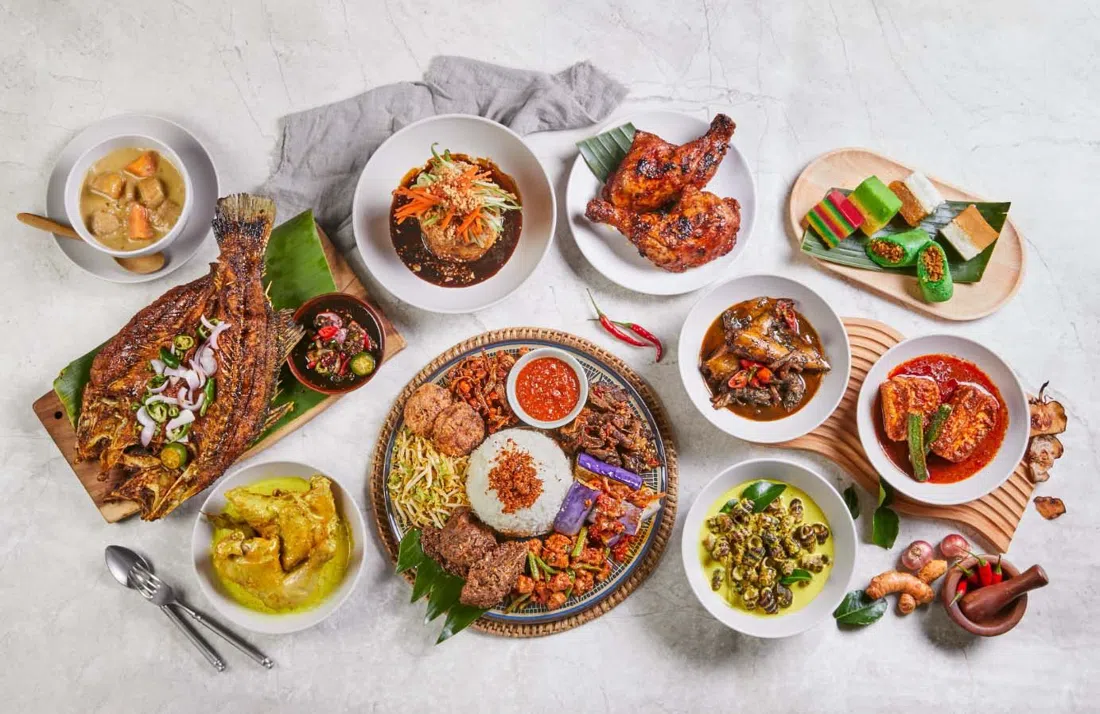
Singapore Zam Zam Restaurant (North Bridge Road) has been trading since 1908 and opens 7am to 11pm, which makes it the fallback when everything else keeps office hours. Murtabak is roughly S$8 to S$18 depending on size and filling; order one between two, because the portions are larger than they look. Walk-in only, no reservations, fast turnover, and a group will be split across separate tables upstairs.
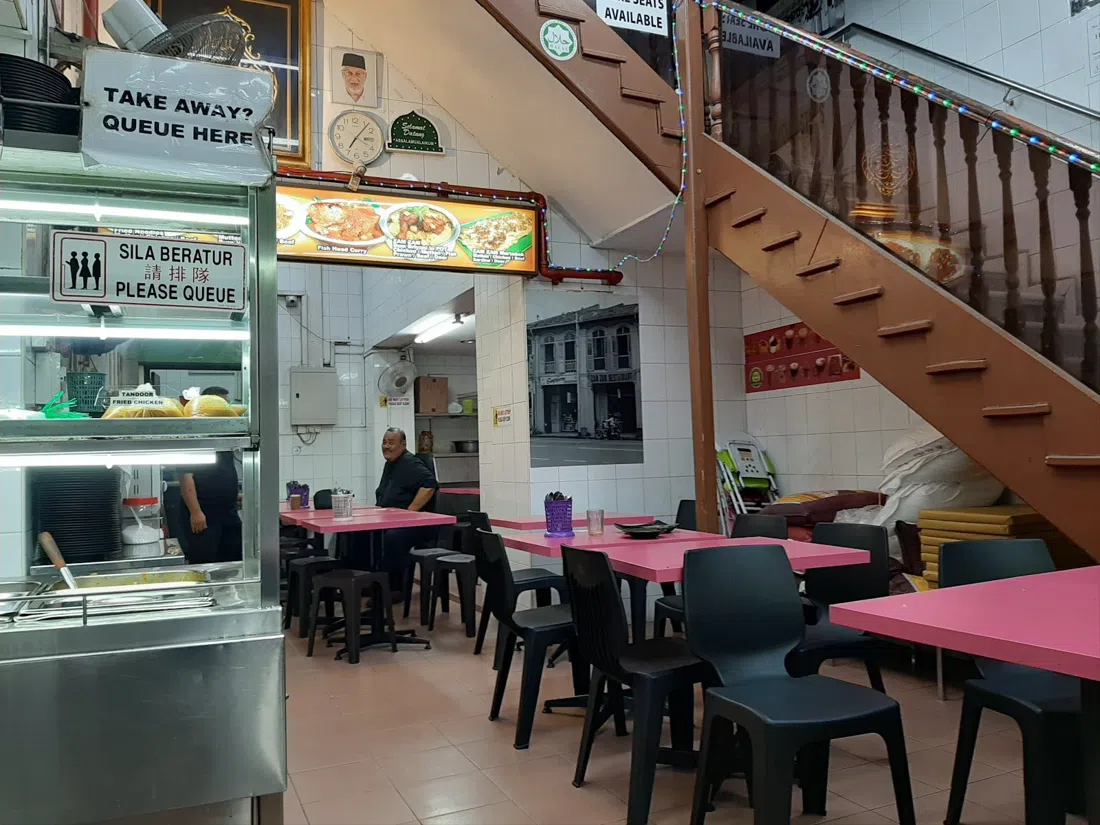
Bhai Sarbat (Jalan Pisang) has been pulling tea since the late 1970s, with more than a hundred tea, coffee and juice combinations at S$2 to S$4 a cup, and it is open 6.30am to 1am, the only address that covers both the pre-crowd start and the post-bar wind-down. Seating is stools and kerb. For dinner, The Coconut Club (Beach Road) does Bib Gourmand nasi lemak in a restored school building at the quarter's southern edge, roughly S$25 to S$40 a head. It takes reservations and seats larger parties, but a card is held and late cancellations are charged S$30 to S$40 a head, so confirm your numbers. Last seating is 9.15pm and it closes on the first Monday of each month.

After the shutters come down
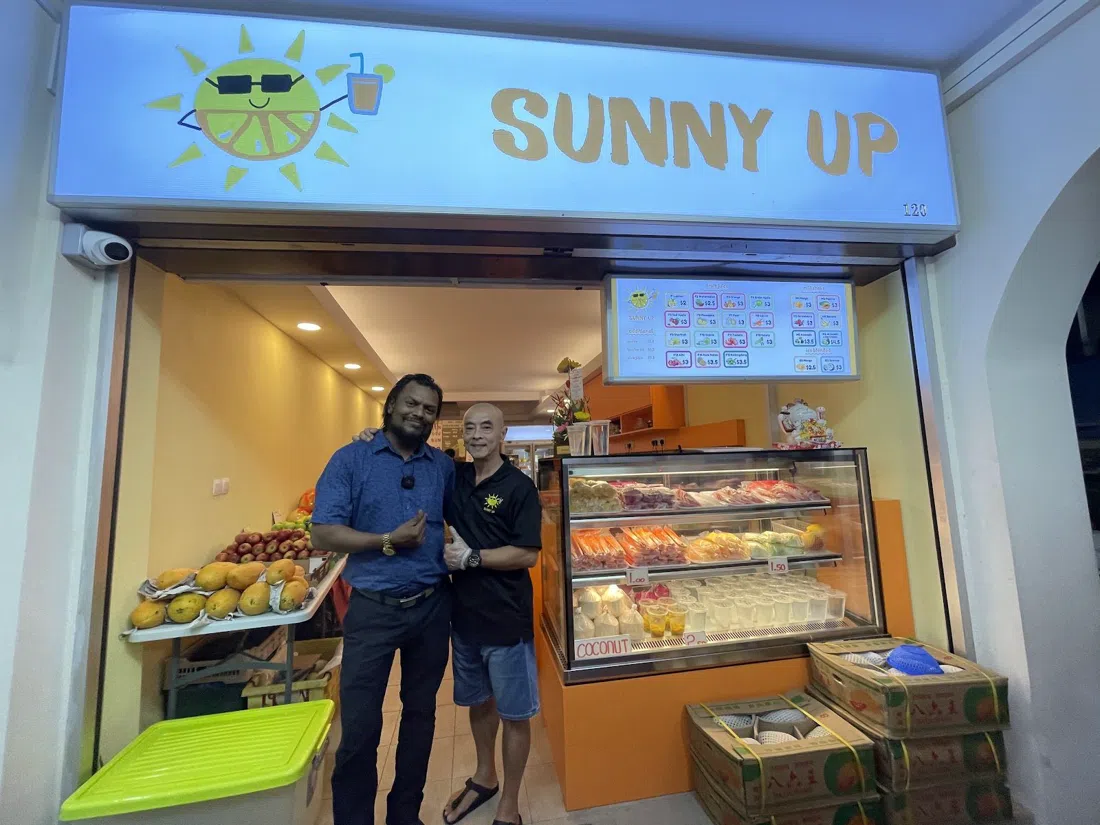
Good Luck (Haji Lane) is the rare address here that is useful before noon: it opens at 8am as a coffee bar, then runs 12 rotating taps of beer from Singapore microbreweries, as it has since 2016 under its slightly longer former name. Pints are roughly S$12 to S$18, snacks S$10 to S$25. The shophouse is small, standing room suits a group, and it takes online bookings for itself and its sister eating house.
Bar Stories (Haji Lane) is the best after-dark stop once the shops have shut. There is no menu; you describe what you like and the bartender builds it. Cocktails are around S$22 to S$28, it runs Tuesday to Sunday 5.30pm to 10.30pm and closes Mondays, and the upstairs room is intimate enough that reservations are strongly advised and effectively essential at weekends. It is not a venue for eight people.
The ten-minute walk almost nobody makes
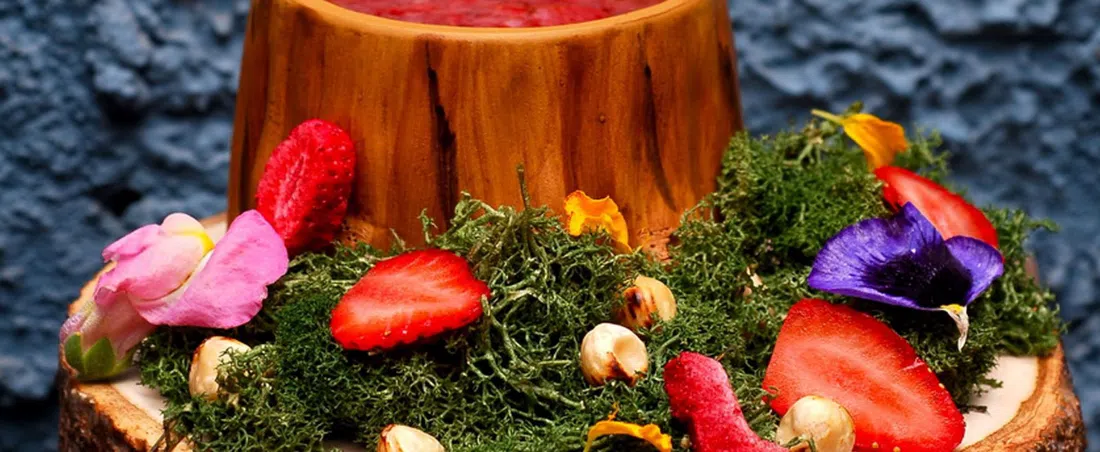
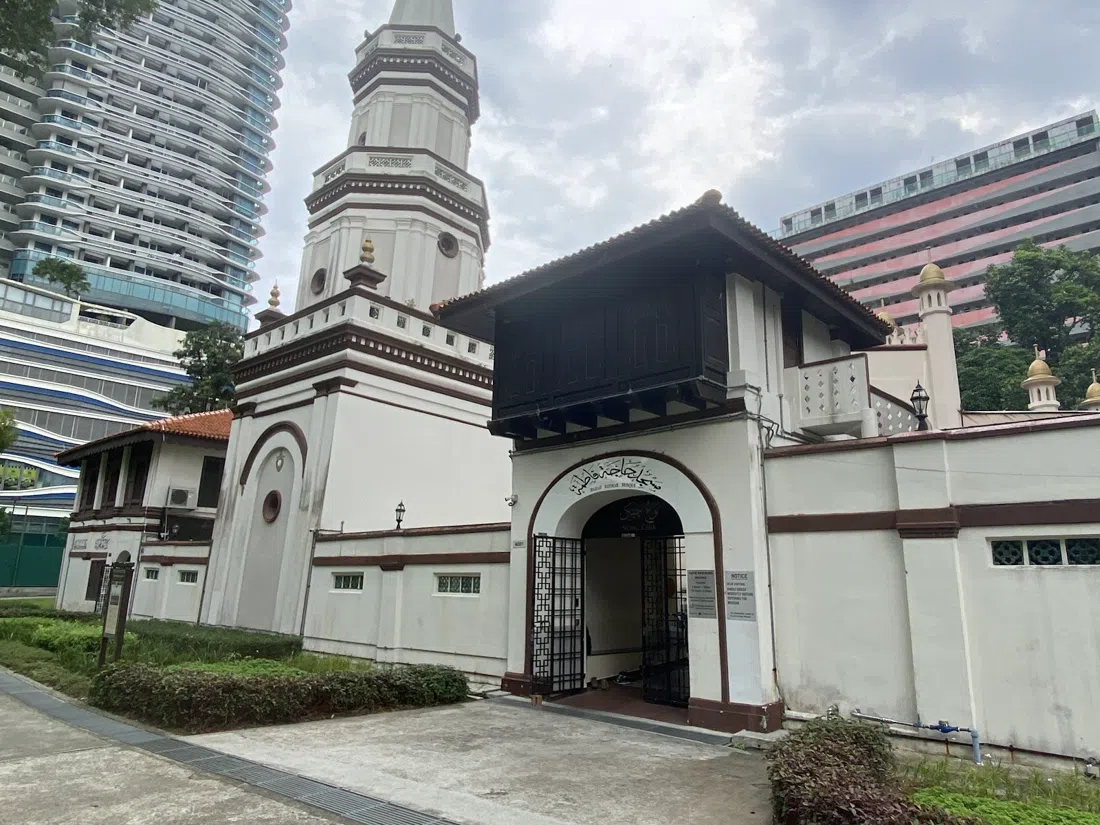
From the Beach Road end it is ten minutes on foot to Hajjah Fatimah Mosque (Beach Road), built in 1845-46 for a wealthy Malay businesswoman and gazetted a national monument in 1973. Its minaret settled unevenly on sandy ground and leans, which earned it the Leaning Tower of Singapore nickname, and it is the one genuinely strange building in the area. Walk-ins are welcome outside prayer times, shoes come off, dress modestly, and small groups are fine; call ahead for anything large. It is almost always empty, which after Haji Lane at 2pm is the point.
Walking it yourself or paying for a guide
Nothing here needs a ticket except the heritage centre. A full self-guided day costs you S$10 of admission and whatever you eat, which is why most people do it alone and why that is the right default if you mainly want the shops, the scent counters and lunch.
A guided option is attached to this page, and it is worth understanding what you are buying. These are half-day circuits, commonly by bicycle, that thread the quarter together with other parts of the city and join up the history as you ride. They run seven days a week, and prices start from 68 USD per person. Across the bookable tours at this attraction there are 11,507 traveller reviews, with the top-rated one holding 5.0 out of 5 from 6,538 reviews. The quality is not in question; the question is whether you want a four-hour framed route or three unhurried hours of your own. If it is your first day in the city and you want the geography to make sense, book ahead. If Kampong Glam is a half-day on an itinerary you already have, walk it.
Best time to go in October 2026
October sits in the inter-monsoon period: days around 30-32°C, humidity high from morning, and short violent afternoon thunderstorms that are common rather than exceptional. That dictates the shape of the day. Arrive between 8am and 9am for tea at the kerb, walk Haji Lane and the back-lane murals while they are empty, be at the mosque when it opens at 10am, eat early at 11.30am, and keep the museum, the bookshop and the textile and perfume shops for the 2pm to 5pm window when the sky usually breaks.
Pick your day carefully. Monday is the weakest: the heritage centre is closed, the cocktail bar is closed, and on the first Monday of the month the nasi lemak restaurant is too. Sunday loses the nasi padang lunch. Friday morning loses the mosque, which only admits visitors from 2.30pm. Tuesday to Thursday gets you everything open at once, and the lane is markedly calmer than on a weekend afternoon. For context on the rest of the city in this window, the Singapore guide covers what pairs well with a Kampong Glam morning.
Is it worth it
Yes, with a condition: it is worth a deliberate half-day rather than a drive-through. Arrive at noon on a Saturday and you will see a congested shopping lane and conclude it is overrated. Arrive at nine on a Wednesday and you get an empty mural alley, a working mosque at its quietest, 279 artefacts in galleries that were shut for three and a half years, batik explained by the family that sells it, and lunch for S$12.
It suits couples and pairs best, solo visitors very well, and families with older children. It is the hardest quarter in the city for a group of eight or more: the lanes are single-file, the perfume shops hold a handful of people, the bookshop discourages large parties, and the one cocktail bar actively does not want you. If you are travelling in numbers, the heritage mansion buffet and the nasi lemak restaurant are the two places built to take you.
Practical notes for October 2026
Bugis MRT, on the East West and Downtown lines, is a five-minute walk to the mosque; Nicoll Highway on the Circle line is closer to the Beach Road end and the leaning minaret. Lavender works if you are approaching from the north. Nothing in the quarter justifies a taxi between stops. If you want to be inside the quarter for the 8am start, the shophouse conversions and capsule hotels along its edges are the walkable option, and you can compare rates through the Singapore hotel search.
Cards and QR payment are near-universal, but carry S$20-30 in small notes for the tea stall, the attar counters and anywhere with a stool instead of a chair. Budget roughly S$35-50 a head for a self-guided day with lunch and a souvenir bottle of oil, S$80-120 if you add the mansion buffet or a Bib Gourmand dinner, and S$150-plus if you sit down for a bespoke scent. Cover shoulders and knees for both mosques; robes are loaned at the larger one, but not in unlimited numbers. Allow three hours minimum, five to do it properly, and carry water: the shade in these lanes is thinner than the photographs suggest.