The Singapore issue
One Hundred and Sixty-Two Years: Singapore's Botanic Gardens and the Rainforest the City Forgot to Build On
How a free garden in Tanglin came to hold a slice of primary rainforest older than Singapore itself — and the best morning in the city built around it.

By Ingrid VogelThe city read block by block
There is a six-hectare patch of forest a fifteen-minute walk from the shopping crowds of Orchard Road where some of the trees were already old when Stamford Raffles stepped ashore in 1819. The city grew up, out and skyward around it, and yet this fragment of the jungle that once covered the whole island was never cleared. Arrive at seven in the morning, when the air is still cool and the joggers and tai chi groups have the paths mostly to themselves, and you understand why Singapore protected it: this is the last place on the island where you can stand inside the landscape that was here before there was a Singapore at all.
The rainforest the city forgot to build on
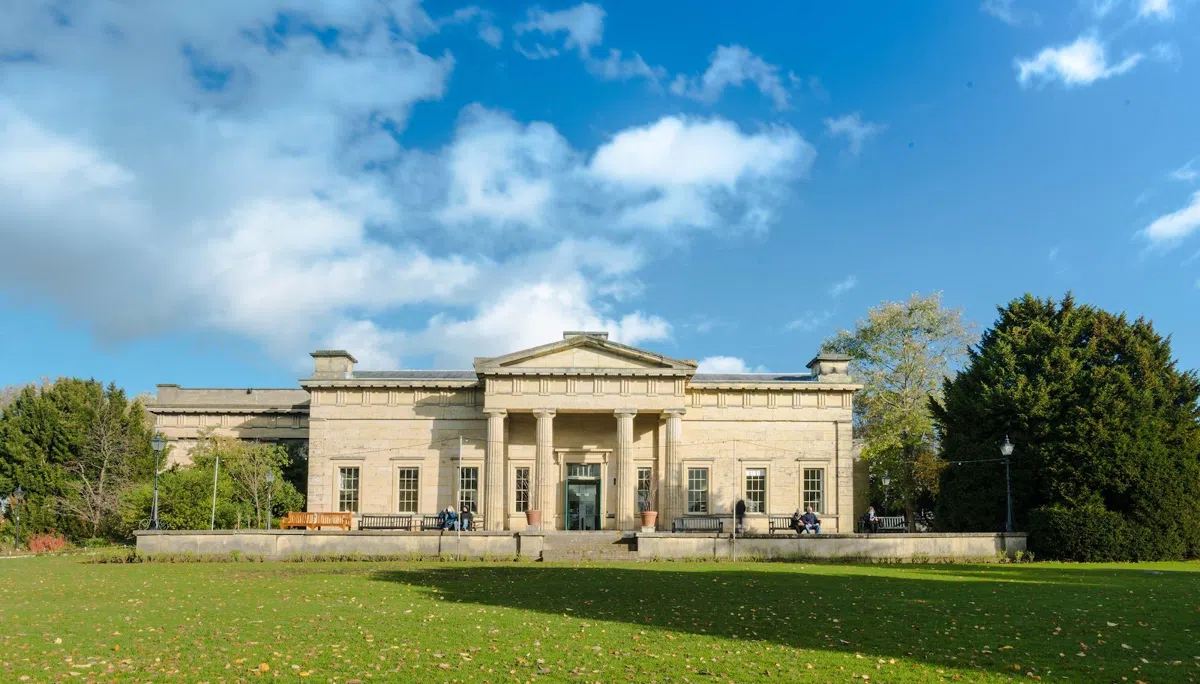
Singapore Botanic Gardens (Tanglin, alongside Orchard) is the reason to plan a morning rather than an hour. It is Asia's first UNESCO World Heritage site and the only botanic garden on earth that holds a preserved slice of primary rainforest — genuine old-growth, not replanted parkland. That distinction matters more than the plaque suggests. Most of the great botanical gardens are collections of things brought in from elsewhere; here, the collection grew up around a piece of the original forest that simply never went under the axe.
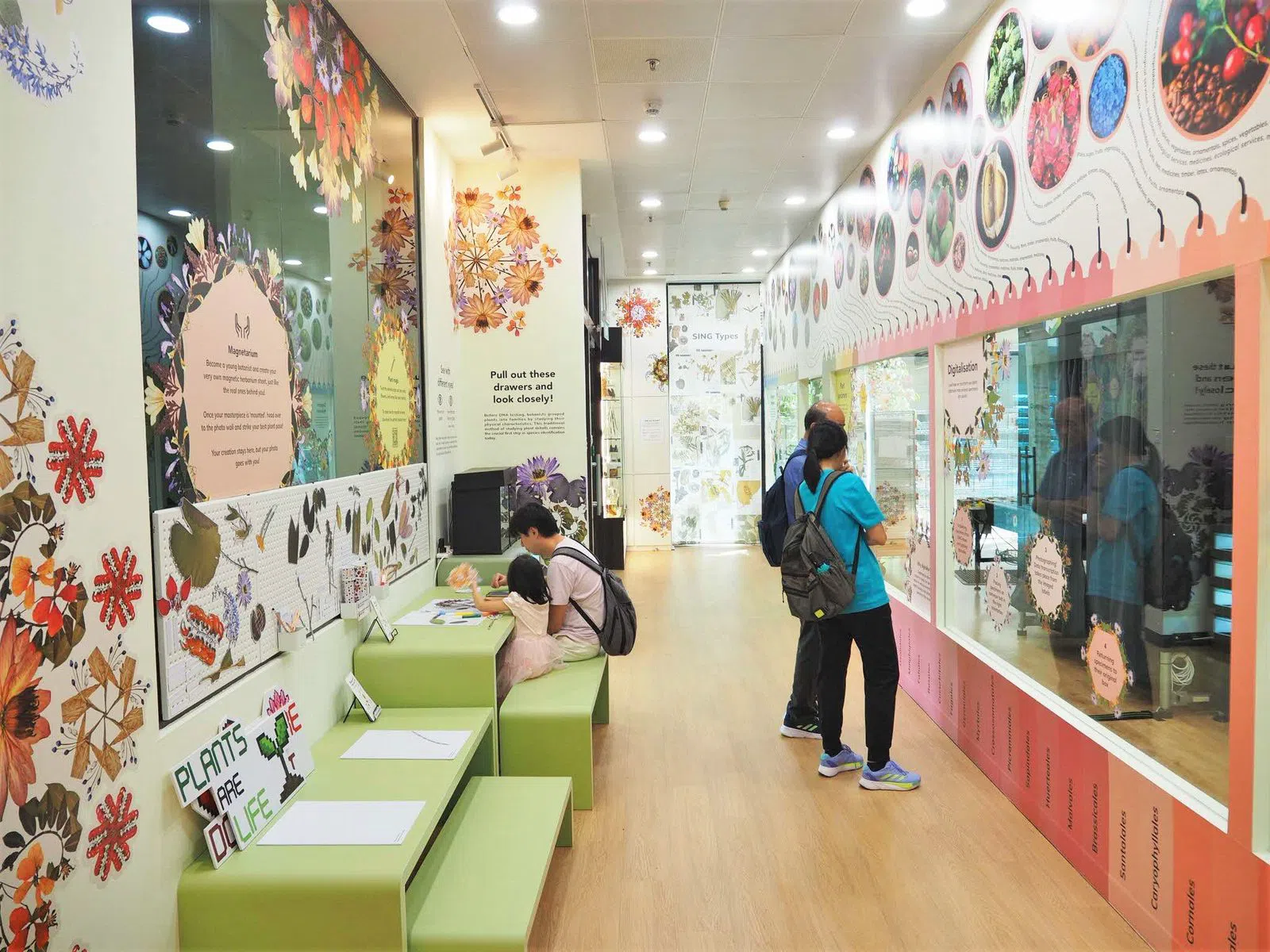
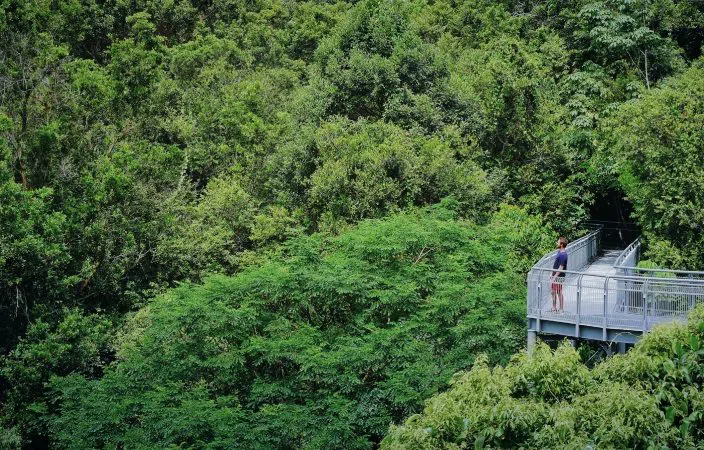
The Rainforest Trail is a short raised boardwalk loop, and it is easy to underestimate. Walk it slowly. The canopy closes overhead, the temperature drops a degree or two, and the noise of the city genuinely disappears. You are looking at towering dipterocarps and a tangle of lianas and epiphytes that represents more plant species in a few hectares than some countries hold across their whole territory. Do this stretch first, before the day warms up, because the forest is at its most alive — birdsong, the occasional flash of a monitor lizard — in the first hour of light.
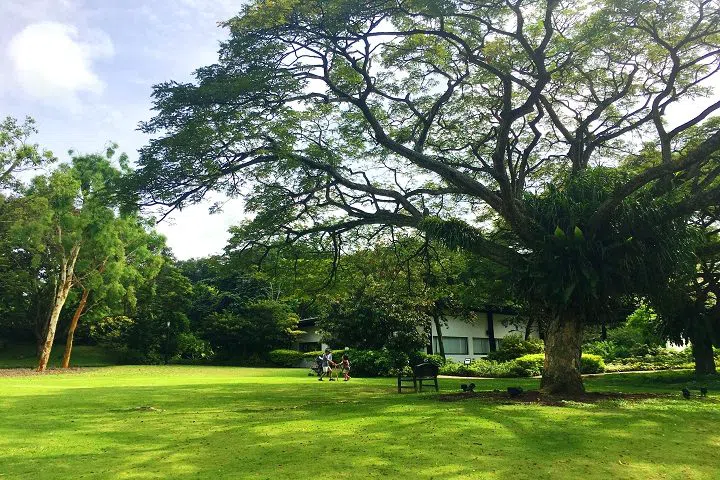
From the forest the Gardens open into their more composed set pieces. The Ginger Garden is the lushest corner, a humid hollow of gingers, heliconias and their relatives arranged around a small waterfall — greenhouse density in the open air. Swan Lake, the oldest of the Gardens' ornamental lakes, sits near the Tanglin gate and is the classic slow-loop: black swans, a small island of fan palms, benches that catch the early shade. None of this costs anything. The grounds are free and open daily from 5am to midnight, there is no booking, and organised groups of any size can arrange a guided heritage walk in advance.
There is also a hard piece of economic history embedded in these lawns. Rubber seeds cultivated here in the late nineteenth century — coaxed, propagated and taught to bleed latex without dying — launched the rubber industry that would remake the economy of the whole Malay peninsula. The tyres of the twentieth century trace back, in part, to horticultural experiments conducted on this quiet hill. It is worth knowing as you walk: this was never only an ornamental garden, it was a working scientific institution, and it still is.
Plan your Singapore trip
Live prices from our booking partners.
Free cancellation on many rooms. We may earn a commission when you book.
The orchid house at the centre
Inside the Gardens, and the only part of them that charges, is the National Orchid Garden (within the Botanic Gardens, near the central ridge). The ticket is deliberately gentle: SGD 5 for adults, SGD 1 for students and seniors, free for under-12s, open 8:30am to 7pm daily. For that you get more than 1,000 species and over 2,000 hybrids banked across a terraced hillside — the largest display of tropical orchids most visitors will ever stand in.
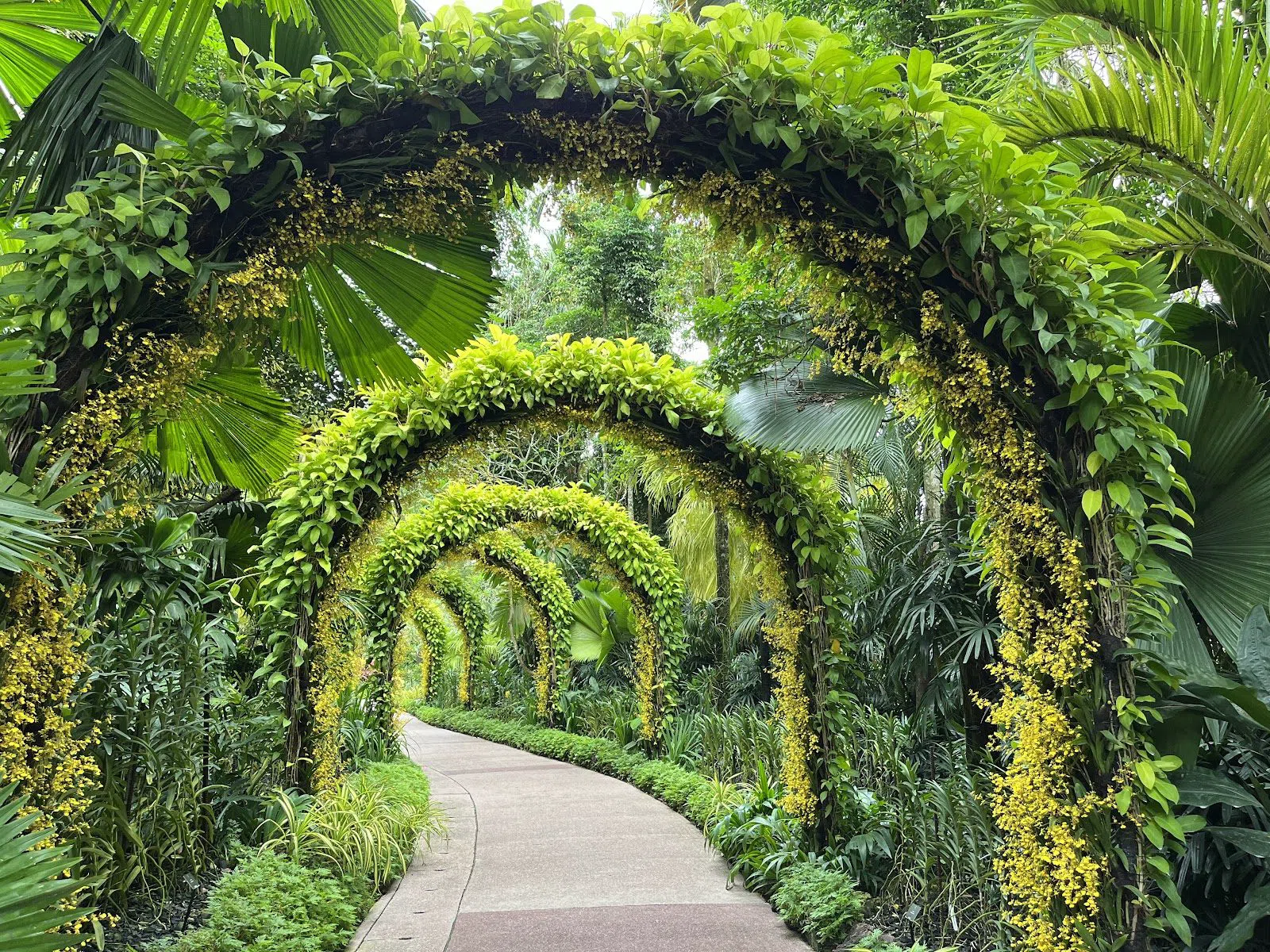
The curiosity worth seeking out is the VIP orchid collection: hybrids named for visiting heads of state, royalty and celebrities as a piece of Singapore's flower diplomacy. It is a genuinely charming corner, half botany and half diplomatic guest-book, and it rewards a slow read of the little name-plaques.
Be honest with yourself about timing here, because this is the single busiest square of the entire Gardens. If you want it near-empty, be at the gate right at 8:30am opening; by mid-morning the coach groups arrive and the narrow terraced paths fill. That gives you a natural rhythm for the visit: the free rainforest and lakes at first light, then the orchids the moment they open, then out before the heat and the crowds peak together.
The seven o'clock hour
The best hour in the Gardens is not a secret, but it is under-used by visitors: seven in the morning. The city is still cool, the light is low and gold through the rain trees, and the paths belong to the people who use the Gardens as part of daily life — runners, stretching classes, older residents walking in slow companionable groups. It is the least touristic and most rewarding version of the place.
If you can time your visit to a weekend, look for the free morning concerts on the Palm Valley lawn, the Gardens' natural grass amphitheatre. These open-air performances are free, unticketed and gloriously informal — people bring mats and coffee and sit on the slope. They are scheduled rather than daily, so check the Gardens' programme before you build a morning around one, but catching a symphony drift across the palms in the early cool is the kind of thing that makes a garden feel like a living civic space rather than an attraction.
Getting here is simple, which is part of why an early start is realistic. Singapore Botanic Gardens has its own MRT station of that name on the Downtown and Circle lines, which opens onto the Bukit Timah gate at the rainforest end; Napier station on the Thomson–East Coast Line sits near the Tanglin gate by Swan Lake. Enter at Bukit Timah for the forest-first walk, exit at Tanglin, and you have crossed the whole Gardens in a logical line.
The engineered counterpoint
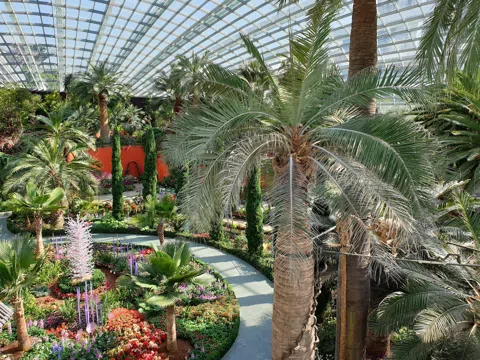
If the Botanic Gardens preserve an old rainforest, Gardens by the Bay (Marina Bay, by the waterfront) engineers a new one. It is the deliberate modern counterweight and worth pairing on the same trip precisely because the contrast is so stark. The outdoor gardens and the Supertree grove are free to wander; the two climate-controlled conservatories are ticketed, roughly SGD 32 to 53 for a two-conservatory ticket, open 9am to 9pm. The place is fully wheelchair accessible and built frankly for large tour groups — the opposite of the Botanic Gardens' narrow orchid terraces in every way.
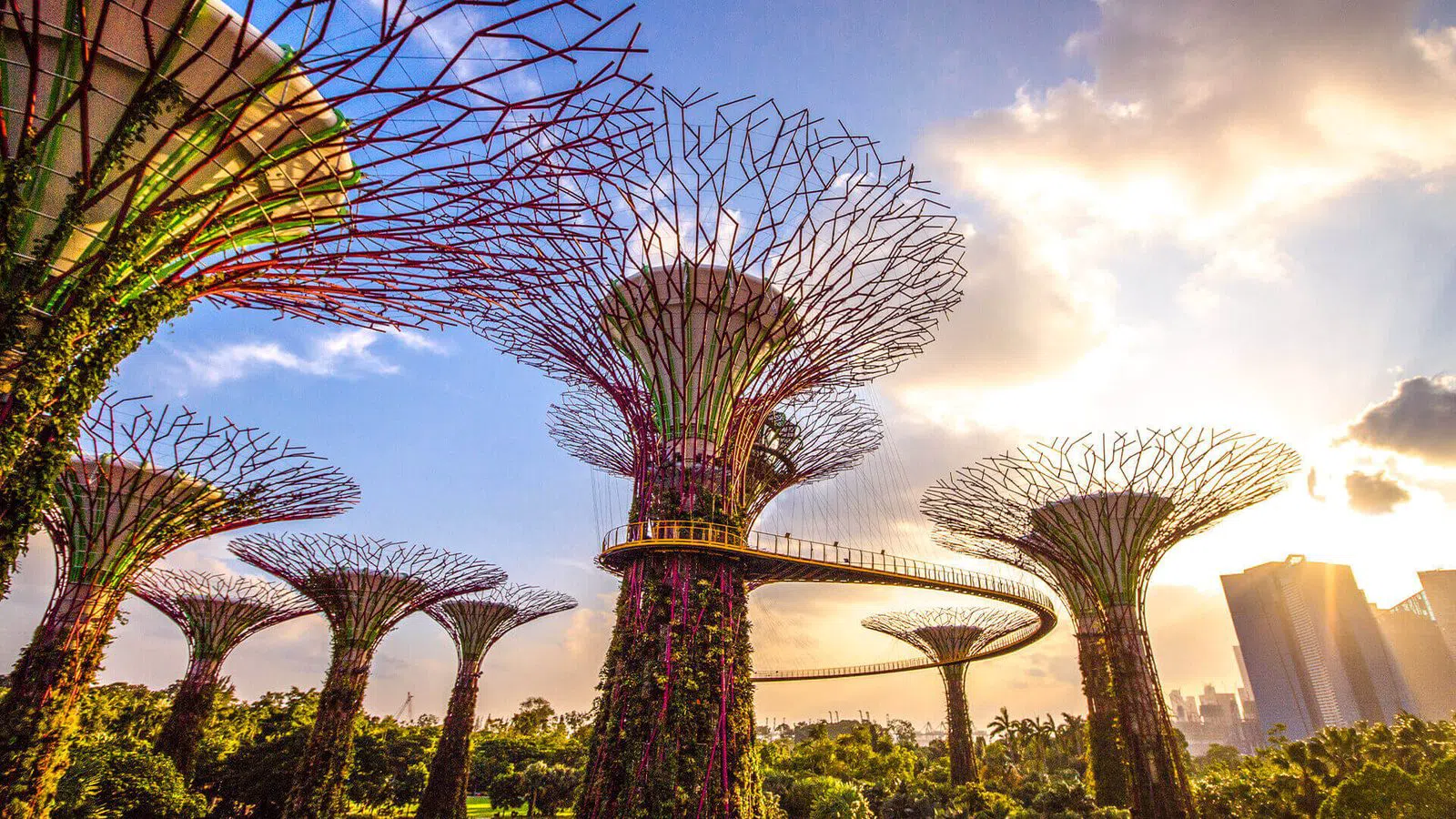
The set-piece is the nightly Garden Rhapsody, a free light-and-sound show among the Supertrees after dark. It is unashamed spectacle, and it works. Because Gardens by the Bay runs until 9pm and the Botanic Gardens are a morning affair, the two slot neatly into opposite ends of a single day rather than competing.
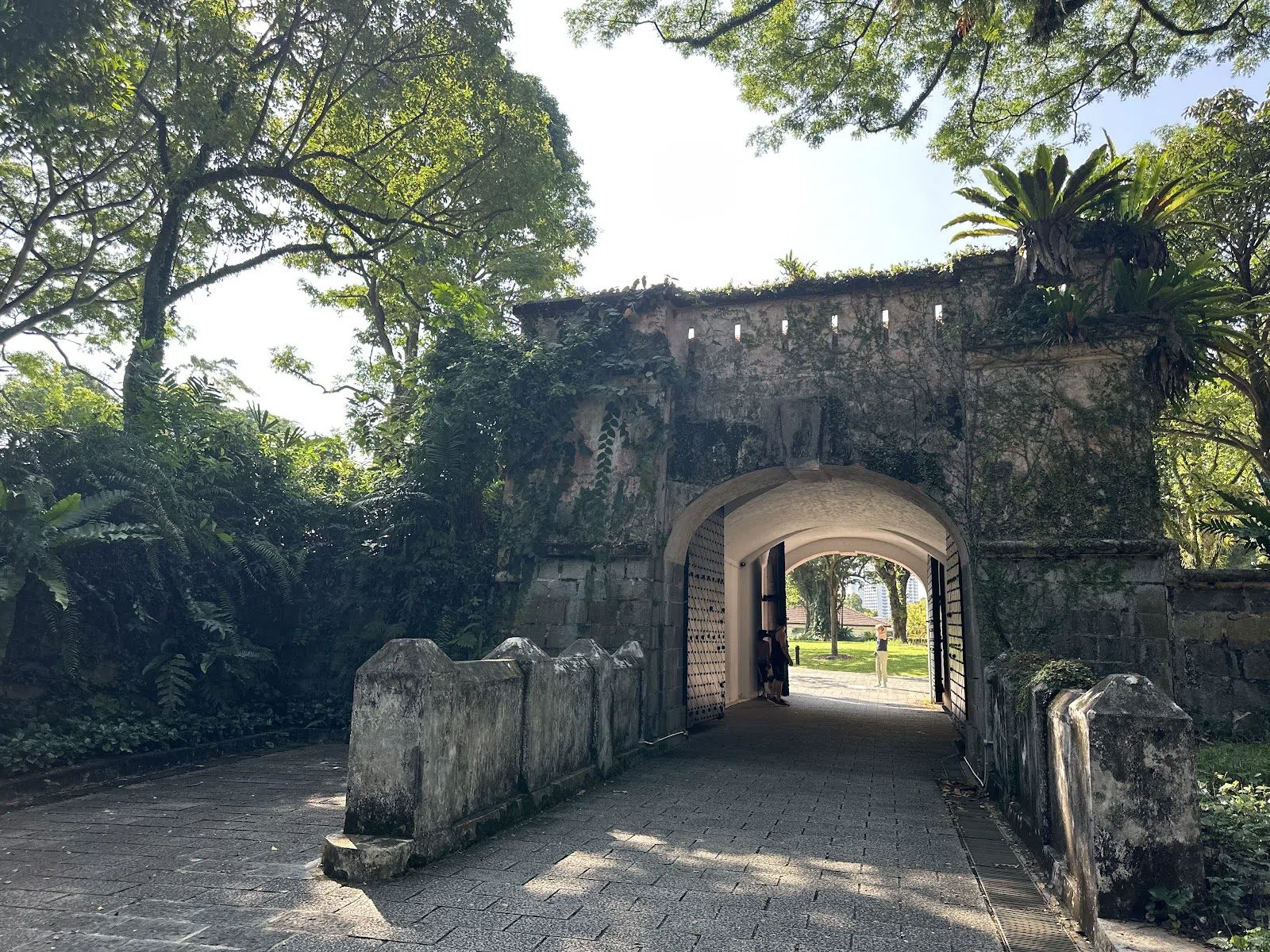
Closer to the museums and the river, Fort Canning Park (Civic District, above the city centre) is the easiest historical companion to the Botanic Gardens. It is free and open around the clock, a layered hilltop where nine themed heritage gardens trace the island's botanical and colonial story — spice, pioneer, artisan and more. Fort Canning MRT on the Downtown Line puts you at its foot. Groups gather on the lawns for heritage-trail walks and events; couples come for the shaded stairways and the photogenic tree tunnel. Thirty minutes here reframes the Botanic Gardens' rubber history as one chapter of a much longer botanical story the whole island has been telling.
Into the real rainforest
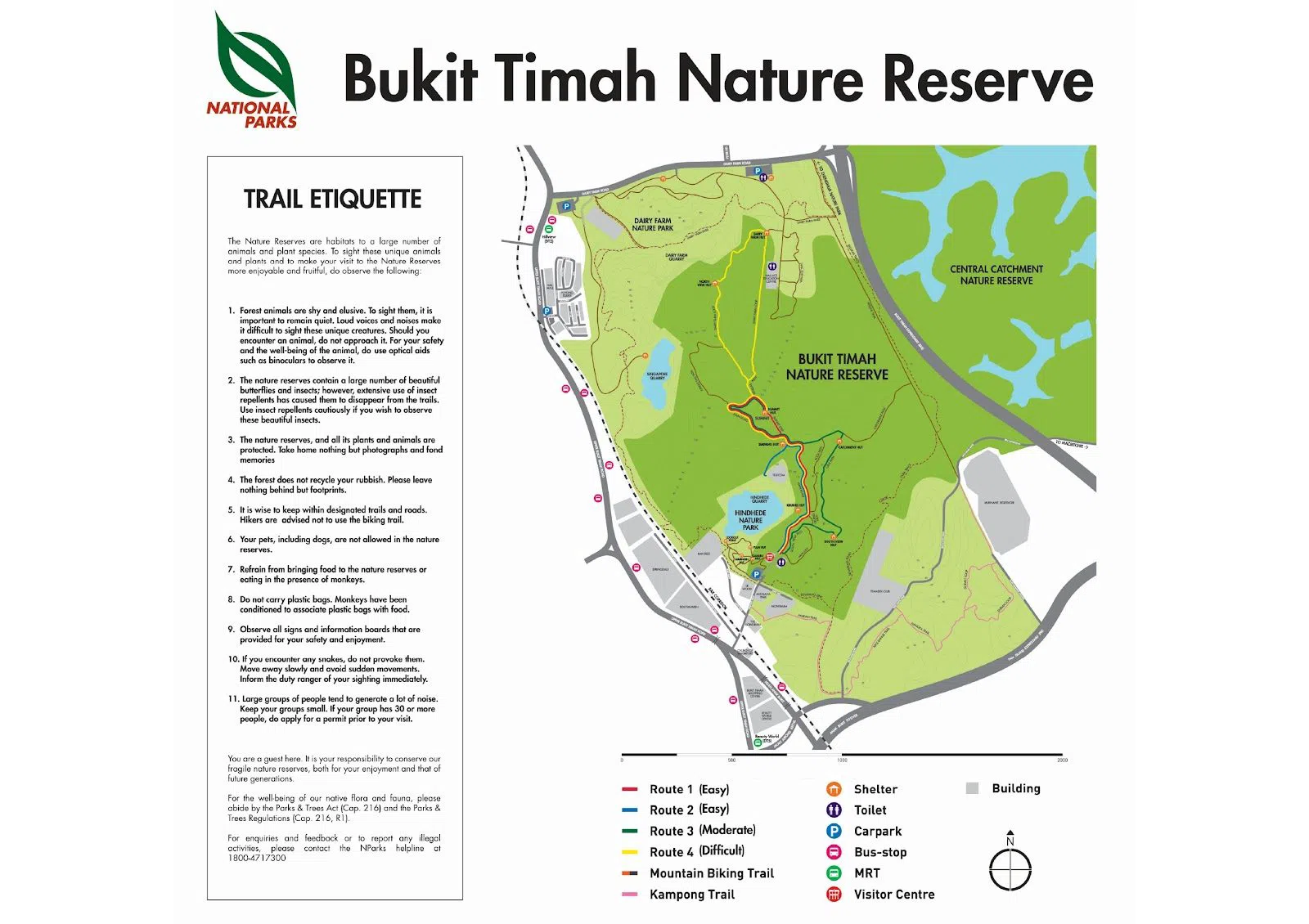
The Botanic Gardens' forest is curated and gentle. For a genuine climb, Bukit Timah Nature Reserve (Upper Bukit Timah, in the centre-west) holds some of the island's oldest primary rainforest and its highest hill. It is free, open 7am to 7pm, and reached from Beauty World MRT with a short walk to the gate. Be realistic about it: this is the wilder sibling, the trails are narrow and genuinely steep in places, and it is popular with hiking groups. Larger parties should start early both to beat the heat and to avoid bottlenecking the summit path.
MacRitchie Reservoir Park (Central Catchment, off Thomson) is the other serious rainforest walk, and the more famous one. It is the gateway into the 2,000-hectare Central Catchment reserve, and its TreeTop Walk — a canopy-level suspension bridge — is the classic Singapore rainforest experience. Free, park hours 7am to 7pm, but note the bridge itself keeps its own hours and is closed on Mondays. It is one-way with capacity limits, so a large group that turns up late will be waiting; start early. One planning note for 2026: the Lower Peirce boardwalk nearby is closed for works until September, so don't build a route around it this year.
Ridges, coasts and wetlands
For a walk that connects rather than loops, the Southern Ridges (Mount Faber to Kent Ridge, southern edge) string ten kilometres of hilltop parks and sculptural bridges — the Henderson Waves bridge among them — into one green corridor. It is free, open 24 hours, and the wide walkways genuinely suit groups. There are multiple access points, so you can walk as much or as little of the chain as you like; Labrador Park MRT is a practical entry at the coastal end.
The Ridges plug straight into HortPark (Telok Blangah, on the Southern Ridges), a nine-hectare gardening hub and the most hands-on stop on this list. It is free, grounds open 6am to 10pm, and it is built around workshops, clubs and its monthly Gardener's Day Out bazaar, with guided tours for groups. Think of it as the practical trailhead onto the Ridges and the place to go if you actually want ideas for your own garden rather than a view.
At the southern coast, Labrador Nature Reserve (Pasir Panjang, by the sea) is Singapore's only cliff-side coastal nature reserve — a rare mix of rainforest, sea views and Second World War history. Free, open around the clock, comfortable for groups, and reliably uncrowded compared with the marquee gardens. It is the quiet alternative when the big names are full.
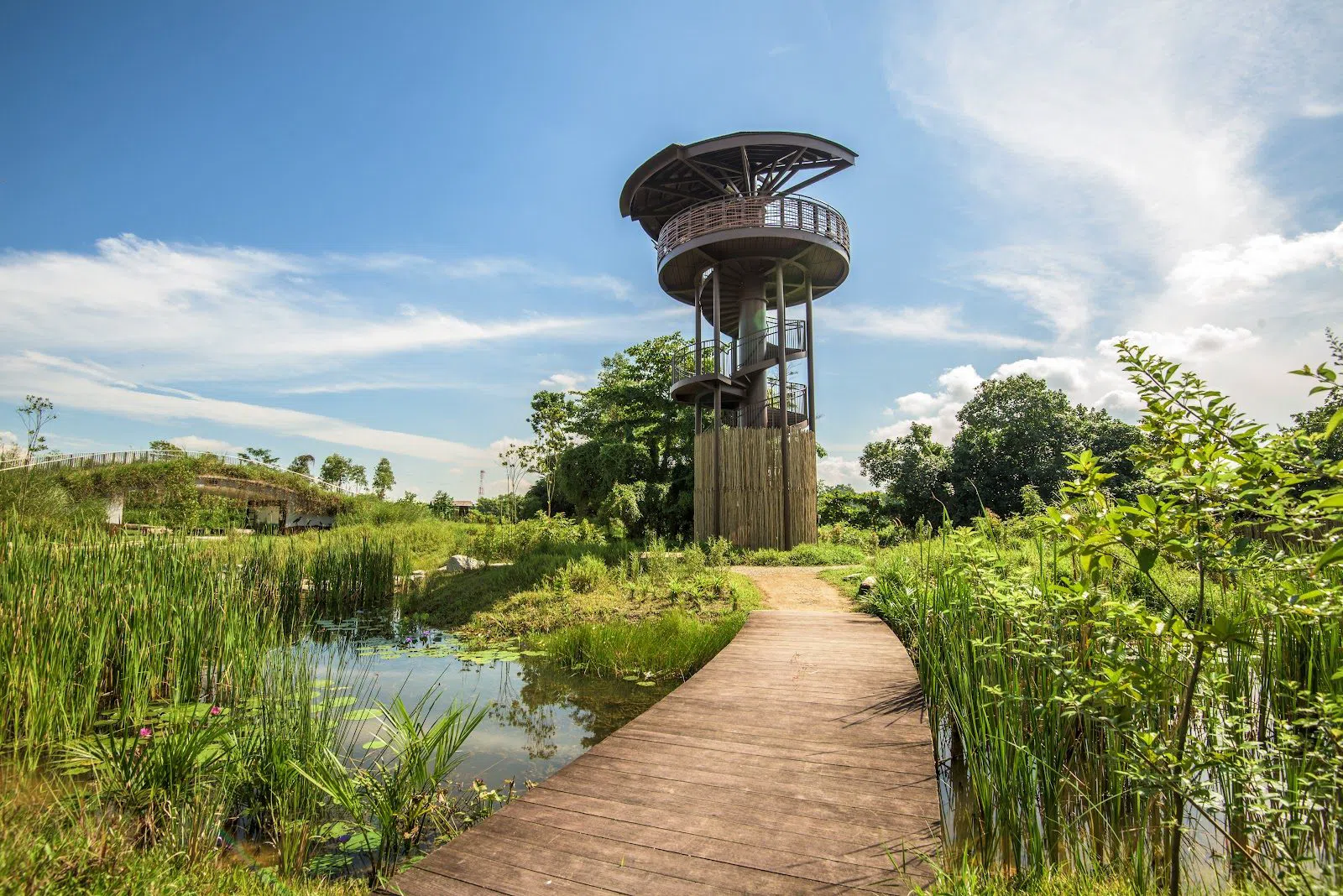
Out in the northwest, Sungei Buloh Wetland Reserve (Kranji, on the Johor Strait) is the coastal, wetland face of Singapore's greenery — an internationally recognised sanctuary of mangrove and mudflat that fills with migratory birds. Free, with a visitor centre, open 7am to 7pm with last entry at 6:30pm; guided group birdwatching walks are bookable. Come in the cool early morning, both for the birds and because there is little shade. Nearby, Kranji Marshes (Kranji, in the rural northwest) is a 56-hectare freshwater marsh that is the specialist's counterpoint to all the manicured gardens — quietest just after sunrise. The core marsh is accessible only by booked guided walk, which makes it ideal for organised nature groups and less suited to a spontaneous drop-in. Both are reached from Kranji MRT.
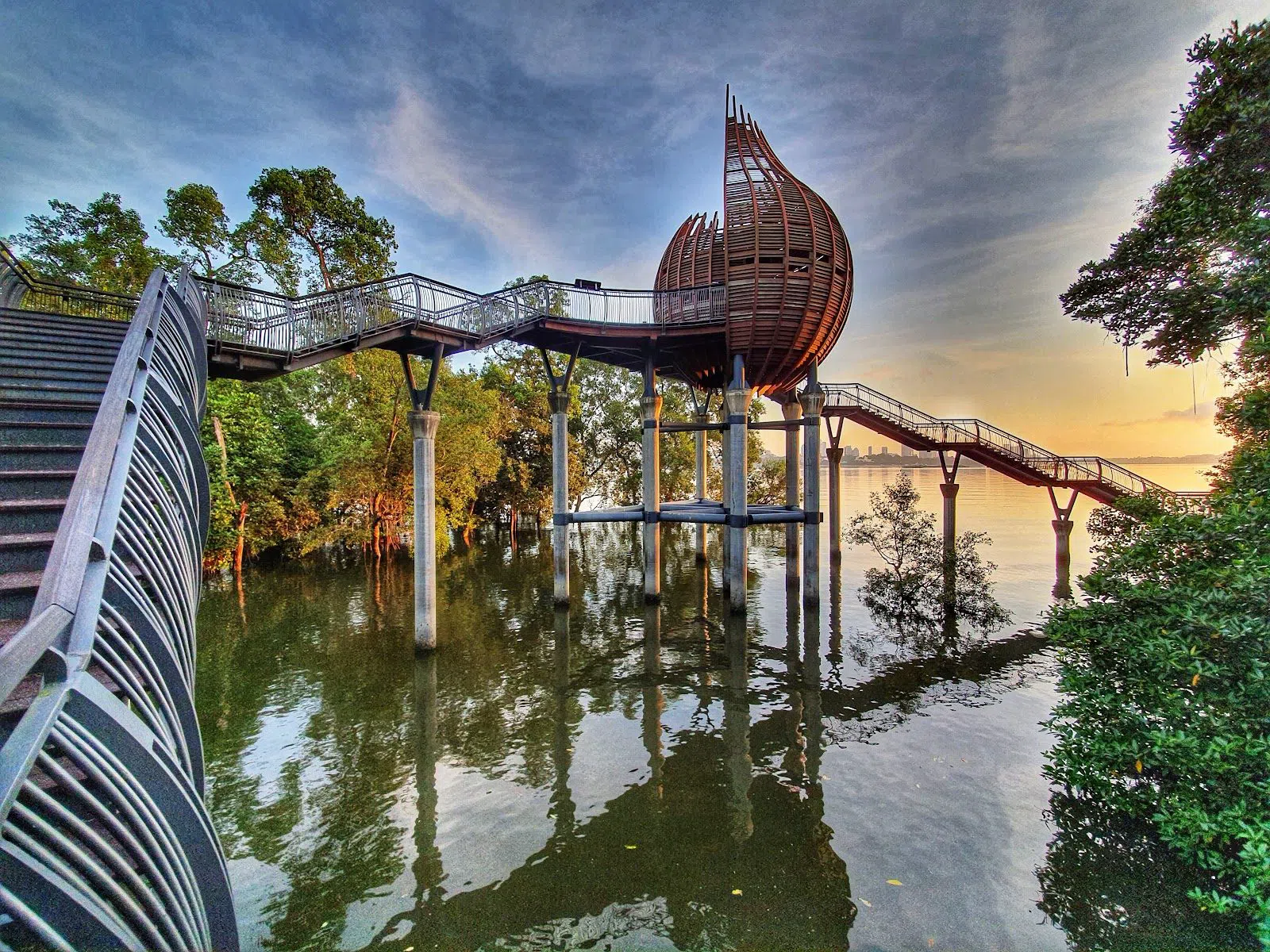
The wilder edges
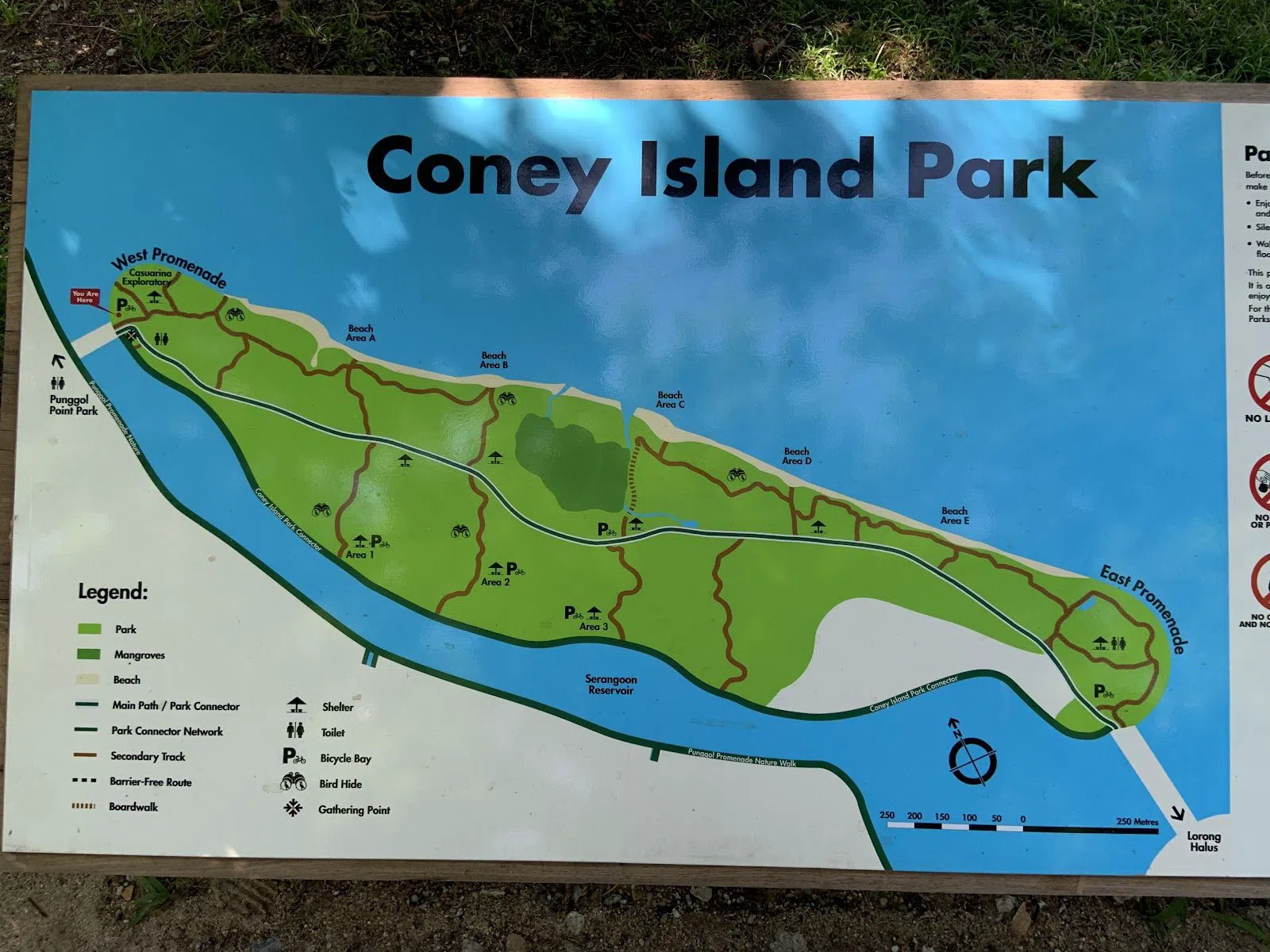
Two places reward travellers who want raw nature over polish. Coney Island Park (Punggol, in the northeast) is kept deliberately rugged — a walking and cycling island with no vehicles, free, open 7am to 7pm, reached on foot or bike from the Punggol Point end. It is the honest anti-thesis to the engineered spectacle of the bayfront gardens: scrubby, wild, low-development on purpose.
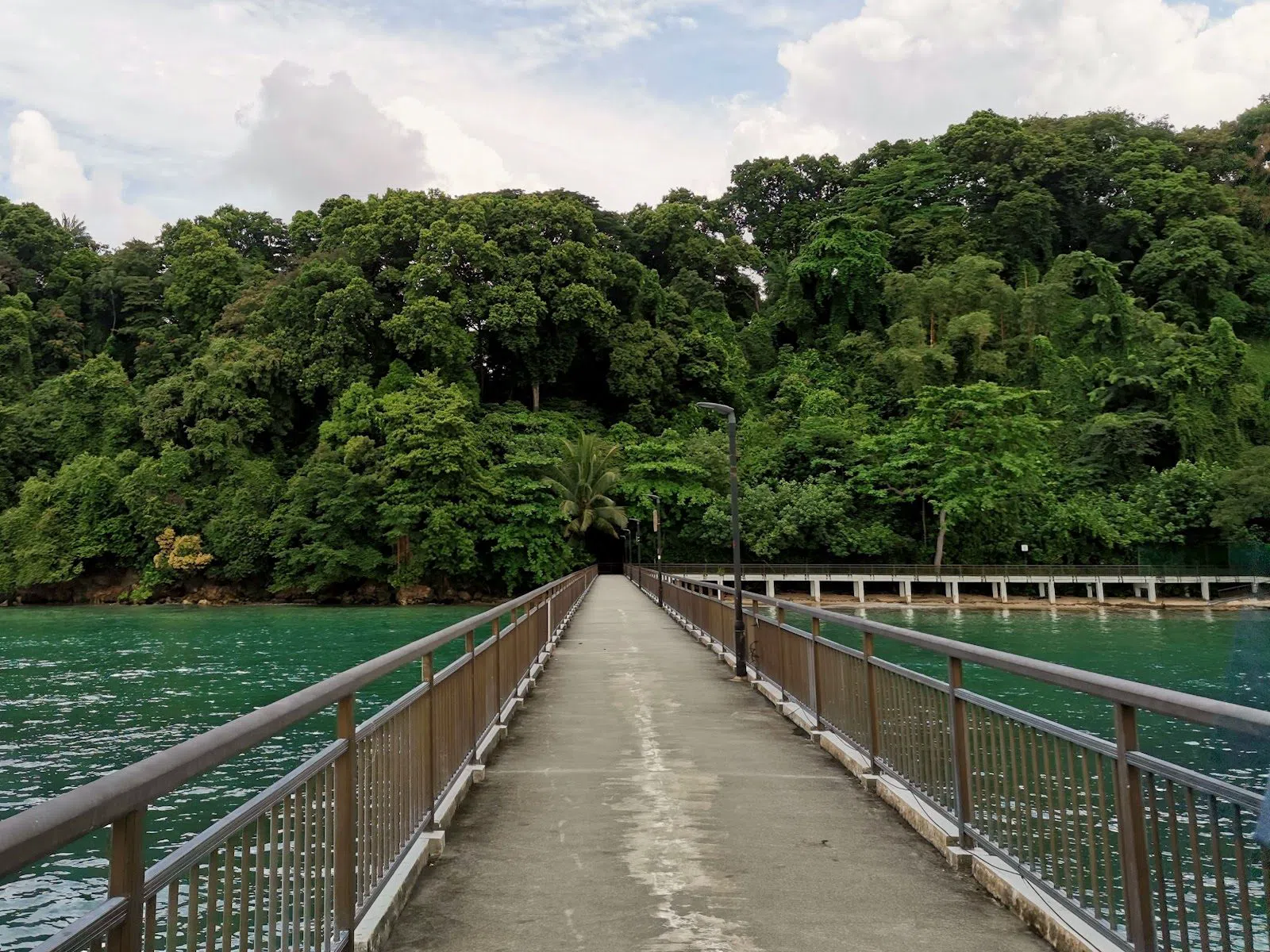
The fullest escape is Pulau Ubin & Chek Jawa Wetlands (off Changi, in the northeast). A short bumboat ride from Changi Village — around SGD 4 each way, boats take groups — carries you to Singapore's rural past, an island of kampong lanes, mangrove and rainforest. The Chek Jawa Wetlands stitch six ecosystems into a single walk, and guided Chek Jawa tours are available. It is a full day, daylight hours only, and the most complete day-trip on this list. For a trip that leans on the Botanic Gardens, keep Ubin for a separate day rather than trying to bolt it on.
The heartland garden
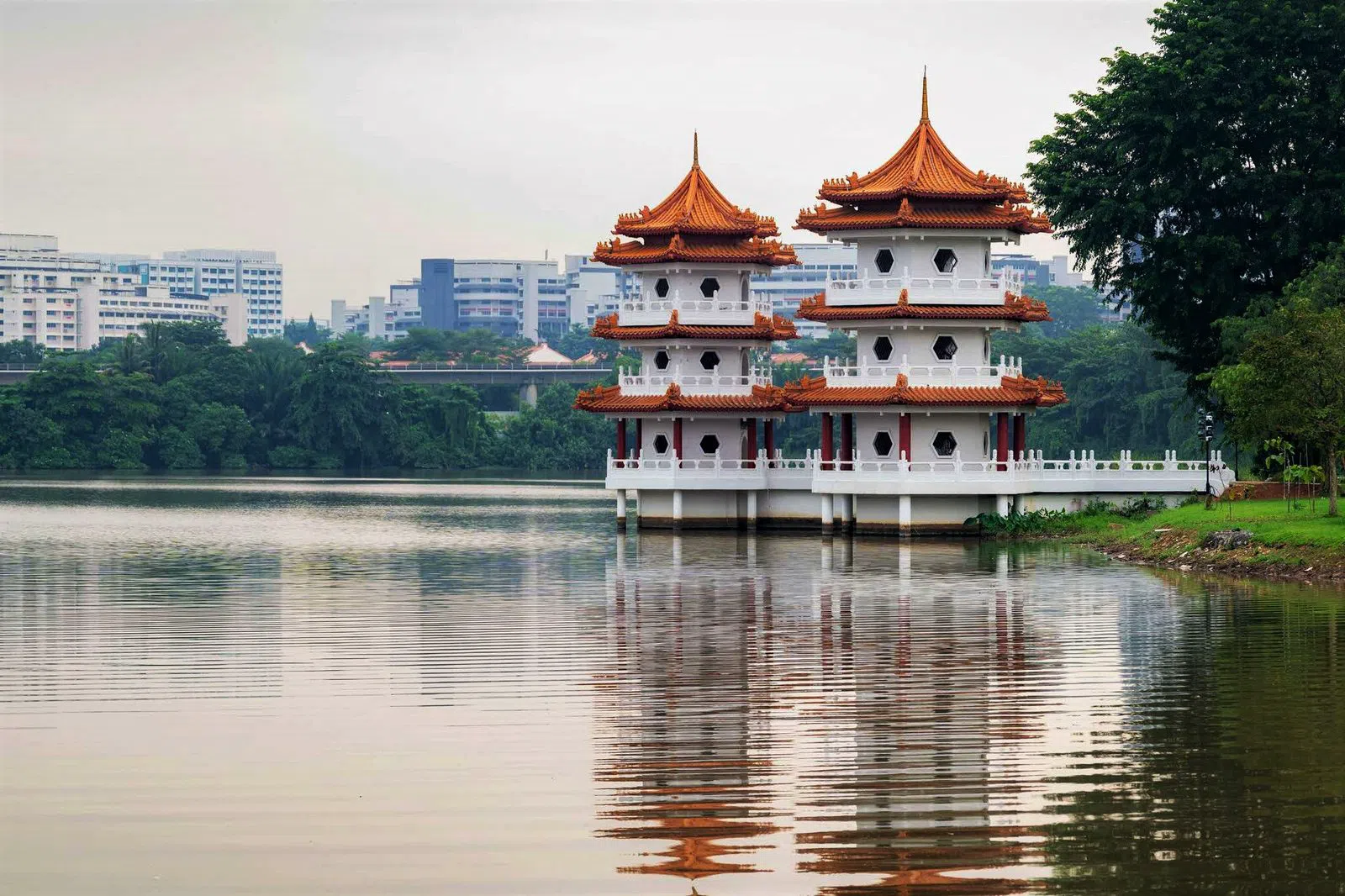
One more, for anyone staying longer. Jurong Lake Gardens (Jurong, in the west) is Singapore's first heartland national gardens — 90 free hectares with plenty of room for groups and regular guided community walks. The reason to make the trip in 2026 is timing: the Chinese and Japanese Gardens within it reopened in September 2024 after a five-year rebuild, so they are still fresh. Lakeside MRT drops you nearby. It is not central, but it is the most genuinely local of the big gardens.
Practical notes
Transport. Almost everything here is on the MRT. The Botanic Gardens have two stations — Botanic Gardens (Downtown/Circle) at the Bukit Timah gate, Napier (Thomson–East Coast) at Tanglin. A stored-value or contactless bank card taps you through every gate and bus. The far reserves (Sungei Buloh, Kranji Marshes, Bukit Timah, Coney Island, Pulau Ubin) all involve a short bus, cycle or boat leg from their nearest station, so allow extra time.
Timing. Go early. Seven in the morning is the single best decision you can make — cool air, low light, thin crowds. The National Orchid Garden opens at 8:30am; be there at opening or expect coach groups. Save Gardens by the Bay and its Garden Rhapsody light show for after dark, when the heat has broken.
Cash and cost. The headline is that the best of this list is free. The Botanic Gardens grounds, Fort Canning, the Southern Ridges, HortPark, Labrador, Sungei Buloh, Kranji Marshes, Coney Island and Jurong Lake Gardens cost nothing. You pay only for the National Orchid Garden (SGD 5), the Gardens by the Bay conservatories (about SGD 32–53), and the Pulau Ubin bumboat (about SGD 4 each way). Carry a little cash for the boat and small kiosks; cards work almost everywhere else.
What to bring. Water, a hat and light rain cover — tropical showers are brief but sudden, and shade is uneven on the ridges and wetlands. Sensible shoes for Bukit Timah and MacRitchie, which are proper trails, not strolls.
For where to base yourself, start with a Singapore hotel search; Tanglin and Orchard put you within walking distance of the Botanic Gardens' morning cool. For more on the rest of the city, see the full Singapore guide. Build the day around the Gardens at seven, and the rest of the island's green map arranges itself.
Before you go
Is Singapore Botanic Gardens free to visit?
Yes. The grounds, rainforest, Ginger Garden and Swan Lake are all free and open daily from 5am to midnight, with no booking required. The only paid part is the National Orchid Garden, which is SGD 5 for adults, SGD 1 for students and seniors, and free for under-12s.
What is the best time to visit Singapore Botanic Gardens?
Seven in the morning. The air is still cool, the light is low, and the paths are shared mostly with local runners and tai chi groups rather than tour crowds. Aim to see the free rainforest and lakes first, then be at the National Orchid Garden right at its 8:30am opening before coach groups arrive.
How do I get to Singapore Botanic Gardens by MRT?
The Gardens have two stations. Botanic Gardens station on the Downtown and Circle lines opens onto the Bukit Timah gate at the rainforest end, and Napier station on the Thomson–East Coast Line sits near the Tanglin gate by Swan Lake. Enter at one and walk through to exit at the other.
What makes Singapore Botanic Gardens a UNESCO World Heritage site?
It is Asia's first UNESCO-listed garden and the only botanic garden holding a preserved six-hectare slice of primary rainforest older than the nation itself. It was also a working scientific institution: rubber seeds cultivated here launched the rubber industry across the Malay peninsula.
How long should I spend at Singapore Botanic Gardens?
Plan a full morning. Allow around an hour for the Rainforest Trail, Ginger Garden and Swan Lake, then an hour for the National Orchid Garden, and time to reach it before the heat and crowds peak. If you want to pair it with the wilder reserves like Bukit Timah or MacRitchie, keep those for a separate start.