 In this area
The Singapore issue
Kampong Gelam, Singapore: Heritage, Murtabak and Murals
A walk through Singapore’s old Malay-Arab quarter, where Sultan Mosque, century-old kitchens, textile traders and shophouse bars still share the same small grid.
By Desmond LimShophouse studios and Peranakan craft, block by block
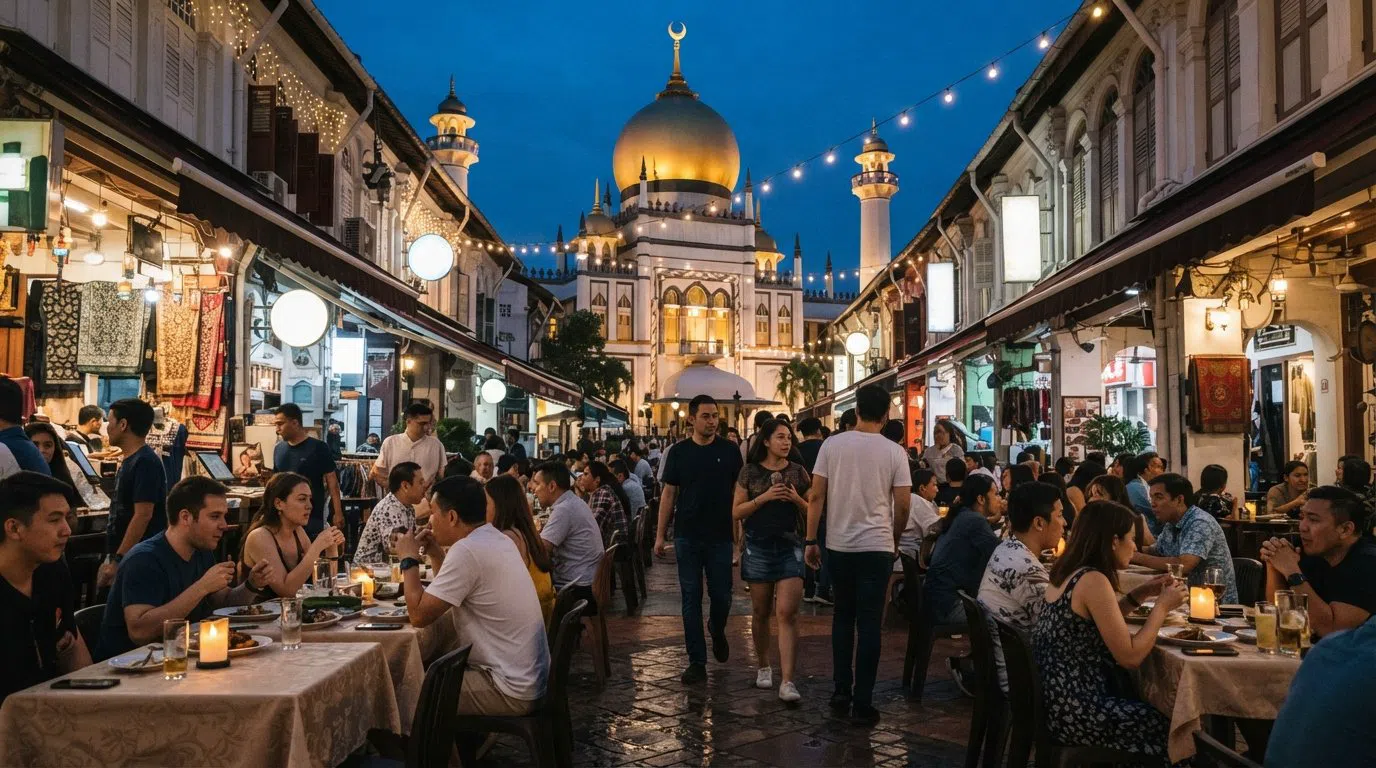
Walk up Bussorah Street and the neighbourhood gives itself away in one sweep: the golden dome of Sultan Mosque ahead, the smell of grill smoke rising from the food street, and the old quarter’s shophouses pressed close enough that you can almost touch both heritage and hype at once. Kampong Gelam is not polished into one neat story. It is a working Malay-Arab district that still trades in fabric, perfume oil and prayer time, while Haji Lane around the corner has become a compact little theatre of murals, cocktails and late-night noise. That friction, or lack of it, is the charm. The place feels lived in, not staged. And if you know where to look, it still runs on the old rhythms.
What Kampong Gelam is known for
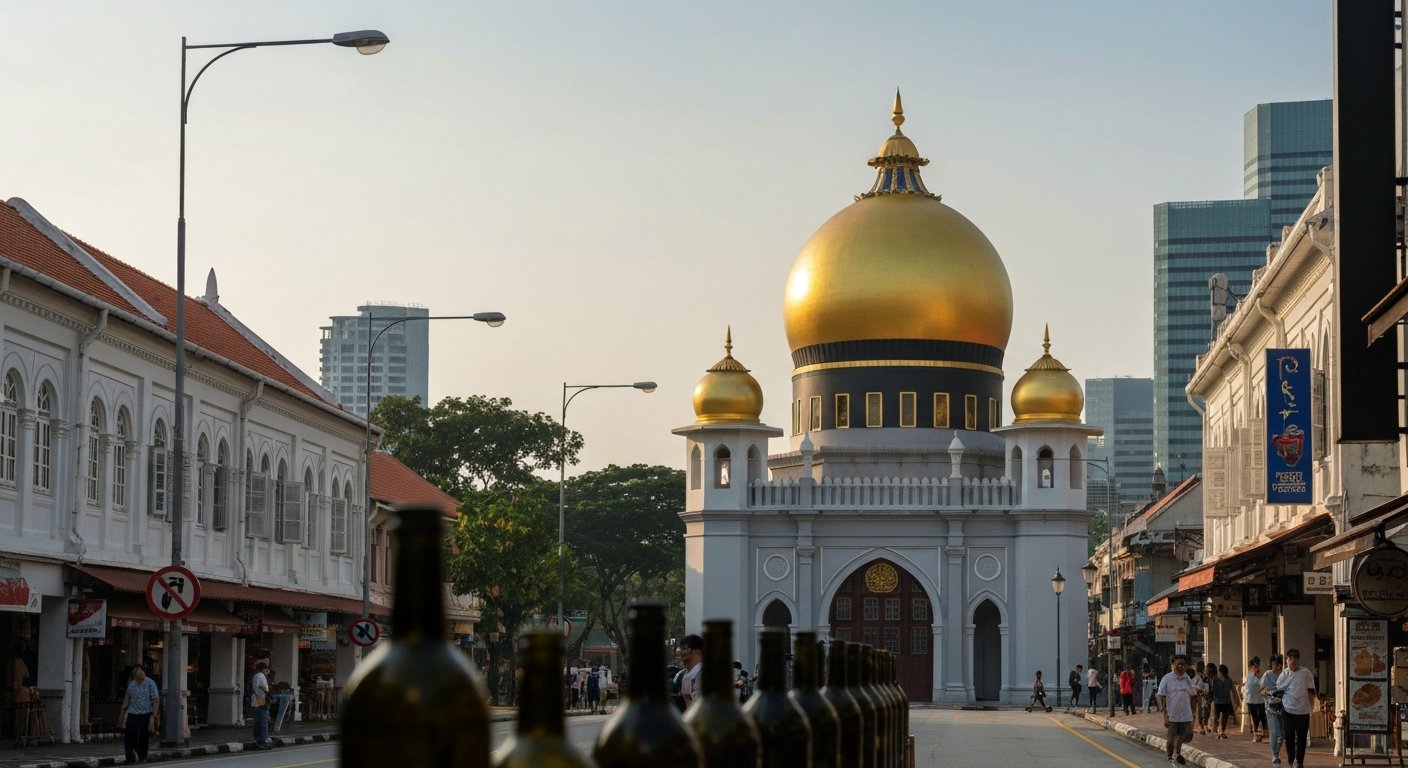
The anchor, always, is Sultan Mosque. You can see that vast golden dome from streets away, which is exactly how a landmark should behave in a city that loves to hide its history behind glass. The first mosque on this site went up in 1824 after Sultan Hussein Shah was granted the land; the building standing now was completed in 1928, and its dome carries a base of dark glass bottle-ends donated by poorer members of the community so they, too, could leave a mark on it. That detail gets me every time. It is not just beautiful; it is democratic in the best way. Non-Muslim visitors are welcome outside prayer times, roughly 9am to 6pm, with tighter restrictions on Fridays, and if you turn up without the right clothes, robes are lent at the door. The mosque is not a museum piece. It is a living centre, and the neighbourhood still orbits it with proper respect.
Radiating from the mosque is the old royal quarter, centred on Istana Kampong Gelam, the former palace of Malay royalty that houses the Malay Heritage Centre. It has been closed for a full revamp and reopens on 25 April 2026 with six new galleries and close to 280 artefacts tracing Malay identity from the wider region to modern Singapore. That reopening matters, because this district has always been more than a pretty backdrop for weekend wanderers. It is a place where memory has architecture.
And then there are the walls. Kampong Gelam was one of the first places in Singapore to have street art, and it is still one of the best. The famous Aztec mural on the flank of Piedra Negra on Haji Lane, by Didier Jaba Mathieu, is widely credited with kicking off the whole scene. You can feel that lineage now in the lanes around it: every wall seems to be trying to outdo the one next door, but the original still has the swagger. Chio, honestly.
Plan your Singapore trip
Live prices from our booking partners.
Guests & rooms
Free cancellation on many rooms. We may earn a commission when you book.
Where to eat & drink
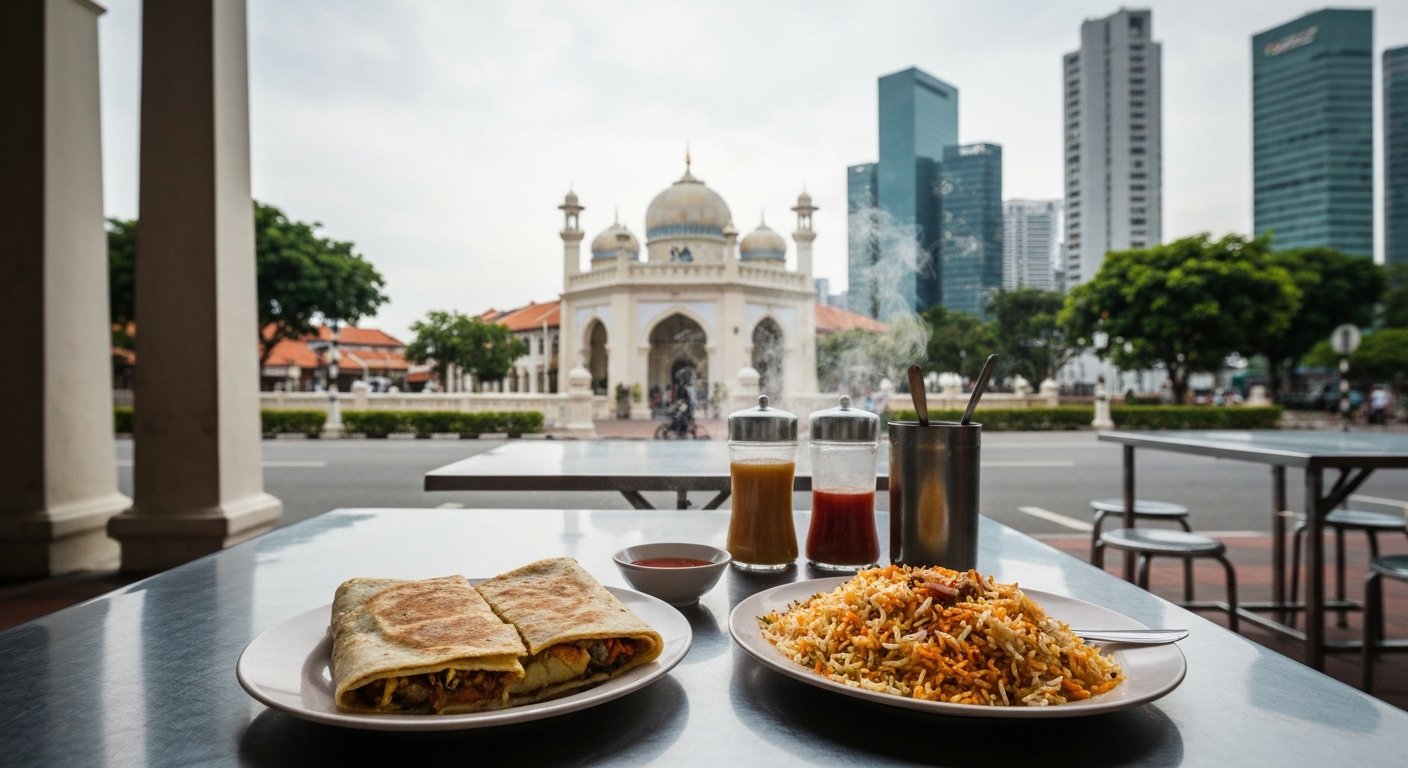
This is where Kampong Gelam gets properly shiok. Start with the heritage kitchens, because the neighbourhood’s food story is older than the murals and a lot more important than the cocktail menus. Zam Zam at 697-699 North Bridge Road has been frying murtabak opposite the mosque since 1908. The mutton murtabak is the order: a folded pancake stuffed with spiced minced meat, onion and egg, with a plate of biryani alongside if you want to do it properly. There is a reason this place still draws a queue; it tastes like the neighbourhood’s memory.
If the line at Zam Zam looks too stubborn, Victory Restaurant sits directly across the road and does its own well-regarded murtabak. This is one of those classic head-to-heads that locals know by instinct. No need for drama, just choose your side and eat.
For Malay-Indonesian nasi padang, Hjh Maimunah on Jalan Pisang has been a fixture since 1992 and holds a Michelin Bib Gourmand. Point at the beef rendang and the ayam bakar sunda and eat well under S$15. That price matters in a neighbourhood where it is very easy to get distracted by bars and forget that the real value here is still on the plate. Hjh Maimunah keeps the old logic intact: generous rice, serious flavour, no fuss.
A few streets over on Beach Road, The Coconut Club at 269 Beach Road turns nasi lemak into an event, with fried organic chicken thigh and its own “White Sutera” coconut milk earning it a Bib Gourmand in the 2025 Michelin Guide. It is a more polished kind of Malay comfort food, but not in a fake way. The kitchen knows exactly what it is doing.
On the Middle Eastern side, Alaturka at 15 Bussorah Street is the neighbourhood’s Turkish institution, Bib Gourmand-listed and serving mixed grills and meze since 2005. It helps anchor Bussorah Street’s evening rhythm, especially when the street-side kebab and shawarma spots around it start filling the air with smoke. Sit outside and you get the whole show: mosque light, passing families, grill smoke, the clatter of plates. That is the real dining room here.
For breakfast or a caffeine-free wake-up, Bhai Sarbat at 21 Bussorah Street pulls what many locals rate the best teh tarik in the city, and it opens in the mornings only, from about 6.30am. If you want the neighbourhood before it starts performing for the cameras, this is the move. A hot cup, a seat, and the mosque in the near distance.
By evening, the drinks scene takes over with its own small, noisy confidence. Good Luck Beerhouse at 9 Haji Lane pours a rotating dozen taps of Singaporean craft beer with dim sum on the side. Bar Stories on Haji Lane makes bespoke cocktails to your mood rather than a menu, which is either a delight or a sign that someone has been reading too many brand decks. Still, when done well, it works here. The lane is already theatrical; a drink that responds to your mood fits the setting.
Going out
Evenings in Kampong Gelam are not about the big club night. If that is your mission, Clarke Quay is the short ride away. Here, the action is more compact, more social, and frankly more interesting. The institution is Blu Jaz Cafe at 11 Bali Lane, a multi-level, neon-lit cafe-cum-club where the ground floor runs live jazz, funk and soul most nights, the upstairs turns into a dance floor later on, and Wednesday’s open jam session lets anyone bring an instrument. That last bit is the tell. This is not a place pretending to be a scene; it is one.
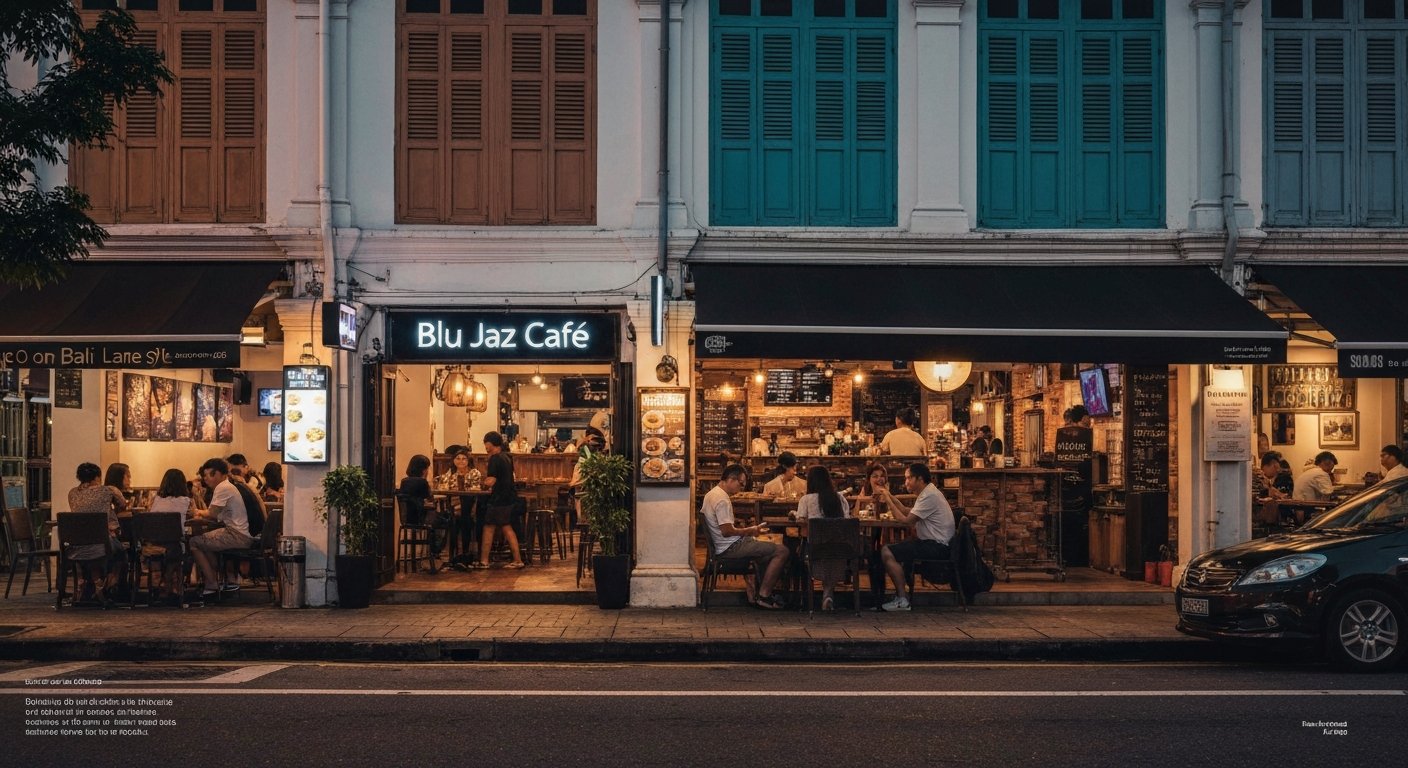
Around the corner, Haji Lane is wall-to-wall drinking after dark. Good Luck Beerhouse brings the local craft taps. Bar Stories does the made-to-order cocktail thing. Piedra Negra sits on the corner with oversized frozen margaritas and Mexican plates under that landmark Aztec mural, its tables spilling out onto the lane. It is loud, yes, but not in a mindless way. The buzz here comes from people actually looking at each other, not just at a DJ booth.
Bussorah Street and Baghdad Street lean a different direction, into shisha lounges and late Middle Eastern grills, where you can nurse an apple-tobacco pipe and a mint tea with a view of the illuminated mosque. That combination—smoke, tea, prayer light—can feel almost cinematic, but it is also just how the street works. The old and the new are not fighting. They are sharing the pavement.
If the skyline calls, Mr Stork sits on Level 39 of the Andaz Singapore at 5 Fraser Street, with ten teepee cabanas, its own Andaz Pale Ale and a wraparound view over the quarter and the wider city. It is a rooftop hotel bar rather than a Haji Lane dive, so dress a notch up. Different mood, same neighbourhood gravity.
Things to do / what to see
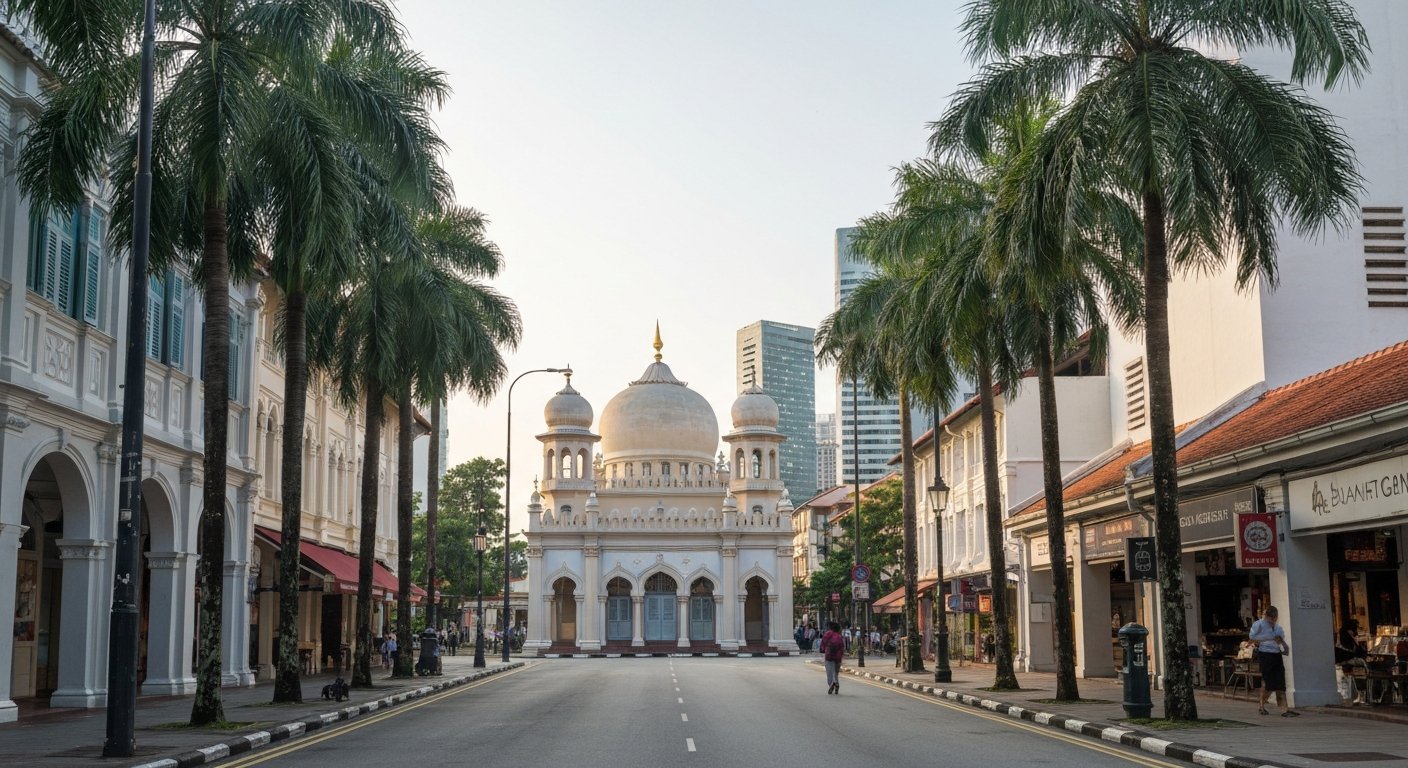
Do the district as a slow walking loop. Start at Sultan Mosque, whose main entrance faces up Bussorah Street, and step into the forecourt to look closely at the bottle-glass detail at the base of the dome. Then let Bussorah Street do what it does best: frame the mosque beautifully. It is pedestrianised, palm-lined, and at its best in the early morning before the crowds arrive. That is when the quarter still feels like a neighbourhood rather than a set.
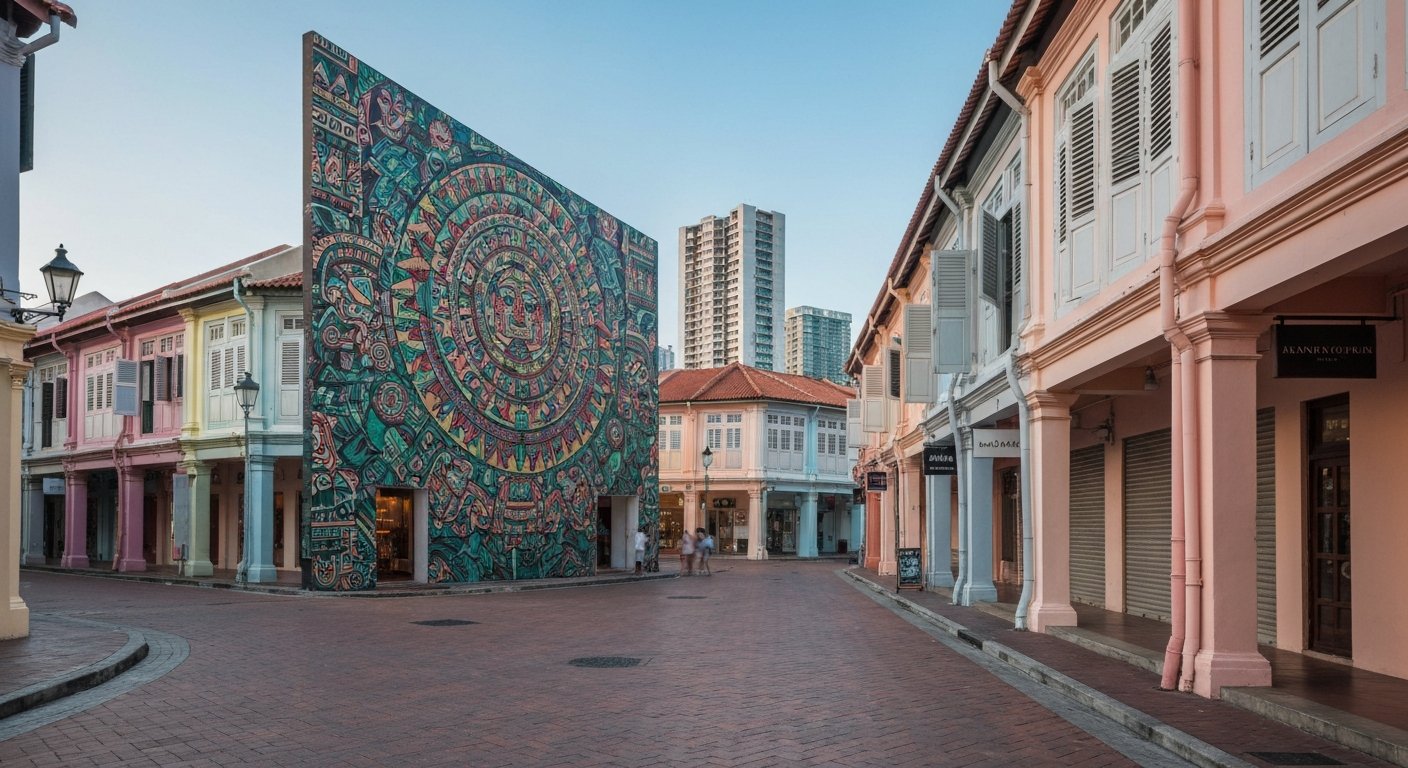
Cut behind toward Haji Lane and Bali Lane for the street art, then follow the lane walls as they change from pastel facades to murals to bar fronts. Haji Lane is the district’s photo and going-out spine, narrow enough to feel intimate, busy enough to feel alive. Photographers should hit the pastel shophouse fronts and the Piedra Negra Aztec wall first thing, when the light is soft and the lanes are empty. Later on, the people become the picture.
Then make for Gelam Gallery on Muscat Street, Singapore’s first permanent outdoor street-art gallery, essentially an alleyway turned into a rotating open-air show by local and international artists. It is one of those places that sounds minor until you are standing inside it, looking up at the walls and realising how much of the district’s identity has been written in paint. The gallery rewards a slow pace. So does the whole quarter.
History-minded visitors should time a trip around the reopening of the Malay Heritage Centre / Istana Kampong Gelam on 25 April 2026, which restores public access to the old Malay palace grounds at the heart of the quarter. That is the sort of thing that gives a neighbourhood depth beyond the snackable version. Kampong Gelam is not just a pretty stretch between bars. It is a place where the royal, the religious and the everyday still overlap.
Don’t miss in Kampong Gelam
Sultan Mosque
Haji Lane fashion boutiques
Malay Heritage Centre
And then, honestly, the best thing to do is keep drifting. Walk from the mosque to the lanes, from the lanes to the shops, and back again with a teh tarik in hand. This is a very walkable, very photogenic district, but it is also one that rewards the eyes that stay open a little longer. The bottle-ends in the dome. The rug seller unrolling batik in a doorway. The way the street art gives way to the call to prayer. The neighbourhood has layers, and it does not mind if you take your time.
Shopping & markets
Two very different shopping cultures sit side by side here, and that contrast is part of the pleasure. Arab Street is the old trade: textile houses and carpet merchants that have sold here for generations, with bolts of silk, batik, lace and brocade stacked floor to ceiling. Family-run rug dealers such as Samad & Sons still unroll kilims in their doorways, which is exactly the sort of detail that tells you a district has not fully surrendered to trend cycles. This is where you come for texture, literally and otherwise.
This is also the home of attar, the concentrated alcohol-free perfume oil brought by the Arab merchant community. A good shopkeeper will dab sandalwood, oud and rose onto a card and let you take your time. That slower sales rhythm is part of the charm. No hard sell, no rush. Just scent, memory and a bit of old-world patience.
The standout here is Sifr Aromatics at 42 Arab Street, a laboratory-style perfumery where founder Johari Kazura will blend you a bespoke scent over a booked session of around an hour. It is one of the few places in the area that still feels genuinely personal rather than packaged for passing trade. If you like your shopping with a bit of craft and a bit of story, this is the one to book.
A short walk away, Haji Lane is the modern counterpoint: a tight run of independent fashion boutiques, vintage stores and one-off accessory shops that turn over regularly and act as an incubator for younger Singaporean designers. It is the neighbourhood’s mood board, but with rent and weather and actual people behind it. One practical note that trips people up: many of Arab Street’s traditional textile and perfume shops close on Sundays, so plan serious shopping for Tuesday to Saturday. And the boutiques on Haji Lane tend not to open until late morning, which is useful if you do not enjoy standing outside a locked gate with your coffee getting cold.
Where to stay in Kampong Gelam
Kampong Gelam puts you in a genuine heritage neighbourhood that is still a five-to-ten-minute walk from Bugis MRT, so you get character without sacrificing connectivity. That is the sweet spot, really: enough atmosphere to feel like you have chosen a place, not just a bed.
The design landmark is the Andaz Singapore on Fraser Street, a lifestyle high-rise directly linked to Bugis station, with the Mr Stork rooftop upstairs and the lanes of the quarter at its feet; it is the splurge-and-view option. Beyond it, the area’s stock is largely boutique shophouse hotels and smaller stays threaded through the conservation streets, which suit travellers who want to be steps from Haji Lane, Arab Street and the mosque and do not mind trading a large hotel pool for atmosphere.
For street feel, Bussorah Street and Kandahar Street pockets are quieter and closer to the mosque and heritage side; anything directly on or over Haji Lane and Bali Lane will be lively and noisy well past midnight, which is a plus or a minus depending on your night-owl tendencies.
Hotels in Kampong Gelam
Our best-rated stays in this neighbourhood. Prices are approximate “from” rates — confirmed at the provider when you continue. We may earn a commission if you book through our partners — at no extra cost to you.
In this area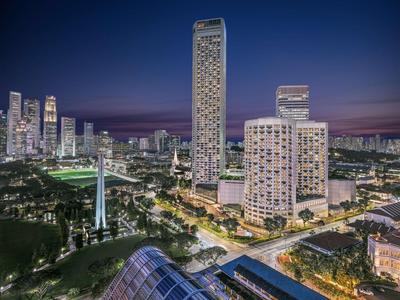 In this area
 In this area
 In this area
 In this area
Kampong Gelam
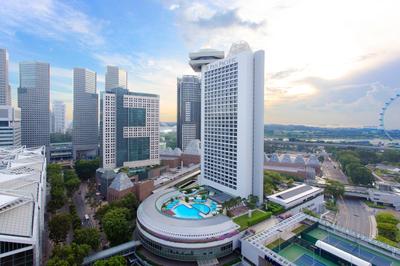
The Ritz-Carlton, Millenia Singapore
9.2· 2,767 reviews
approx. from£414 / nightSee prices
 In this area
 In this area
Kampong Gelam
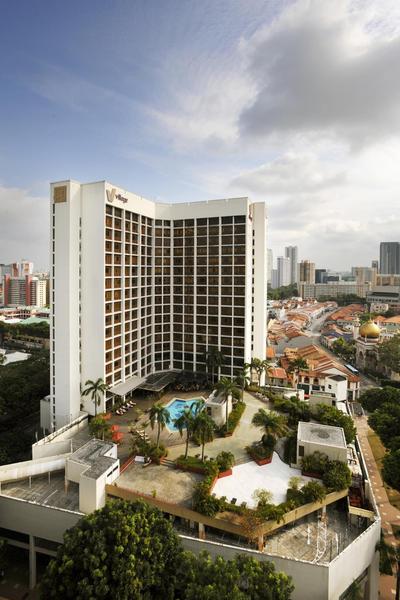
Village Hotel Bugis by Far East Hospitality
8.0· 5,970 reviews
approx. from£143 / nightSee prices
 In this area
 In this area
 In this area
Kampong Gelam
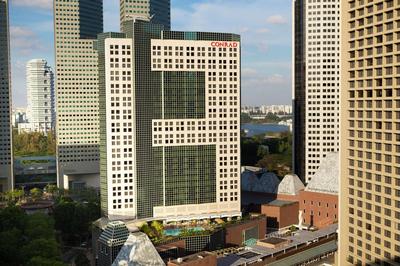
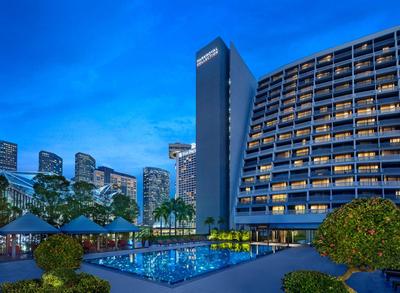
PARKROYAL COLLECTION Marina Bay, Singapore
9.1· 8,242 reviews
approx. from£292 / nightSee prices
 In this area
Kampong Gelam
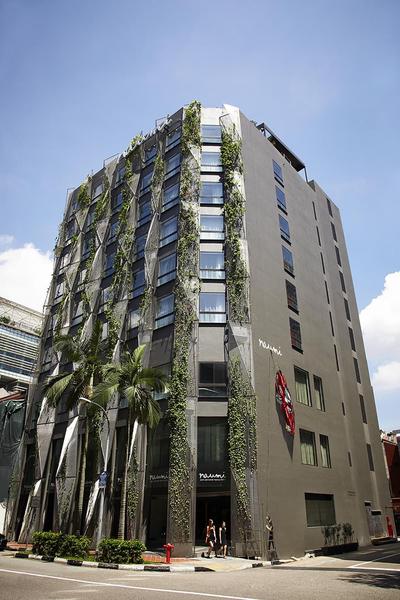
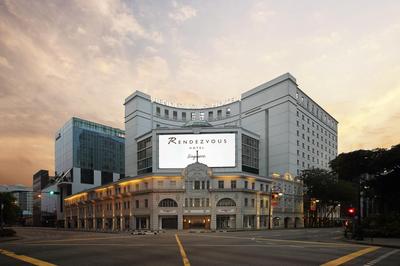
Rendezvous Hotel Singapore by Far East Hospitality
8.6· 3,766 reviews
approx. from£179 / nightSee prices
 In this area
Getting around
The nearest station is Bugis MRT on the East-West and Downtown lines; take Exit B and walk down Victoria Street toward North Bridge Road and you reach Sultan Mosque and Haji Lane in about five to ten minutes. Nicoll Highway MRT on the Circle line is an alternative, roughly a 12-minute walk in via Beach Road. Once you are here, you barely need transport. The quarter is small, flat and entirely walkable, and the core streets around Bussorah, Haji Lane and Arab Street are pedestrian-friendly.
Central sights are close: Bugis Street and its market are next door, Little India is one MRT stop or a 15-minute walk, and Marina Bay is around 10 minutes by train. For Changi Airport, it is roughly a 20-25 minute drive off-peak, or about 30-40 minutes on the MRT from Bugis via a change at Tanah Merah.
The practical truth about Kampong Gelam is simple: it is one of the easiest heritage quarters in Singapore to read on foot, and one of the most rewarding to revisit after dark. Come early for the mosque and the textiles, stay for the food, and if you have the stamina, let the bars and music carry you into the night. This is a small district with a long memory. That is why it sticks.
Gallery
Kampong Gelam in pictures
Kampong Gelam — your questions
Is Kampong Gelam a good area to stay in Singapore?
Yes, especially if you want character and food over a resort feel. It is a walkable heritage quarter five to ten minutes from Bugis MRT, steps from Sultan Mosque, Haji Lane and Arab Street, with Little India, Bugis and Marina Bay close by train. You will find everything from the Andaz Singapore to boutique shophouse stays. Book around Bussorah or Kandahar Street for quieter nights, or right on Haji Lane if you want the buzz on your doorstep.
Is the food in Kampong Gelam halal?
A large share of it is. The neighbourhood’s heart is Malay-Arab, so heritage kitchens like Zam Zam, Victory and Hjh Maimunah, plus the Turkish and Middle Eastern spots along Bussorah Street, are halal or Muslim-owned. You will find murtabak, biryani, nasi padang, nasi lemak and kebabs everywhere. That said, Haji Lane’s newer bars and some cafes serve alcohol and pork, so check individual venues if halal dining matters to you.
Can non-Muslims visit Sultan Mosque?
Yes. Non-Muslim visitors are welcome outside prayer times, roughly 9am to 6pm daily, with tighter restrictions on Fridays. Enter via the main entrance facing Bussorah Street, dress modestly with shoulders and knees covered, and robes are provided at the door if you turn up underdressed. Keep your voice down inside, as it is an active place of worship.
What is the best time to visit Kampong Gelam?
Early morning is best for Sultan Mosque, Bussorah Street and the textile shops on Arab Street, while evenings are when the food streets, live music and bars come alive. If you want photos, go early for soft light and empty lanes. If you want atmosphere, come back after sundown.