 In this area
The Singapore issue
Chinatown, Singapore: hawker smoke, temple bells and shophouse nights
A block-by-block walk through Singapore’s most layered quarter, where Michelin-cheap hawker food, old temples and shophouse bars sit a few minutes apart.
By Desmond LimShophouse studios and Peranakan craft, block by block
Two floors up in Chinatown Complex, a plate of soya sauce chicken rice still lands at about S$3.50, and that alone tells you almost everything about this neighbourhood: the everyday here is never just everyday. Incense curls out of temple doorways, wok smoke hangs over the hawker centres, and a rooftop cocktail is never more than a short walk from a lunch that costs less than a bus ride. Chinatown is loud, layered and a little bit cheeky about it — heritage on one block, hype on the next, and somehow the whole thing hangs together.
What Chinatown is known for
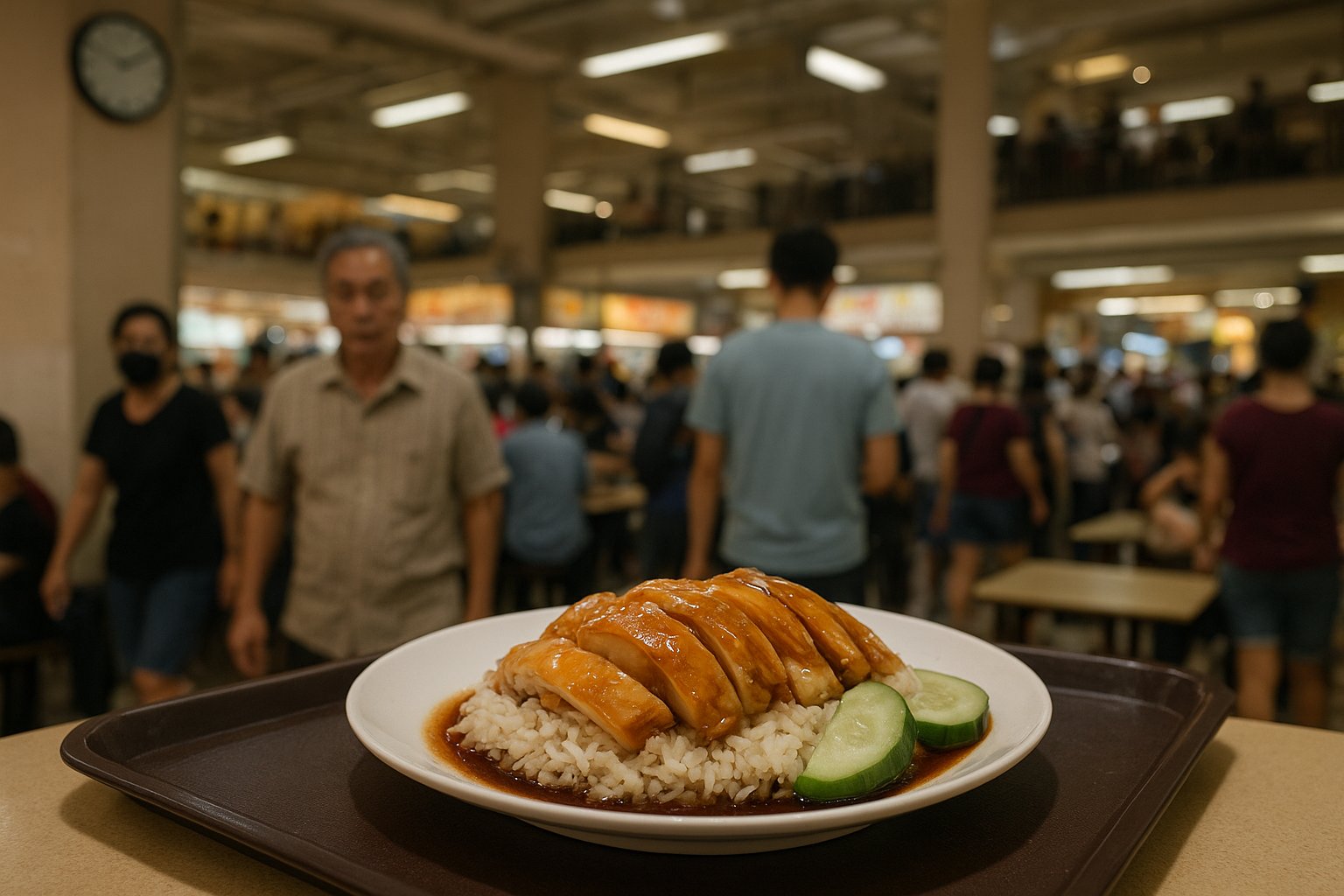
Start with the food, because Chinatown starts with the food. Chinatown Complex Food Centre at 335 Smith Street is the big one, the giant everyone comes back to — well over 250 stalls spread across two floors above a wet market. It is the kind of place where retirees nurse kopi over the paper, office workers do the lunch-break shuffle, and the air feels permanently seasoned with soy, charcoal and steam. This is where Liao Fan Hawker Chan made history as one of the first hawker stalls in the world to earn a Michelin star. The star is gone now, but the queue is not, and the soya sauce chicken rice is still about S$3.50. That is Chinatown in one bite: fame without fuss, and no apology for either.
The rest of Chinatown Complex is just as telling if you know where to look. Lian He Ben Ji Claypot Rice cooks each pot to order over charcoal and has a Michelin Bib Gourmand, which means you should budget time, not just money. 168 CMY Satay grills Michelin-recognised sticks at roughly 70 cents each, the sort of price that makes you do a double take even after living here a while. Ann Chin Popiah keeps the fresh spring-roll tradition going, and The 1950s Coffee pours a proper Nanyang kopi for the full kopitiam ritual. It is all dense, all cheap, all slightly chaotic in the best possible way.
A five-minute walk south, Maxwell Food Centre is the more compact cousin, tidier around the edges but no less beloved. Tian Tian Hainanese Chicken Rice is the headline stall here, Bib Gourmand and from about S$5, the kind of chicken rice that has turned a queue into a landmark. If the line looks brutal, Ah Tai a few stalls down is run by Tian Tian’s former head cook and usually moves faster. No one comes to Chinatown for restraint; they come for the line that is worth standing in.
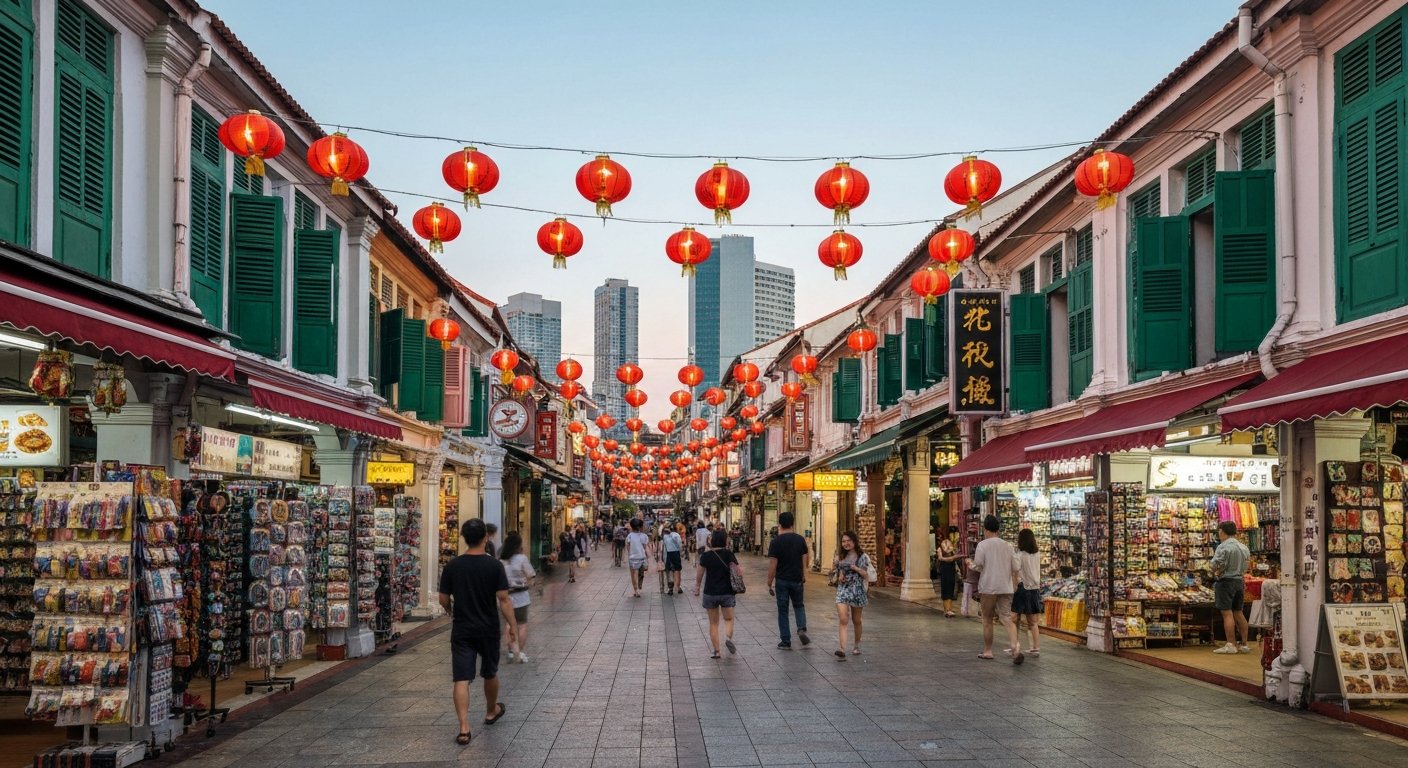
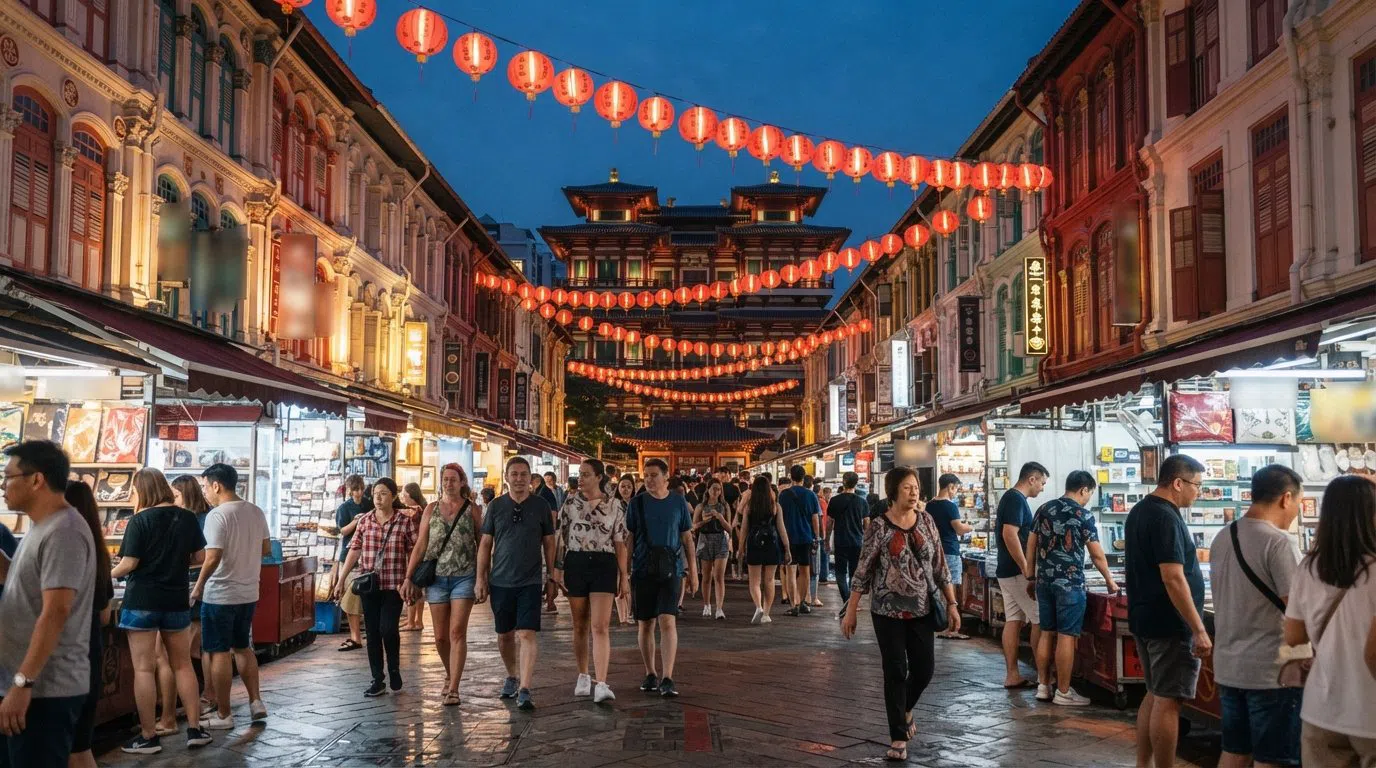
The other thread is heritage, and it runs straight down South Bridge Road. Three of the neighbourhood’s landmark temples sit within a few hundred metres of one another, and the effect is not museum-like at all. It is lived-in, practical, a little rough at the edges, with worshippers, tourists and office workers all crossing paths in the same heat. The shophouse lanes — Pagoda Street, Trengganu Street, Temple Street, Sago Street and Smith Street — are more obviously photogenic, especially once the red lanterns come on, but they are not fake for being pretty. Chinatown has always known how to perform and how to feed people at the same time.
Then there is the newer layer: the restored shophouses of Ann Siang Hill, Club Street and Keong Saik Road, where the old quarter’s bones now hold some of the city’s smartest restaurants and bars. That is the trick, really. Chinatown does not choose between old and new; it stacks them. Temple, market, cocktail bar. Hawker smoke, then natural wine. It sounds like a branding exercise until you walk it and realise the place is genuinely good at every version of itself.
Plan your Singapore trip
Live prices from our booking partners.
Guests & rooms
Free cancellation on many rooms. We may earn a commission when you book.
Where to eat & drink
If you want to do Chinatown properly, begin at the hawker centres and work outward from there. Chinatown Complex is the obvious first stop because it gives you the most room to graze and the best chance of doing lunch like a local. Go for Liao Fan Hawker Chan if you want the famous plate everyone has an opinion about, then swing to Lian He Ben Ji Claypot Rice when you have a bit more time to spare. The charcoal pots here are not a grab-and-go situation; this is a sit, wait and let the wok do its work kind of meal. 168 CMY Satay is the snack to thread between bigger bites, and Ann Chin Popiah is the neat little counterpoint when you want something fresher and lighter. For coffee, The 1950s Coffee does exactly what a neighbourhood kopitiam should do: give you a place to pause, sip and watch the room.
A short walk away, Maxwell Food Centre gives you another whole lunch option without leaving the district’s orbit. Tian Tian Hainanese Chicken Rice is the obvious draw, and it deserves the attention; it is one of those stalls that makes a simple dish feel like a civic duty. If you are not keen on queueing, Ah Tai is the sensible move. I like that Chinatown allows both moods. You can be the pilgrim or the pragmatist and still eat well.
For a sit-down meal, climb into the shophouses and let the neighbourhood change its tone. Kok Sen on Keong Saik Road is a 50-year-old cze char institution with a Michelin Bib Gourmand and the kind of serious wok hei that makes people start talking a little louder at the table. Order the big prawn hor fun and do not overthink it. Keong Saik also carries Meta and FOC, which tells you how far this street has travelled without losing its appetite. It used to be known for something very different; now it is one of the city’s densest dining rows, and honestly, that reinvention suits it.
Up around Ann Siang and Club Street, the mood shifts again. Merci Marcel at 7–9 Club Street is the all-day French bistro version of the neighbourhood, while Les Bouchons at 7 Ann Siang Road does steak frites with no nonsense and no need to reinvent the wheel. Yen Yakiniku brings wagyu grilling into the mix, and Luke’s Oyster Bar & Chop House on Gemmill Lane gives the area a New York raw-bar edge. None of these places pretend Chinatown is one thing. They just take the block as it is and work with it.
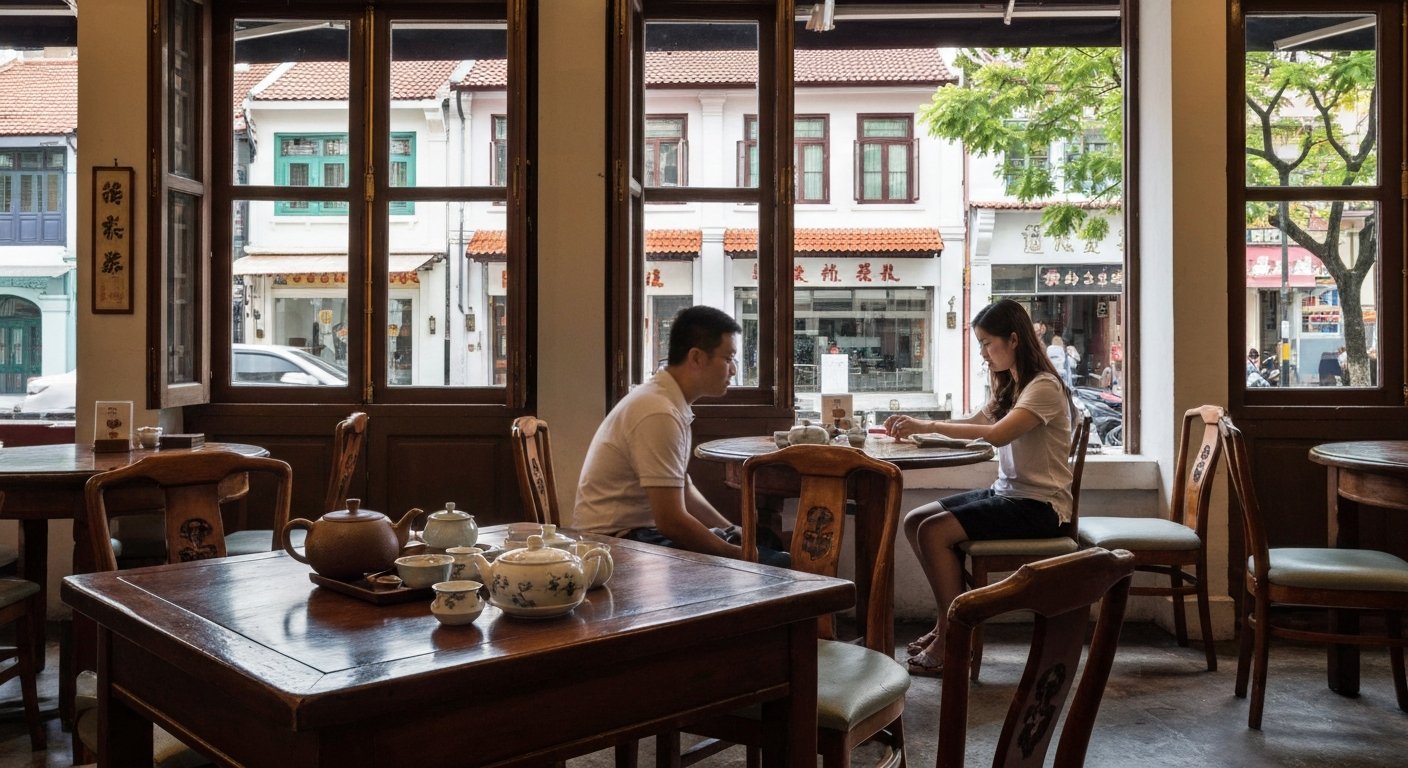
For a slower, more old-school pause, Tea Chapter on Neil Road has been pouring Chinese tea since 1989, and Queen Elizabeth II visited in that first year. That fact alone tells you the room has a certain gravitas, but it never feels stuffy. It feels like a place where time is meant to be held, not chased.
Going out
Chinatown’s night out is not about big-club theatrics. It is drinks and dinner, with a bit of spill-out energy and enough personality to keep the evening interesting. The classic after-work huddle sits on Club Street and Ann Siang Road/Hill, both of which go car-free on Friday and Saturday evenings. That alone changes the mood. Tables seem to lean into the street, conversations loosen, and the slope fills with people who look like they have just escaped the office but are not in any hurry to leave.
Junior The Pocket Bar on Ann Siang Hill is one of the smartest tiny rooms in the area, partly because it reinvents its whole menu around a new theme every few months. That kind of restlessness could feel gimmicky elsewhere; here it feels like the neighbourhood’s own habit of changing costume without changing character. Gem Bar on Ann Siang Hill keeps things a little more unpretentious and fruit-forward, which is often exactly what the night needs after a heavy meal.
For a quieter view over the city, Barouv Rooftop Bar on Level 4 of The Scarlet hotel is an intimate garden terrace over the CBD skyline. It is not trying to outshine the mega-rooftops in Marina Bay, and that is precisely why it works. You can hear yourself think here.
On the Telok Ayer–Amoy edge, Native at 52A Amoy Street is the serious-drinker address, the one that takes Southeast Asian spirits and foraged, fermented local ingredients and turns them into a proper evening out. It sat at No. 45 on Asia’s 50 Best Bars 2025, which is nice to know, but the real point is that it still feels rooted in place rather than floating above it. Back on Keong Saik Road, Potato Head gives the district a buzzy rooftop anchor for later in the evening.
There is one thing Chinatown is not, and that is a late, sprawling club district. If you want that, Clarke Quay is a short taxi or two MRT stops away. Chinatown is more specific than that. It is for people who like their night to have a beginning, a middle and a sensible end.
Things to do / what to see
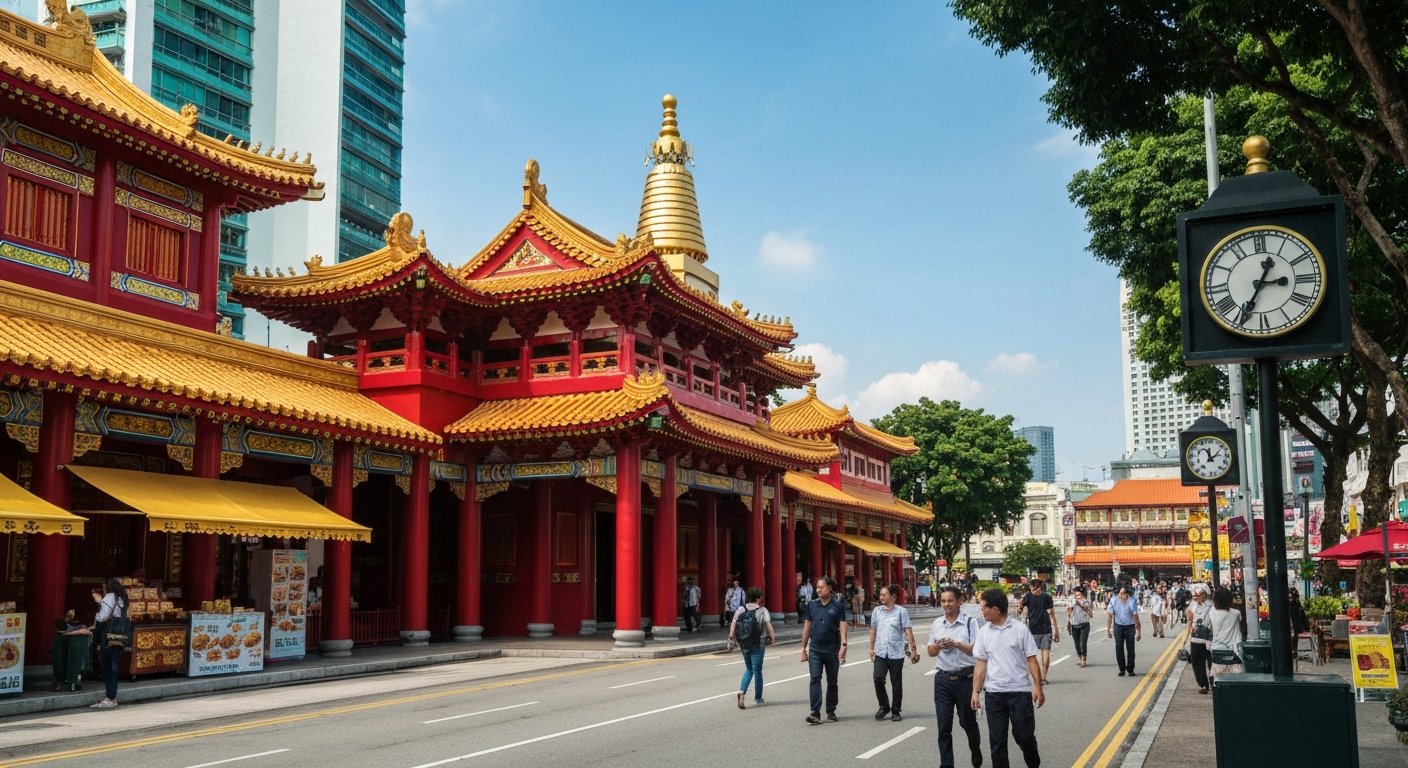
The best free hour in Chinatown is still the temple walk down South Bridge Road. Begin at the Buddha Tooth Relic Temple at 288 South Bridge Road, a five-storey Tang-style hall completed in 2007, open daily from 7am to 7pm. It has a golden stupa and a rooftop orchid garden upstairs, and entry is free, though you should dress modestly. The building is grand, yes, but not cold. It has the sort of ceremonial weight that makes you lower your voice without being told.
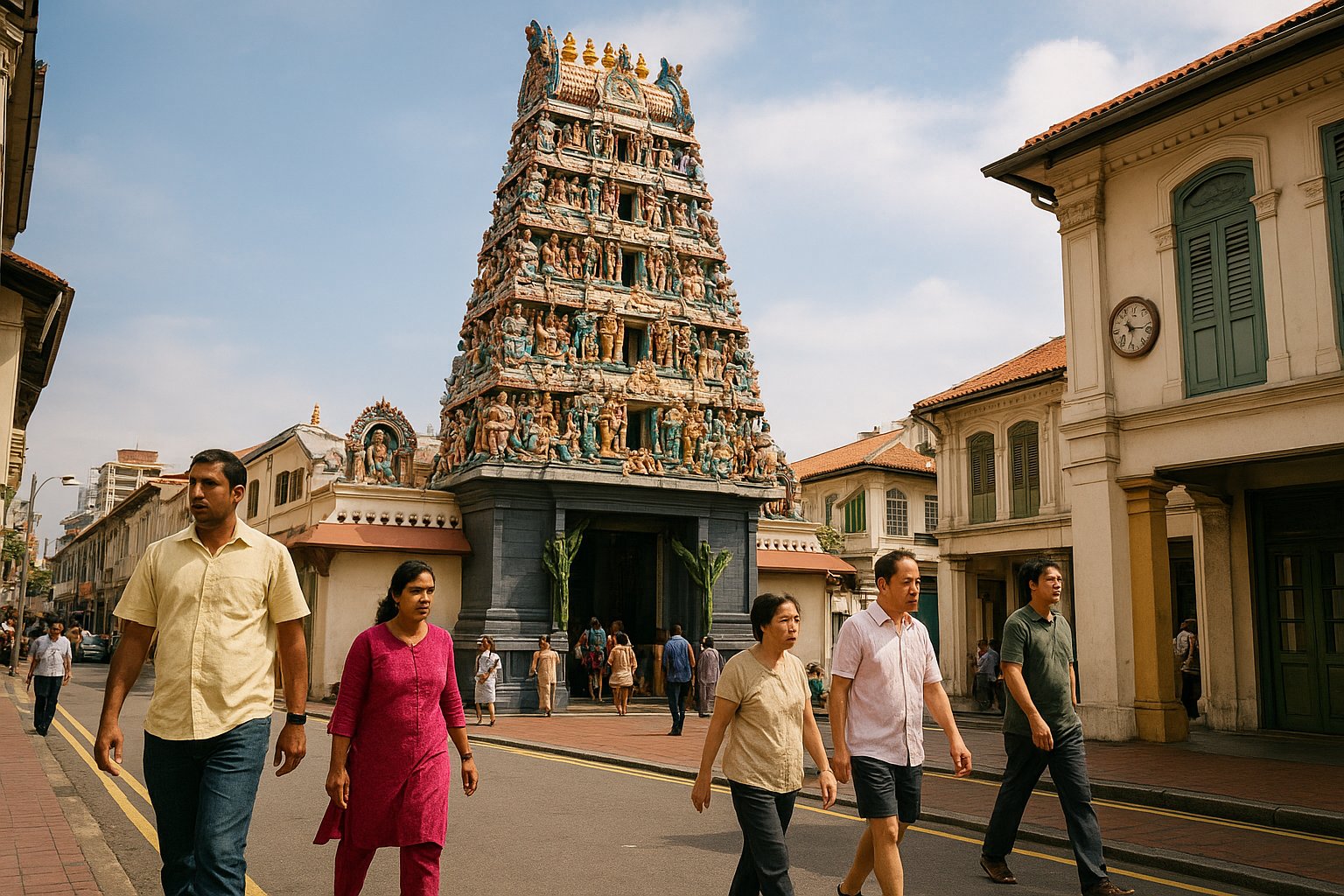
A block away stands the Sri Mariamman Temple, Singapore’s oldest Hindu temple, with its landmark painted gopuram stacked high with brightly coloured deities. The contrast between the two temples is one of Chinatown’s best lessons: different faiths, different forms, same street, no drama. Down on Telok Ayer Street, where the old waterfront once sat before reclamation pushed the sea away, Thian Hock Keng Temple is the city’s oldest Hokkien temple, built by immigrants giving thanks for a safe crossing. It is free and open until late afternoon, and it still carries the emotional logic of arrival — gratitude first, grandeur second.
For context, spend an hour in the Chinatown Heritage Centre at 48 Pagoda Street. It recreates the crowded shophouse cubicles of the 1950s, and it is the single best hour of background you can buy in this district. After that, wander without a plan. The market grid of Pagoda, Trengganu, Temple and Sago Streets is at its best in the late afternoon when the lanterns start to glow and the tourist trade finally feels like part of the scenery rather than the whole story. Smith Street, the old Chinatown Food Street, has been reworked with new eateries and cultural stalls, which is very Chinatown too: old label, new use, still busy.
Don’t miss in Chinatown
Buddha Tooth Relic Temple
Maxwell Food Centre
Keong Saik Road dining strip
Shopping & markets
Shopping in Chinatown is a mixed bag, and it should be. The Chinatown Street Market runs through the pedestrianised lanes off Pagoda, Trengganu, Sago, Temple and Smith Streets, open daily from mid-morning until around 10pm. Yes, it is touristy. No, that does not automatically make it worthless. You get lanterns, silk, souvenirs, chops carved with your name, dried food and bak kwa — the sweet barbecued pork jerky that shows up every Chinese New Year and still makes a decent gift if you know what you are buying. Prices are usually fixed and marked, though if you buy several things from one seller you may shave a little off. The key is to keep your eyes open and your standards modest. This is not the place for subtlety; it is the place for the cheerful, obvious, slightly over the top version of Chinatown.
But the district is more interesting once you step outside the obvious market lanes. The surrounding shophouses still hold traditional trades: medical halls stacked with dried herbs, tea merchants and paper-offering shops. Those are the places that give the area its texture once the souvenir crowd thins out. Up on Ann Siang Hill and Ann Siang Road, the shopping turns boutique — an old British barber, jewellers and design-led one-offs tucked between the restaurants. It is polished, yes, but not sterile. There is still enough old brick and unevenness to keep it from feeling like a mall in costume.
For everyday needs, People’s Park Complex and People’s Park Centre near Chinatown MRT are the old-school answer: sprawling, unpolished, useful. Money-changing, cheap eats, Chinese goods — the sort of places locals actually use, which is always a better sign than a glossy façade.
Where to stay in Chinatown
Chinatown is one of the best-value central bases in Singapore, and not just because the food is cheap. You are on two MRT lines, walking distance to the CBD, and a short hop from Marina Bay, Clarke Quay and the port for Sentosa. That matters. It means you can do the city without spending half your day in transit, then come back to a neighbourhood that still has some pulse after office hours.
Character-seekers should look at the restored shophouse hotels, especially The Scarlet Singapore in a 1924 art-deco building just off Ann Siang Hill. It is the standout, with Barouv Rooftop Bar on top, and it wears its drama well. The quieter, more design-led pockets are Keong Saik Road and Neil Road, where boutique stays sit among some of the best restaurants. Expect some weekend evening noise near Club Street; that is the trade-off for being this central and this lively. Around Pagoda Street and the market grid, you will find more mid-range and budget options right on top of the action — lively and convenient, but louder. Backpackers are well served by hostels near Chinatown MRT.
Hotels in Chinatown
Our best-rated stays in this neighbourhood. Prices are approximate “from” rates — confirmed at the provider when you continue. We may earn a commission if you book through our partners — at no extra cost to you.
In this area In this area
 In this area
 In this area
 In this area
 In this area
 In this area
 In this area
 In this area
 In this area
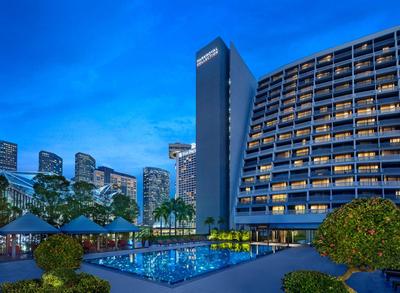 In this area
Chinatown
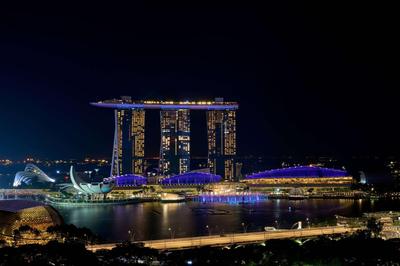
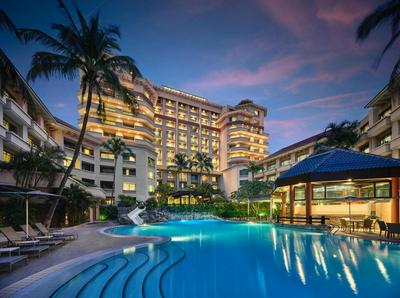
PARKROYAL COLLECTION Marina Bay, Singapore
9.1· 8,242 reviews
approx. from£295 / nightSee prices
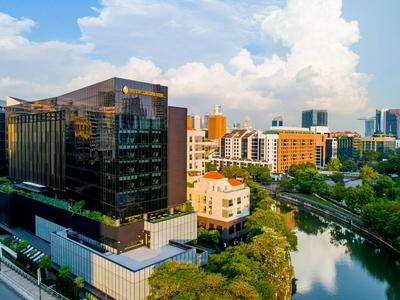 In this area
Chinatown
InterContinental Singapore Robertson Quay by IHG
9.2· 730 reviews
approx. from£266 / nightSee prices
Getting around
Chinatown is small, flat and made for walking. You can cross the core in about 15 minutes, which is part of why the neighbourhood works so well as a base. The hub is Chinatown MRT, an interchange on the blue Downtown Line and the purple North East Line; Exit A puts you straight onto Pagoda Street and the market. Maxwell MRT on the brown Thomson–East Coast Line, opened in 2022, is the closest stop to Maxwell Food Centre, the Buddha Tooth Relic Temple and the Ann Siang/Club Street shophouses. Outram Park, one stop or a short walk west, is a big interchange linking the East West and North East Lines plus the TEL, useful if you are heading airport-side.
From Chinatown it is roughly 5 minutes on the MRT to Marina Bay, about 10 minutes to Orchard Road, and around 20–25 minutes to Changi Airport with a change. VivoCity and the walkway to Sentosa are a couple of stops down the line. Taxis and Grab are cheap and plentiful if the heat wins, which in Singapore, let us be honest, it often does.
Chinatown works because it never pretends to be one-note. It is hawker centre and temple street, old trade and cocktail bar, tourist lane and local shortcut. Walk it slowly and it keeps revealing another layer. That is the whole point. The neighbourhood does not ask you to choose between heritage and now. It serves both on the same block, and somehow that is the shiok part.
Gallery
Chinatown in pictures
Chinatown — your questions
Is Chinatown a good area to stay in Singapore?
Yes — it is one of the best-value central bases. You are on two MRT lines, within walking distance of the CBD and only a few minutes from Marina Bay, with cheap hawker food and good shophouse restaurants right outside the door. The trade-off is noise, especially around Club Street and the Pagoda Street market at night, so light sleepers should ask for a quieter room.
What is the best hawker centre in Chinatown and when should I go?
Chinatown Complex Food Centre at 335 Smith Street is the biggest and most characterful, with Michelin-recognised stalls like Hawker Chan, Lian He Ben Ji claypot rice and 168 CMY Satay. Maxwell Food Centre nearby is smaller and famous for Tian Tian chicken rice. Go early for lunch or in the evening for the fullest buzz, and keep a backup stall in mind because some vendors sell out or close by mid-afternoon.
Do I need to pay to visit the temples in Chinatown?
No. The Buddha Tooth Relic Temple, Sri Mariamman Temple and Thian Hock Keng Temple are all free to enter, though donations are welcome. Dress modestly, with shoulders and knees covered; the Buddha Tooth Relic Temple provides shawls if needed, and some prayer halls require you to remove your shoes.
What is Chinatown like at night?
It is more drinks-and-dinner than late-night clubbing. Club Street, Ann Siang and Keong Saik Road are the main evening strips, with car-free weekend nights on Club Street and Ann Siang Road/Hill. Expect lively bars, good restaurants and a fair bit of spill-out energy, but not a big club district like Clarke Quay.